Active Recovery vs Rest Days: Which to Choose?
Before asking which is better, it helps to ask what you are choosing by. Active recovery vs rest days which to choose is really a question about your current body, your training load, and your week ahead, not a contest with one winner. Active recovery usually means light, low-effort movement such as an easy walk, gentle cycling, or mobility work. A rest day means stepping away from planned exercise so your body and mind can ease off.
Both have a place in most training weeks. What changes is the situation you are in on a given day. The sections below build a set of decision criteria first, compare the two options against each one, and then match them to common situations.
Setting your criteria before you choose
A good decision starts with a few honest questions. You do not need a spreadsheet, just a quick check-in with yourself.
What is your body telling you?
Soreness, stiffness, heavy legs, and general tiredness all feel different. Mild muscle tightness after a hard session is common and often feels better with gentle movement. Sharp, localized, or worsening pain is a different category, and it is not something to push through on an “easy” day.
How hard was the training that came before?
A very demanding session, a long event, or several tough days in a row place different demands on you than a moderate week. The more taxing the recent load, the more reasonable it may be to lean toward full rest. A lighter stretch of training leaves more room for movement on off days.
How are your sleep, stress, and energy?
Recovery is not only about muscles. Poor sleep, a stressful work week, or low energy can make even gentle exercise feel like a chore. Many people find that when life stress is high, true rest feels more restorative than another thing on the to-do list.
What are your goals and schedule?
Someone preparing for an event, someone building a consistent habit, and someone returning after a break may each want something different from an off day. Time also matters. A twenty-minute walk fits into a busy day more easily than a long mobility routine.
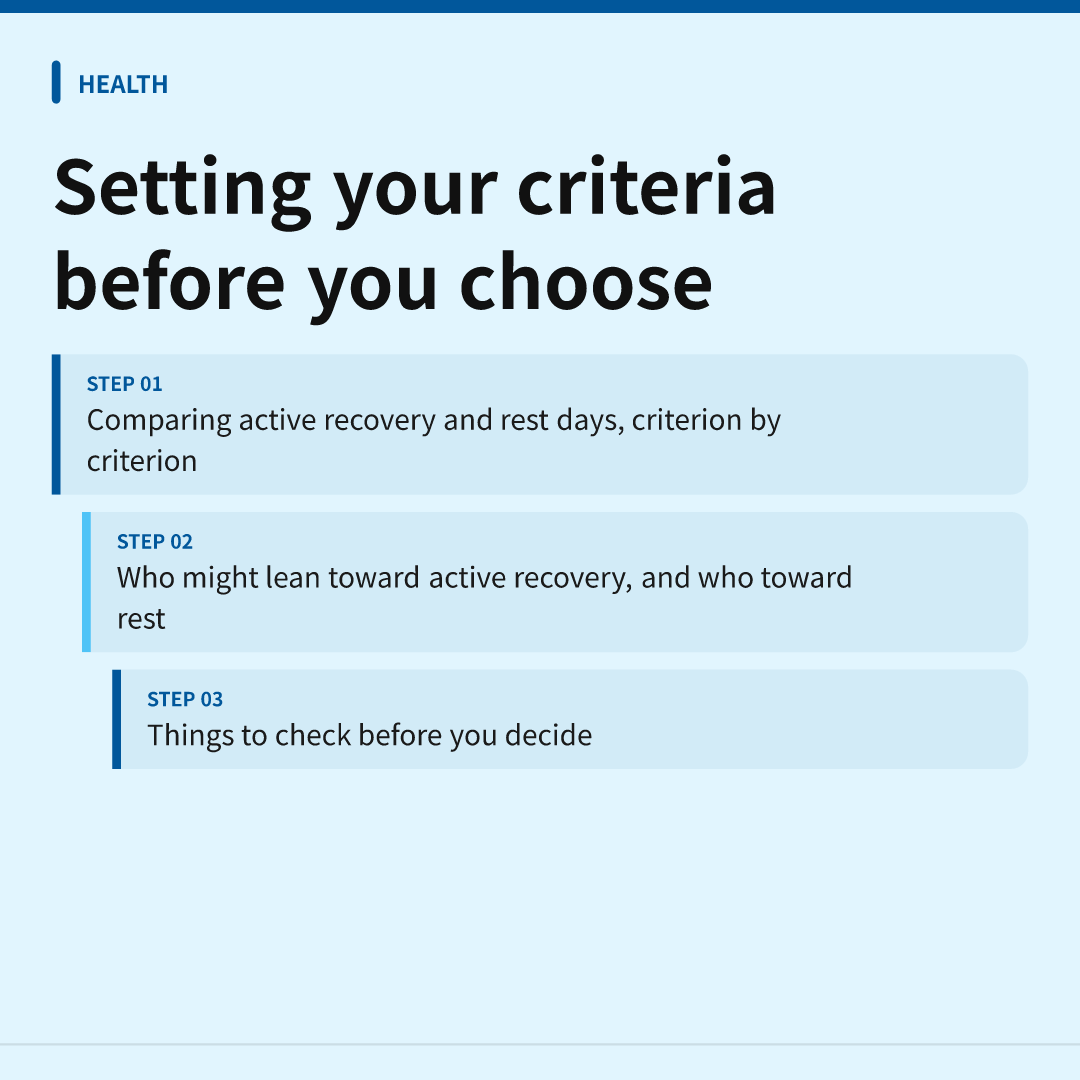
Comparing active recovery and rest days, criterion by criterion
Here is how the two options tend to line up against the criteria above. These are general patterns, and individual responses vary.
Soreness and stiffness
Active recovery: Many people report that light movement helps stiff muscles loosen up and feels more comfortable than sitting still. Whether it speeds actual recovery is less settled, and findings differ between studies and between types of exercise.
Rest days: Full rest gives sore tissue a break from any extra demand. For some, that is exactly what feels best, particularly when soreness is more than mild.
Fatigue and energy
Active recovery: A short, easy outing can lift mood and break up a sedentary day for some people. For others, it adds a layer of effort when energy is already low.
Rest days: Resting fully can feel like a reset when you are run down. It asks nothing of you, which is the point.
Consistency and routine
Active recovery: Light daily movement can help some people keep a steady rhythm, which makes returning to harder sessions feel less abrupt.
Rest days: A planned rest day can protect your routine over the long run by preventing burnout. The risk, for some, is that one rest day turns into several without a plan.
Injury and pain considerations
Active recovery: It is generally meant to be gentle. If a movement causes pain, it is no longer recovery, and that is a signal to stop.
Rest days: Rest is often the more cautious choice when something feels off. Persistent or unexplained pain deserves attention from a qualified professional rather than self-guessing.
Time and mental load
Active recovery: It needs a little planning and some motivation, even if the activity itself is easy.
Rest days: Nothing to schedule, though some people feel restless or guilty about not moving. That feeling is worth noticing, because rest is part of training rather than a lapse in it.
Related reading: How to Build a Balanced Plate When Your Meals Keep Falling Apart
Who might lean toward active recovery, and who toward rest
Think of these as tendencies rather than rules. Plenty of people sit in the middle or switch depending on the week.
Active recovery may suit you if
- You feel mildly sore or stiff but otherwise well.
- You sit for long stretches during the day and like to move a bit.
- Your recent training has been moderate rather than extreme.
- Gentle movement tends to lift your mood.
- You want to keep a steady daily habit going.
A full rest day may suit you if
- You feel unusually drained, or your sleep has been poor.
- You have just finished a very hard session or event.
- You are juggling a lot of stress outside of exercise.
- You notice sharp, lingering, or worsening pain.
- You tend to overdo “easy” days and turn them into real workouts.
When it is not either/or
Some people alternate, using a gentle walk on one off day and complete rest on another. Others adjust on the spot, starting a light session and stopping if it does not feel right. That flexibility is reasonable, and it tends to work better than forcing one rule onto every week.
Groups who should check in with a professional first
People who are managing a medical condition, are pregnant or postpartum, are recovering from an injury or surgery, or are returning to exercise after a long break may need tailored guidance. A doctor, physical therapist, or other qualified professional can advise on what kind of movement and rest fits your situation. General information, including this article, cannot account for your history.
For broader background on how off days fit into physical activity, the CDC’s adult physical activity page is a reasonable general starting point.
Things to check before you decide
Run through this short list on the morning of an off day. It will not give a perfect answer, but it should make the choice less of a coin flip.
- Pain check: Is any discomfort sharp, localized, or getting worse? If so, lean toward rest and consider speaking with a qualified professional.
- Energy check: Do you feel drained or only a bit sluggish? Real exhaustion points toward rest; mild sluggishness may ease with gentle movement.
- Sleep and stress check: Have the last few nights and days been rough? Recovery includes your whole life, not just your muscles.
- Recent load check: Was your last session or week unusually demanding?
- Effort check: Can you keep the movement truly easy, or will it creep into a workout? If you are unsure, rest may be the better call.
- Goal and schedule check: Does light movement fit your plans, or would rest serve you better this week?
- Health check: Do you have a condition, injury, or circumstance that calls for personal advice before choosing?
- Follow-up check: If you feel off for several days in a row, or symptoms worry you, is it time to ask a licensed professional?
In the end, active recovery vs rest days which to choose comes down to the criteria you set and how you feel that day. Either option can be a good one when it matches your body and your week, and changing your mind as things shift is part of listening to yourself.
Disclaimer: This article is for informational purposes only and is not a substitute for professional medical advice, diagnosis, or treatment. Please consult a licensed professional for personal health decisions.