Balance Exercises to Try at Home: What They Really Are
Balance exercises to try at home are simple, low-equipment movements that ask your body to stay steady while your base of support gets smaller or your position changes. They train the coordination between your eyes, inner ears, muscles, and joints, which together help you stay upright. Below, you will find what that definition means in practice, when these movements come into play, how they differ from similar ideas, and why they matter for everyday decisions.
The Precise Meaning of Home Balance Training
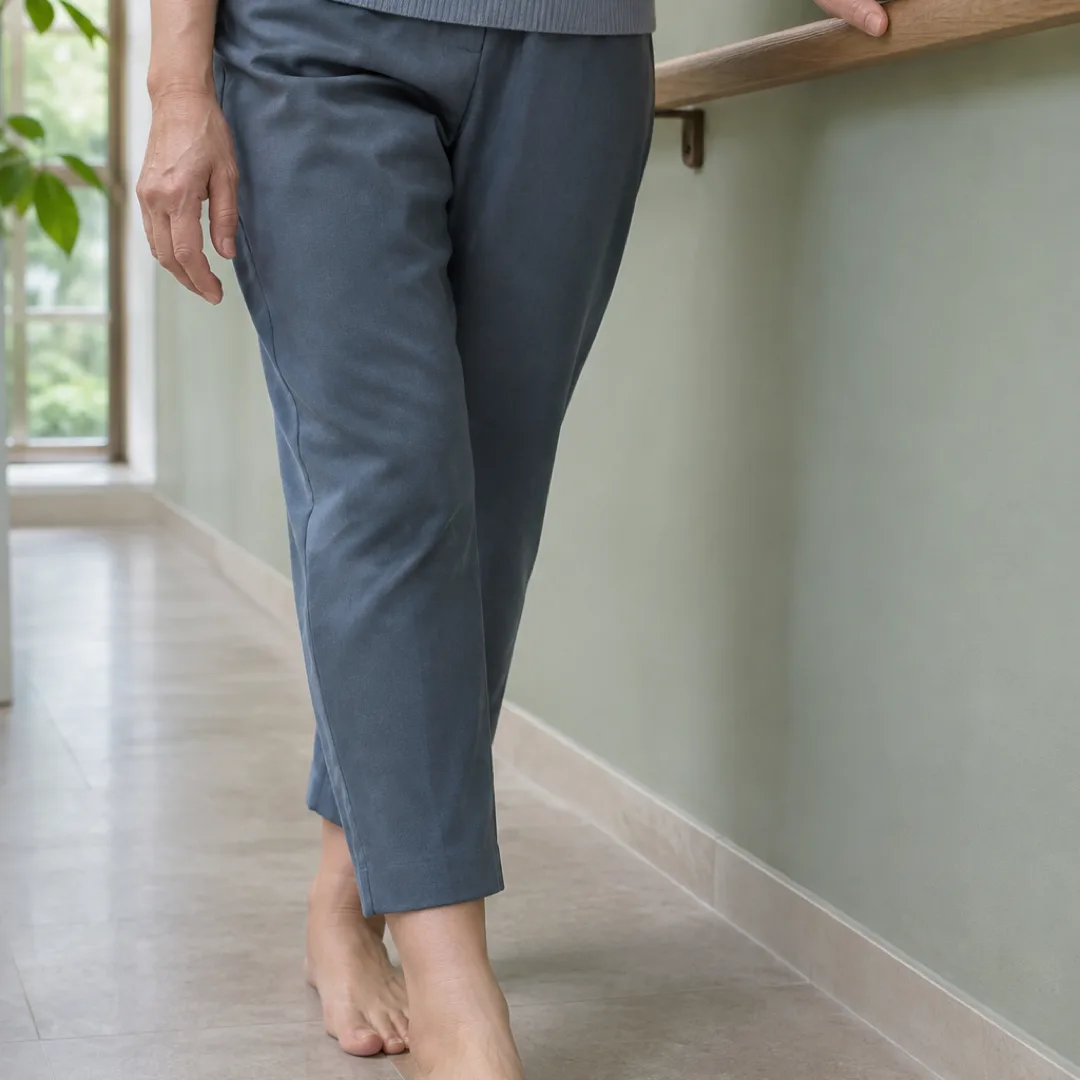
Balance is not a single skill. It is a team effort between several body systems, and each one sends information to the brain about where you are in space. Home balance exercises are movements that deliberately make that team work a little harder, such as standing with feet closer together, shifting weight slowly, or walking in a straight line heel to toe.
Three parts of the system come up again and again in general health guidance:
- Vision: your eyes help you judge the position of your body relative to the room.
- The vestibular system: the fluid-filled structures in the inner ear that sense head movement and gravity.
- Proprioception: your body's built-in sense of where your limbs are without looking at them.
Muscle strength, especially in the legs, hips, and trunk, supports all three. That is why many programs for steadiness blend gentle strengthening with balance challenges rather than treating them as separate topics.
Think of it like tuning a guitar. You are not building a brand-new instrument; you are fine-tuning strings that already exist so they respond more smoothly. That is the only comparison you need here, because the rest is straightforward body mechanics.
Situations Where These Movements Come Into Play
People look into steadiness work for many reasons. Some notice they feel wobbly after a long period of inactivity. Others want to feel more confident on stairs, uneven sidewalks, or while carrying groceries. Athletes and runners often include balance drills as part of general conditioning.
According to the National Institute on Aging's general guidance on exercise for older adults, balance activities are commonly included alongside endurance, strength, and flexibility work. The CDC's general information on falls prevention likewise notes that physical activity programs which include balance elements are often discussed as one piece of a broader approach. Neither agency promises a particular outcome, and individual results vary.
Common starting points people describe
Most beginner-friendly ideas share a few traits: they use a stable surface nearby, they are done slowly, and they can be made easier or harder. Examples frequently listed in public health materials include:
- Standing on one foot while lightly holding a counter or sturdy chair.
- Heel-to-toe walking along a hallway or wall.
- Gentle weight shifts from side to side while standing.
- Slow sit-to-stand movements from a firm chair.
- Tai chi–style or yoga-style standing sequences, often learned through a class or reputable video.
These are descriptions of what exists, not a prescription. How long, how often, and which movements suit you is a question for a physical therapist, doctor, or other qualified professional who knows your health history.
Who should be especially careful
Some people have good reasons to get personal guidance before trying anything new. That includes anyone with dizziness or vertigo, a history of falls, recent surgery, joint replacements, neurological conditions, vision changes, low blood pressure, or medications that can cause lightheadedness. If you have unexplained unsteadiness, it can have many different causes, and a clinician is the right person to sort that out.
Balance Exercises Versus Look-Alike Concepts
The phrase gets mixed up with several neighboring ideas. Separating them makes it easier to choose what you actually need.
Balance training versus strength training
Strength work builds the capacity of your muscles to produce force, such as rising from a chair or climbing a step. Balance work trains your ability to control your body's position, especially when something shifts unexpectedly. The two overlap, since weak muscles make steadiness harder, but a person can be strong and still feel unsteady, or the reverse.
Balance training versus flexibility work
Stretching focuses on range of motion. It can make some positions more comfortable, but being flexible does not automatically mean being steady. General exercise guidance from public health agencies usually lists flexibility as its own category for this reason.
Balance exercises versus vestibular rehabilitation
This one matters. Vestibular rehabilitation is a specialized, professionally guided form of therapy used for certain inner ear or dizziness-related conditions. General home movements are not the same thing, and doing the wrong kind of head movement on your own with an inner ear problem may bring on symptoms. If dizziness or a spinning sensation is your main concern, it is worth being evaluated first.
Balance exercises versus fall prevention as a whole
Falls usually have more than one contributing factor. The CDC's general information on preventing falls points to things like home hazards, vision checks, footwear, and medication reviews alongside physical activity. So steadiness work is one piece, not the entire plan.
Why Understanding This Actually Matters
Balance tends to fade quietly. Because most of us do not practice it on purpose, we often only notice a change when something startles us, like a missed curb or a slippery floor. Understanding that steadiness is a trainable combination of senses and muscles, rather than a fixed trait, gives you a more useful way to think about it.
It also matters because the safest version of this kind of activity is a thoughtful one. Practicing next to a counter, wearing supportive footwear or going barefoot on a non-slip surface, and having a clear space around you are the kinds of common-sense precautions often mentioned in public guidance. Reactions and comfort levels differ from person to person, and feeling a bit challenged is not the same as feeling pain, sharp dizziness, or chest discomfort. Anything in that second category is a signal to stop and talk with a healthcare professional.
Signs to bring up with a professional
- Repeated falls or near-falls.
- Spinning dizziness, fainting, or sudden lightheadedness.
- New numbness, weakness, or changes in vision or speech. Sudden symptoms like these call for urgent medical attention.
- Pain in a joint or the back when standing or walking.
- Uncertainty about whether movement is appropriate after an injury or surgery.
What Changes Once You Know This
Knowing what these exercises are, and what they are not, changes two practical judgments.
- You can tell whether home practice fits your situation. If your concern is general steadiness and you have no red-flag symptoms, gentle practice may be a reasonable topic to explore. If you have dizziness, repeated falls, or a medical condition affecting movement, the better first step is a professional assessment rather than guessing on your own.
- You can look at the whole picture instead of one routine. That keeps expectations realistic, since results vary and no single movement is a stand-alone answer.
With that framing, balance exercises to try at home become less of a trend and more of a sensible, personalized conversation to have with a qualified professional.
Whether a prescription medicine or a specific dose is right for you is a decision to make with a doctor or pharmacist.
Frequently asked questions
Do I need equipment for balance exercises at home?
Not necessarily, because many commonly described movements use only a wall, counter, or sturdy chair for support. If you later want to add items such as a cushion or a stability tool, it makes sense to ask a physical therapist whether they suit your situation. Harder setups also raise the chance of a slip.
Is dizziness a reason to skip home balance practice?
If dizziness or a spinning feeling is part of what you are experiencing, an evaluation by a healthcare professional usually comes before home practice. Vestibular problems are handled differently from general steadiness work, and some head movements can worsen symptoms. A clinician can explain which approach fits you.
Are balance exercises the same as strength training?
No, though they overlap. Strength work builds muscle force, while balance work trains position control and coordination, and weak muscles can make steadiness harder. If you want a plan that covers both, a qualified professional can help you structure it.
Can balance exercises prevent every fall?
No, because falls usually have several contributing factors, including home hazards, vision, footwear, and medications. If you want to reduce risk broadly, public health agencies such as the CDC describe physical activity as one part of a wider approach. A clinician can help you look at the other pieces.
Disclaimer: This article is for informational purposes only and is not a substitute for professional medical advice, diagnosis, or treatment. Please consult a licensed professional for personal health decisions.
Related reading: Bone Density Tips After 50: What They Really Mean