Desk Stretches to Release Tension at Work: What Helps and Why
Bad posture gets blamed for almost every tight neck and aching shoulder at the office, but desk stretches to release tension at work tend to help for a different reason: the real culprits are usually long stretches of staying still, mental stress, and a workspace that nudges the body into the same position for hours. Posture matters, but it is rarely the whole story. Understanding the difference can make short movement breaks feel less like a chore and more like a useful reset.
Responses to stretching vary a lot from person to person. Some people feel noticeably looser after a minute or two of gentle movement, while others notice very little. This article explains the common causes of workday tension, how to tell them apart, and what to bring up with a professional if discomfort sticks around.
The Common Myth: “It’s All About Sitting Up Straight”
Many people assume that if they could only hold a perfect, upright posture, their shoulders would stop aching. It is an appealing idea because it feels like a single fix. In practice, even a very good position becomes tiring when the body holds it without changing for a long time.
Ergonomic guidance from workplace health organizations generally emphasizes changing positions and taking breaks rather than chasing one ideal posture. The U.S. Centers for Disease Control and Prevention’s NIOSH program publishes general information on office ergonomics at cdc.gov/niosh, which is a reasonable place to start if you want official workplace-health resources.
That does not mean posture is irrelevant. A screen set too low, a keyboard that sits too far away, or a chair that does not suit your body can all add strain. But fixing those details alone often does not erase the tightness people feel by mid-afternoon.
Myth and reality side by side
| Common belief | What is more likely going on |
|---|---|
| Slouching is the single cause of neck and shoulder tightness. | Holding any position for too long, including a “good” one, can leave muscles feeling stiff. |
| Stretching harder gives better relief. | Gentle, comfortable movement is generally the approach people use; forcing a stretch can irritate tissue. |
| Tension is purely physical. | Stress and concentration often make people clench the jaw, raise the shoulders, or hold their breath without noticing. |
| A fancy chair will solve everything. | Equipment helps some people, but regular movement and workspace setup usually work together. |
| If a stretch does not help right away, it is useless. | Effects differ between people and sessions, and some benefits are subtle. |
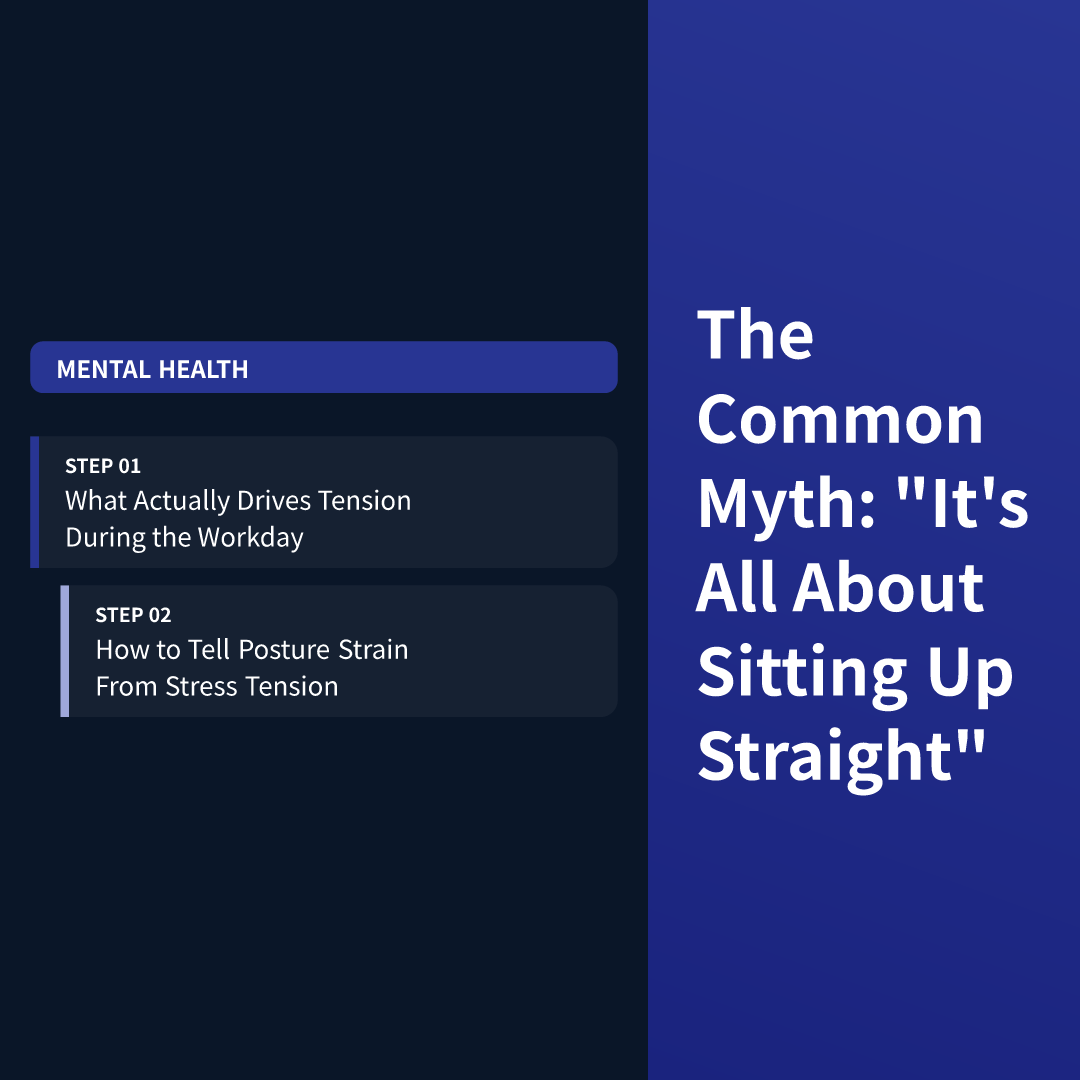
What Actually Drives Tension During the Workday
Rather than one cause, workday tension usually comes from a few overlapping factors. Looking at each one separately makes it easier to figure out which habits are worth adjusting.
Staying still for long periods
Muscles are built to move. When you sit with little variation, the same muscles stay mildly active for hours, and that low-level effort can leave them feeling heavy or stiff. Many people notice the neck, upper back, hips, and forearms most.
Breaking up sitting with brief movement is a common suggestion in general workplace wellness guidance. It does not need to be dramatic, and it does not need special equipment.
Stress and mental load
Because this article sits in the mental health category, it is worth saying plainly: the mind and body are closely tied. During a tense meeting or a looming deadline, many people unconsciously lift their shoulders toward their ears, clench their teeth, or breathe shallowly. Over a long day, that adds up to a tight, tired feeling that no amount of chair adjustment fully explains.
Gentle stretching paired with slow breathing is something many people find calming, partly because it gives the brain a short pause from screens and tasks. It is not a treatment for anxiety or any mental health condition, but it can be one small, low-effort coping habit among others. (Source: WHO Fact sheet: Mental disorders) (Source: WHO Fact sheet: Anxiety disorders) (Source: MedlinePlus: Mental Health)
Screen and device habits
Leaning toward a screen, looking down at a laptop, or cradling a phone against the shoulder can all push the head forward of the body. The head is relatively heavy, so the muscles at the back of the neck work harder when it drifts forward. Lifting a laptop to eye level with a stand, or using a separate keyboard, is a common workspace tweak people try.
Workspace setup and repetitive tasks
Mouse use, constant typing, and reaching for items that sit slightly too far away can strain the wrists, forearms, and shoulders. Small adjustments, like keeping frequently used items within easy reach, are often suggested in ergonomic resources.
Sleep, general activity, and individual factors
Tension is also shaped by things outside the office. Poor sleep, low overall activity, past injuries, and individual body differences can all influence how stiff someone feels at their desk. This is one reason two coworkers in identical chairs can have very different experiences.
How to Tell Posture Strain From Stress Tension
The two often blend together, but a few observations can help you make sense of what you are feeling. These are general reflections, not a diagnosis.
- Timing: Tightness that builds steadily after long, still sitting may point toward a movement and setup issue. Tightness that spikes during stressful moments may be more stress-related.
- Location: Jaw, temple, and shoulder-top tension often travel with stress. Lower back and hip stiffness often tracks with long sitting.
- Response to movement: If walking around for a few minutes eases things, inactivity may be a big factor. If you still feel wound up after moving, stress may be playing a larger role.
- Weekends and time off: If symptoms ease noticeably away from work, the work environment or workload may be contributing.
Most people have a mix of both, and that is perfectly normal. Noticing patterns for a week or two can give you something concrete to discuss with a professional if you decide to ask for help.
Gentle desk movements people commonly use
The movements below are general, low-intensity ideas often shared in workplace wellness resources. They should feel comfortable throughout. If anything causes pain, tingling, or dizziness, stop and consider speaking with a qualified professional such as a physical therapist or your healthcare provider, since they can tailor suggestions to your body.
- Shoulder rolls: Slowly circling the shoulders backward and then forward, keeping the motion smooth.
- Gentle neck tilts: Easing the ear toward the shoulder without forcing the range and without pulling on the head.
- Chest opener: Clasping the hands behind the chair or simply drawing the shoulder blades gently together while sitting tall.
- Seated spinal twist: A slow, comfortable turn of the upper body while keeping the hips facing forward.
- Wrist and finger stretches: Easy extension and flexion of the wrist, stopping well before any strain.
- Standing and walking breaks: Simply getting up to refill water or look out a window gives the whole body a change of position.
- Slow breathing: Lengthening the exhale can be a quiet way to let the shoulders drop.
How long and how often someone does these is a personal choice, and there is no single schedule that suits everyone. A physical therapist or workplace health professional can help you decide what fits your situation, especially if you have an existing condition.
Stretching has limits
Stretching is a modest tool, not a cure-all. It may take the edge off stiffness for some people, but it will not fix an unsuitable workstation, an overloaded schedule, or an underlying medical issue. Think of it as one piece of a broader approach that includes movement, setup, rest, and stress management.
When to check in with a professional
Occasional tightness is common, but some signs deserve proper attention rather than more stretching. Consider contacting a qualified healthcare professional if you notice any of the following:
- Pain that is severe, worsening, or does not ease with rest.
- Numbness, tingling, or weakness in the arms or hands.
- Headaches that are new, frequent, or unusually intense.
- Pain after an injury or accident.
- Discomfort that wakes you at night or interferes with daily life.
- Persistent feelings of stress, low mood, or anxiety that affect your work or relationships.
If chest pain, trouble breathing, sudden severe headache, or sudden weakness occurs, seek emergency medical care right away rather than trying to stretch it out.
Small, comfortable movement breaks work best as a supportive habit, not a substitute for professional care when something feels off.
Frequently Asked Questions
Do desk stretches really help with work stress?
Many people report feeling calmer and looser after brief movement breaks, in part because they interrupt long periods of focus and let the body change position. Experiences differ, though, and stretching is not a treatment for stress-related conditions. If stress feels overwhelming or constant, a mental health professional can offer support that goes well beyond stretching.
How often should I stretch at my desk?
There is no one-size-fits-all answer. General workplace guidance tends to encourage regular changes of position through the day, and the right rhythm depends on your job, your body, and any health conditions. A physical therapist or your healthcare provider can help you work out something realistic for your situation.
Can stretching make neck or shoulder pain worse?
It can if a movement is forced, jerky, or pushed into pain. Gentle, comfortable motion is the usual approach, and anything that sharply increases discomfort or causes tingling is a reason to stop and seek advice. People with recent injuries, known spinal or joint problems, or ongoing pain should check with a qualified professional before starting a new routine.
Is my tension from posture or from stress?
Often it is both. Noticing when and where the tightness shows up, and whether it eases with movement or with time away from work, can offer clues. A healthcare professional can help sort out the contributing factors, particularly if symptoms persist. Used sensibly, desk stretches to release tension at work can be a helpful part of the picture, alongside a comfortable workspace and healthy ways of managing stress.
Disclaimer: This article is for informational purposes only and is not a substitute for professional medical advice, diagnosis, or treatment. Please consult a licensed professional for personal health decisions.