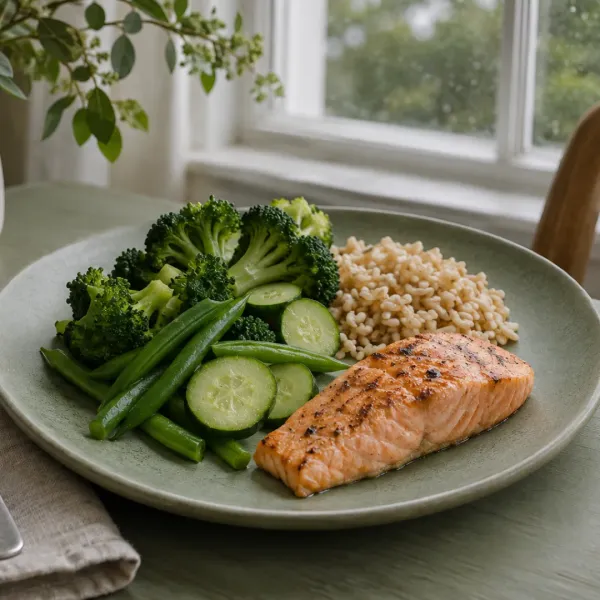
Healthy Aging Habits to Start in Your 40s
The most workable healthy aging habits to start in your 40s are usually the ones you attach to something you already do every day, rather than brand-new routines that demand extra willpower. This approach is often called habit stacking or habit linking: you pick a steady anchor, such as brewing coffee or brushing your teeth, and add one small action right next to it. Because the anchor already happens, the new behavior has a built-in reminder, and that tends to matter more than motivation on a busy Tuesday.
Your 40s are often a crowded decade, with work, family, and caregiving pulling at your time. That is exactly why small pairings make sense. This article walks through how to find your anchors, which behaviors tend to be worth attaching, and what to do when the routine falls apart, because it will at some point. Nothing here is personal medical advice, and individual needs differ.
Finding the Existing Habits You Can Build On

Before adding anything, take a quiet inventory of what you already do without thinking. Good anchors are things that happen at a predictable time and place, almost every day. Weak anchors are things that happen "sometimes" or depend on your mood.
What makes a good anchor
A strong anchor is specific, frequent, and tied to a location. "After I pour my morning coffee" works better than "in the morning," because pouring coffee is a distinct moment you can notice. Behavioral researchers who study habit formation generally describe this kind of cue as helpful, though how quickly a behavior becomes automatic varies a lot from person to person.
Common anchors include:
- Waking up and turning off the alarm
- Making coffee or tea
- Brushing your teeth in the morning and evening
- Sitting down at your desk or opening your laptop
- Waiting for the microwave or kettle
- Getting into the car or onto public transit
- Plugging in your phone at night
Anchors that tend to fail
Be a little suspicious of anchors that change daily. Your lunch break might shift with meetings, and your evening might swallow itself on school-night chaos. If an anchor moves around, the habit attached to it tends to wobble too. Choose the steadier one, even if it is less glamorous.
It also helps to start with just one or two anchors. Trying to redesign an entire day at once is a common reason people quit within a couple of weeks.
Good Behaviors to Attach to Those Anchors
The list below is not a prescription, and no single habit defines healthy aging. These are behaviors that major public health organizations commonly discuss in the context of staying well through midlife and beyond. Which ones fit you depends on your health, budget, schedule, and preferences.
Movement pairings
According to the CDC's general physical activity guidance, regular activity is associated with many aspects of long-term health, and adults are encouraged to include both aerobic movement and muscle-strengthening activity. You do not need a gym to start thinking this way. Here are a few anchor-plus-action combinations:
- Coffee brewing + calf raises or gentle stretches. The minutes while the machine runs are otherwise idle.
- Phone call + walking. Many people find that pacing during calls adds movement without adding a task.
- Brushing teeth + balance practice. Standing on one foot for a moment is a simple way to practice balance, which the National Institute on Aging notes becomes more relevant as people get older.
- Arriving at work + taking the longer route to your desk. It is small, but it is attached to something you do anyway.
If you have joint pain, heart conditions, or have been inactive for a long time, it is sensible to talk with a clinician before starting a new exercise pattern. They can tell you what is reasonable for your body.
Sleep and wind-down pairings
Sleep needs vary, and many adults feel better on a steady schedule. The CDC's general sleep guidance emphasizes consistency and a restful sleep environment. Pairings that some people find useful:
- Plugging in your phone + leaving it outside the bedroom. The charging ritual becomes the boundary.
- Brushing teeth at night + dimming the lights. A cue that signals the day is winding down.
- Setting tomorrow's clothes out + writing down one unfinished task. Offloading worries can feel easier than carrying them to bed.
If you snore loudly, wake unrefreshed, or struggle with sleep for weeks, that is worth raising with a healthcare professional rather than trying to solve with routines alone.
Eating and hydration pairings
Federal dietary guidance, including the Dietary Guidelines for Americans from the USDA and HHS, generally encourages a varied pattern with vegetables, fruits, whole grains, and protein sources, and less emphasis on heavily processed foods and added sugars. Habit pairings might look like:
- Opening the fridge for lunch + adding a vegetable first.
- Morning coffee + a glass of water beside it. Water and coffee share the same counter space.
- Grocery list writing + choosing one new produce item each week.
Nutrition needs depend on health conditions and life stage. A registered dietitian or doctor can help if you have specific concerns.
Skin and sun pairings
The American Academy of Dermatology and the FDA both discuss sun protection as a common part of skin care, including shade, protective clothing, and sunscreen. A simple pairing is linking sun protection to something you already do before leaving the house, like putting on shoes or grabbing keys. Product choice depends on your skin, and a dermatologist can help you sort that out.
Checkups and screenings
This is the pairing many people skip. Routine checkups and age-appropriate screenings are commonly encouraged by public health agencies such as the CDC and the U.S. Preventive Services Task Force, though which screenings apply to you depends on your age, sex, family history, and risk factors. One practical link: when you update your calendar at the start of a new season, add a reminder to book your next appointment. Then ask your clinician which screenings make sense for you.
Stress, connection, and mind
Stress management and social connection are often discussed in public health materials as part of overall wellbeing. Possible pairings include:
- Waiting for the kettle + three slow breaths.
- Commute home + texting one friend or relative.
- Dinner cleanup + a short walk with a family member.
If low mood, anxiety, or burnout is lingering or affecting daily life, a mental health professional or primary care provider can offer support that habit design cannot replace.
What to Do When the Routine Falls Apart
It is more useful to plan for a lapse than to pretend it will not happen. Travel, illness, deadlines, and family emergencies break routines for nearly everyone. What matters is how quickly and gently you return.
Recovery rules you can write down in advance
- Never skip twice if you can help it. One missed day is just a missed day. The second miss is where a pause starts to become a stop, so make the next occurrence the easy one.
- Shrink the habit, don't abandon it. If a ten-minute walk feels impossible, a two-minute version still keeps the anchor alive.
- Return to the anchor, not the guilt. You do not need to "make up" missed days. Simply attach the habit to the next time the anchor happens.
- Have a travel or sick-day version. Decide ahead of time what the minimal form looks like, such as stretching in a hotel room or just drinking water.
- Change the anchor if it keeps failing. Repeated failure usually points to a poorly chosen anchor rather than a lack of discipline.
When struggling is a signal, not a failing
Sometimes a habit keeps collapsing because something else is going on. Persistent fatigue, ongoing pain, trouble sleeping, noticeable changes in mood or appetite, or new symptoms are worth discussing with a healthcare professional. Do not assume it is only a motivation problem. Seek prompt medical care for symptoms such as chest pain, shortness of breath, sudden weakness, or severe headache, and do not wait to fit it into a routine.
What habits cannot do
It is worth being honest about limits. Daily habits can support general health, but they cannot guarantee a particular outcome, reverse aging, or replace medical care. Genetics, existing conditions, and life circumstances all shape how a person ages. Be cautious with products or programs that promise dramatic anti-aging results, since the FTC has repeatedly cautioned consumers about exaggerated health and anti-aging claims.
Conclusion: Start Small, Attach Well
The simplest way to approach healthy aging habits to start in your 40s is to pick one dependable anchor, attach one small action, and give it time. Movement, sleep consistency, balanced eating, sun protection, regular checkups, and social connection are recurring themes in public health guidance, but the right mix depends on you. When something does not fit your health situation, a primary care clinician or other qualified professional is the best person to help you adjust.
For your first two weeks, these three rules keep things manageable:
- Choose only one or two anchors and one tiny action for each.
- If you miss a day, do the small version at the very next anchor instead of making up for it.
- At the end of the second week, keep what felt easy, drop what felt forced, and note any health questions to bring to your next appointment.
Frequently asked questions
How many habits should I try to add at once?
If you are new to habit stacking, starting with one or two is generally easier to sustain than a long list. The earlier sections suggest picking a steady anchor and a small action, then adding more only after the first pairing feels routine. Your schedule and energy will influence what pace is realistic.
What if my daily schedule changes all the time?
If your schedule shifts a lot, choose anchors that stay put regardless of timing, such as brushing your teeth or plugging in your phone at night. Anchors tied to a specific time or meeting tend to be less dependable. Having a shortened sick-day or travel version of each habit can also keep things going.
Should I talk to a doctor before changing my routine?
If you have a chronic condition, have pain, or have been inactive for a long time, a conversation with a clinician before changing exercise or eating habits is a sensible step. Even without those factors, a routine checkup is a good time to ask which screenings and habits fit your situation.
Disclaimer: This article is for informational purposes only and is not a substitute for professional medical advice, diagnosis, or treatment. Please consult a licensed professional for personal health decisions.