Eye Health Nutrition Basics: What Everyday Eating Can Offer
Screens glow from morning to night, and many people notice tired, dry, or strained eyes by the end of the day. That experience sends plenty of readers searching for food-based answers. Supplement aisles, social media posts, and old sayings about carrots all promise something, and it is hard to tell which ideas hold up.
Eye health nutrition basics come down to a simple idea: the eyes are living tissue, and they rely on the same varied, balanced eating pattern that supports the rest of the body. Certain nutrients, including vitamin A, vitamin C, vitamin E, zinc, lutein, zeaxanthin, and omega-3 fatty acids, come up often in public health discussions about vision. Food cannot replace eye exams or treat eye disease, but it is one part of looking after your eyes over the long term.
Where Eye Nutrition Questions Usually Come From

Most people start asking about food and vision in one of a few moments. Someone gets a new pair of glasses and wonders whether anything else could help. A relative receives an eye-related diagnosis, and the family starts asking about lifestyle. Or a person who spends long hours at a desk reads that certain vitamins are "good for the eyes" and wants to know if that is true.
Two everyday situations show how this plays out. These are general, hypothetical examples, not real cases.
Situation one: the long-hours desk worker
Imagine someone who works at a computer all day and skips lunch more often than not. By evening their eyes feel dry and tired. They wonder whether a lack of certain nutrients is to blame and whether a supplement might fix it.
In a case like this, the discomfort is often linked to how the eyes are being used, such as less frequent blinking during screen time, rather than to a single missing nutrient. Eating regularly and drinking enough fluids is a reasonable foundation, but persistent dryness or strain is worth raising with an eye care professional rather than assuming food is the cause or the fix.
Situation two: the family member with an eye condition in the background
Now imagine someone in their sixties whose parent had an age-related eye condition. They want to know if their own eating habits matter. They are also curious about the supplement formulas they have seen advertised.
Here the conversation is different. According to the National Eye Institute, certain combinations of nutrients have been studied in people who already have specific stages of age-related macular degeneration. That is not the same as advice for the general public. Whether any formula is appropriate depends on the individual's diagnosis, so this is a question for an eye doctor, not a shelf label.
The Core Ideas Behind Eating for Your Eyes
Public health guidance tends to describe eye nutrition in terms of overall patterns first and individual nutrients second. The National Eye Institute and the American Academy of Ophthalmology both describe a varied diet, rich in vegetables and fruits, as a general way to support eye and overall health. The sections below cover the nutrients most often mentioned and the foods they are commonly found in.
Vitamin A and its plant precursors
Vitamin A plays a role in how the eye's surface and light-sensing tissue function. It is found in foods such as eggs, dairy, and liver, while orange and yellow vegetables and dark leafy greens provide carotenoids that the body can convert. The familiar carrot reputation comes from this connection, though carrots alone are not a special fix for vision.
Lutein and zeaxanthin
These two carotenoids are found in the retina, the light-sensitive layer at the back of the eye. They appear in leafy greens like spinach and kale, as well as in eggs, corn, and some colorful vegetables. Research has explored their role in eye health, and the National Eye Institute has discussed them in the context of age-related eye conditions. Results in studies depend on the group studied, so they are not a promise for every reader.
Omega-3 fatty acids
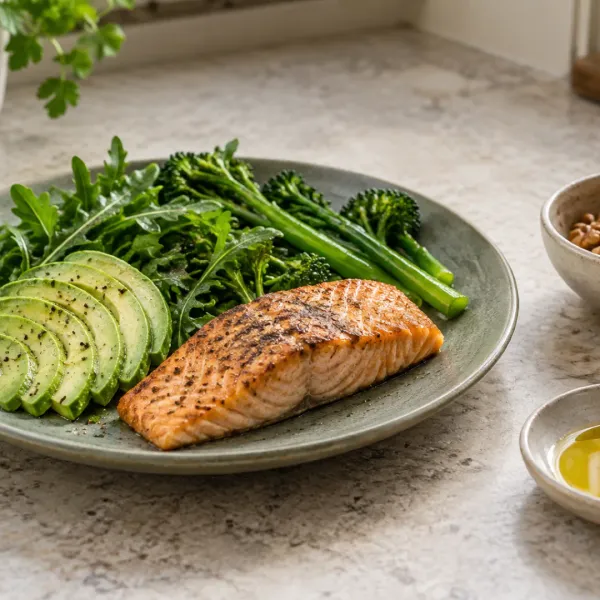
Fatty fish such as salmon, sardines, and trout are common sources, as are some nuts and seeds. These fats are part of the structure of retinal cells, and they are often mentioned in discussions about dry eye comfort. Evidence on supplements for dry eye has been mixed, and an eye care professional can explain what is known for a particular situation.
Vitamins C and E, and zinc
Citrus fruits, peppers, and berries provide vitamin C. Nuts, seeds, and plant oils provide vitamin E. Zinc is found in foods like beans, poultry, and whole grains. These nutrients are often grouped together as antioxidants or supporting minerals, and they show up in discussions of long-term eye health.
A useful way to think about it: no single nutrient works alone. Eye health nutrition basics are really about patterns, such as colorful plates, regular meals, and enough variety, rather than any one "super" food.
Related reading: Antioxidant Rich Foods for Healthy Aging: What to Know
How the Picture Changes From Person to Person
The same food advice does not land the same way for everyone. Age, existing conditions, medications, and eating patterns all shape what makes sense. Here are some of the common variables.
- Age: Older adults are often the focus of eye nutrition research because some eye conditions become more common with age. Younger adults may be more concerned with screen-related comfort.
- Existing eye diagnoses: If you have been told you have a particular eye condition, the nutrition conversation should happen with the clinician who knows your history.
- Diabetes and other health conditions: Some conditions affect the eyes directly, and managing them through the overall care plan matters more than any single food.
- Dietary patterns: People who avoid certain food groups, such as vegetarians or those with allergies, may get nutrients from different sources, and a dietitian can help sort that out.
- Smoking and sun exposure: Public health agencies note that habits such as smoking and unprotected sun exposure are also linked to eye health, so food is only part of the picture.
A word on supplements
Supplements are a frequent point of confusion. The NIH Office of Dietary Supplements generally notes that nutrients are best obtained from food when possible, and that supplements can interact with medications or be unnecessary for people who already eat a varied diet. Whether a supplement makes sense, which kind, and in what amount is something a pharmacist or doctor should help decide, based on your health history. Reactions to supplements vary from person to person.
Common Misunderstandings About Food and Vision
A few ideas circulate so widely that they deserve a closer look.
"Carrots will fix my eyesight"
Vitamin A is genuinely important for vision, but eating more of it than your body needs does not sharpen eyesight. Common vision changes, such as nearsightedness or the need for reading glasses, are related to the shape and aging of the eye, not to a shortage of carrots. Glasses, contacts, or other care from an eye professional address those changes.
"A supplement can replace a good diet"
Whole foods deliver many compounds together, along with fiber and other nutrients, in ways a single capsule does not copy. Supplements are generally described as an addition for specific needs, not a shortcut around everyday eating.
"If my eyes are tired, I must be deficient"
Eye fatigue has many possible causes, including long periods of close focus, dry air, poor lighting, or an outdated glasses prescription. Assuming it is a nutritional gap can delay finding the real cause. An eye exam is the more reliable starting point.
"Natural means harmless"
Even products made from plants or food extracts can interact with medications or affect people differently. The FDA regulates dietary supplements differently from prescription drugs, which is one more reason to check with a pharmacist or doctor before adding one.
"Nutrition can reverse eye disease"
Food is best seen as one supportive part of eye care, not a replacement for medical treatment. Eye conditions need professional evaluation, and claims that a food or product can undo them deserve skepticism.
Putting It Together
The most practical takeaway from eye health nutrition basics is also the least dramatic: eat a varied pattern with plenty of colorful vegetables and fruits, include a mix of protein sources such as fish, eggs, beans, or nuts, and keep up with regular eye exams. Pair that with habits public agencies often mention, such as wearing sunglasses outdoors, avoiding smoking, and taking screen breaks. None of this guarantees a particular result, and responses differ between people.
It also helps to keep expectations realistic. Changes in eating tend to matter gradually over time, not overnight, and they work alongside other factors such as genetics, age, and overall health.
Conclusion
Everyday food choices can be one supportive piece of looking after your eyes, though they are not a replacement for professional eye care.
- A varied, colorful eating pattern is the general foundation, with nutrients like vitamin A, lutein, zeaxanthin, and omega-3s commonly discussed.
- Needs differ by age, health conditions, and diet, and supplements are not automatically helpful or appropriate for everyone.
- Food does not replace eye exams, glasses, or treatment for eye conditions.
Consider seeing an eye care professional promptly if you notice sudden vision changes, eye pain, flashes of light, new floaters, a dark patch in your vision, or persistent redness or discomfort.
Whether a prescription medicine or a specific dose is right for you is a decision to make with a doctor or pharmacist.
Disclaimer: This article is for informational purposes only and is not a substitute for professional medical advice, diagnosis, or treatment. Please consult a licensed professional for personal health decisions.