Hair Thinning Causes and Nutrition: What Is Going On
You notice a wider part, a thinner ponytail, or more strands in the shower drain than you expected. Hair thinning causes and nutrition are closely linked topics because hair follicles are active, fast-working structures that respond to hormones, stress, illness, and the nutrients available to the body. This article follows the chain from what you see, to the first-level triggers, to the mechanisms underneath, and then to why the same trigger can look so different from one person to the next.
What Hair Thinning Looks Like on the Surface
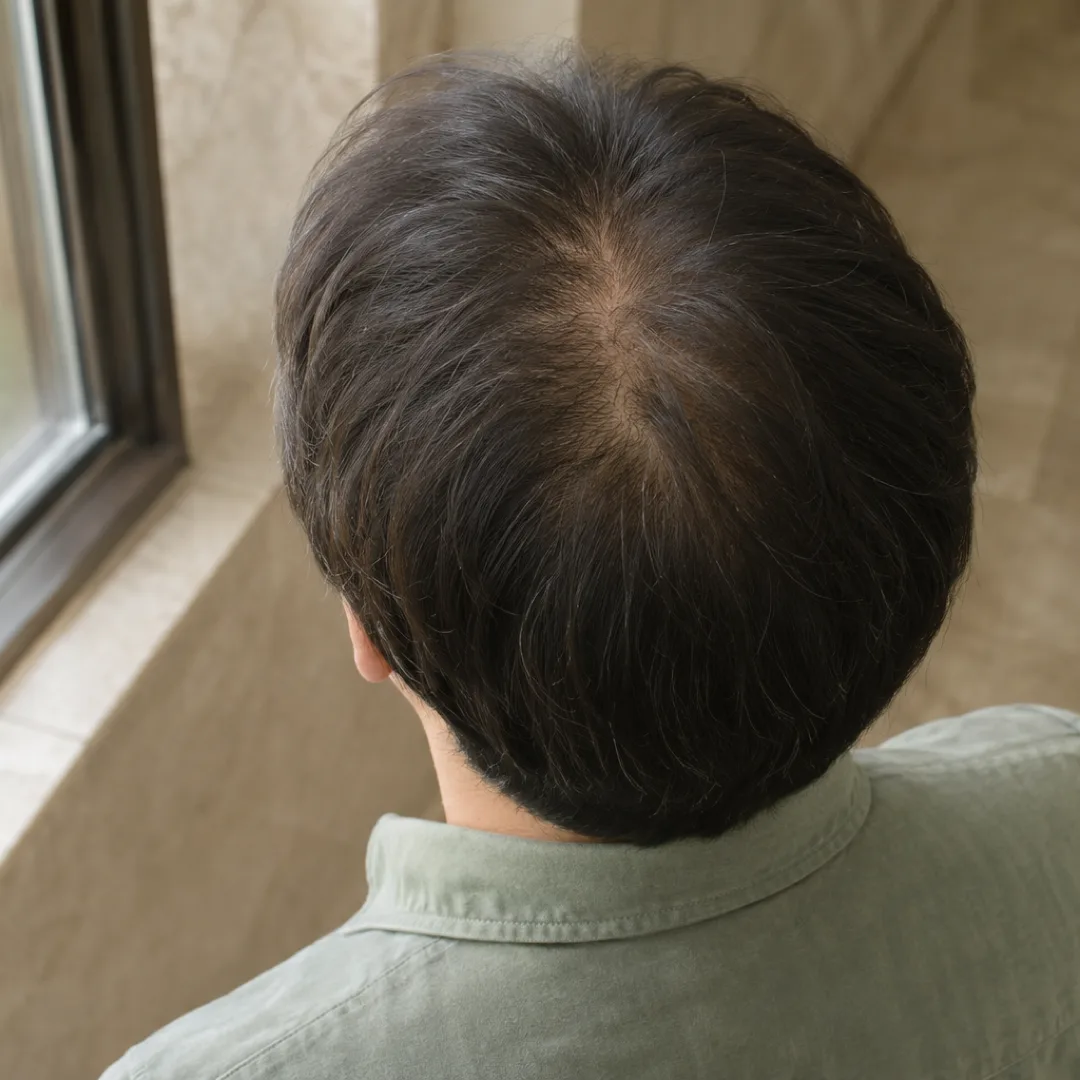
Thinning does not look the same for everyone. Some people see a gradually widening part. Others notice a smaller ponytail, more scalp visible under bright light, or a receding hairline at the temples. Some experience a sudden increase in shedding that seems to arrive out of nowhere.
Shedding versus thinning
These two words are often used interchangeably, but they describe different patterns. Shedding usually means more hairs than usual are falling out, often across the whole scalp. Thinning usually means the hair is becoming finer, shorter, or less dense over time. A person can have one, the other, or both at once.
Some loss is normal
Everyone loses hair daily as part of the natural growth cycle. According to the American Academy of Dermatology general guidance, losing some hair each day is expected. The concern begins when the pattern changes noticeably, when bald patches appear, or when hair comes out in clumps.
First-Level Causes Behind the Change
Hair thinning rarely has a single cause. Dermatology organizations such as the American Academy of Dermatology and MedlinePlus describe several broad categories that commonly contribute.
- Hormonal and genetic patterns: Inherited pattern hair loss is widely described as one of the most common reasons for gradual thinning in adults.
- Physical or emotional stress: Illness, surgery, major life events, and significant weight changes are often associated with a temporary increase in shedding.
- Nutrient gaps: Low intake of certain nutrients, or conditions that affect absorption, may be associated with weaker hair growth.
- Medical conditions: Thyroid problems, autoimmune conditions, and scalp disorders can all play a role.
- Medications and treatments: Some prescription drugs and medical therapies list hair loss as a possible effect.
- Hair care habits: Tight hairstyles, frequent heat styling, and harsh chemical treatments may stress the hair shaft or follicle over time.
The Mechanism Underneath: How Triggers Reach the Follicle
To see why these triggers matter, it helps to know how a hair grows. Each follicle cycles through a growing phase, a short transition phase, and a resting phase before the hair sheds and a new one begins. At any moment, most follicles on a healthy scalp are in the growing phase, while a smaller share are resting.
Thinning generally happens when that cycle is disrupted. The disruption can push more follicles into the resting phase early, shorten the growing phase, or gradually shrink the follicle so it produces finer hair.
A simple cause-and-effect chain
Here is how the chain commonly unfolds for stress-related shedding:
- A significant stressor, such as illness or rapid weight change, affects the body.
- More follicles than usual shift from the growing phase into the resting phase.
- After a delay, often a couple of months, those resting hairs shed together.
- The scalp looks thinner until follicles re-enter the growing phase and new hairs lengthen.
Because of that delay, many people struggle to connect the shedding to its trigger. The event may be long past by the time the hair starts falling.
Where nutrition fits in
Hair is built from protein and depends on a steady supply of energy, vitamins, and minerals. When the body has limited resources, it generally prioritizes vital organs over hair. That is one reason very restrictive diets, rapid weight loss, and inadequate protein or calorie intake are often discussed alongside shedding.
The NIH Office of Dietary Supplements describes roles for several nutrients in the body, including iron, zinc, vitamin D, and certain B vitamins. Some research has explored links between low levels of these nutrients and hair changes, but findings are mixed and do not show that more of a nutrient will help someone whose levels are already adequate.
Why more is not always better
Hair supplements are widely marketed, yet the evidence for them in people without a deficiency is limited. The NIH Office of Dietary Supplements notes that high intakes of some nutrients can cause problems of their own. Before using any supplement, it is sensible to talk with a pharmacist or doctor, especially if you take other medicines or have a health condition.
Why the Same Cause Looks Different From Person to Person
Two people can go through a similar trigger and have very different outcomes. Several factors help explain this variation.
Genetics set the baseline
Inherited sensitivity of follicles to hormones influences how a person responds to the same internal changes. Someone with a family pattern of thinning may notice changes sooner or more persistently than someone without one.
Age and hormonal shifts
Hormone levels change through puberty, pregnancy, the postpartum period, menopause, and aging. According to general guidance from MedlinePlus, these shifts can affect hair density and shedding. Some changes settle on their own, while others may need evaluation.
Starting nutrient status differs
A person who already has low stores of a nutrient may be more affected by a dip in intake than someone with ample reserves. Diet patterns, absorption, menstrual blood loss, certain digestive conditions, and medications can all change what a person starts with. That is why two people eating similar meals may not have the same needs.
Multiple causes often overlap
Real life is rarely tidy. Someone may have a genetic tendency, a recent illness, and a restrictive diet at the same time. Sorting out which factor matters most is difficult without professional input, and it is a common reason that general advice does not fit everyone.
When Professional Evaluation Makes Sense
Gentle, general explanations only go so far. The American Academy of Dermatology suggests seeing a dermatologist or other qualified clinician when hair loss is sudden, patchy, or accompanied by scalp pain, redness, scaling, or other symptoms. It is also reasonable to seek care if thinning is causing distress or if it follows a new medication.
A clinician can review your history, examine the scalp, and decide whether tests are appropriate. Blood tests, for example, are ordered by a professional based on individual circumstances, not as a routine step for everyone. Scarring types of hair loss in particular are generally described as needing prompt attention, since early evaluation can matter for the follicles involved.
Two Things to Avoid Once You Understand the Mechanism
Knowing that hair thinning has layered causes and that nutrition is only one piece suggests two habits worth steering clear of.
- Do not self-prescribe supplements on a hunch. Because more of a nutrient does not necessarily help when levels are already adequate, and because some nutrients can cause problems in excess, it is wiser to discuss any supplement with a pharmacist or doctor first.
- Do not wait indefinitely or rely on a single explanation. Assuming diet alone is responsible can delay recognition of thyroid issues, scalp conditions, or other medical causes. If thinning persists or worsens, a professional evaluation is a better next step than guessing.
Disclaimer: This article is for informational purposes only and is not a substitute for professional medical advice, diagnosis, or treatment. Please consult a licensed professional for personal health decisions.
Related reading: Scalp Health Basics for Stronger Hair