Healthy Portion Sizes Without Counting Calories
Healthy portion sizes without counting calories means judging how much to eat using visual cues, plate balance, and your body's hunger and fullness signals instead of tracking numbers. It is a practical approach that replaces a spreadsheet with habits you can use at a kitchen table, a restaurant, or a friend's dinner party. This article explains what the idea actually means, where it works well, how it differs from similar concepts, and why it matters, along with the limits you should know about.
What the Idea Actually Means
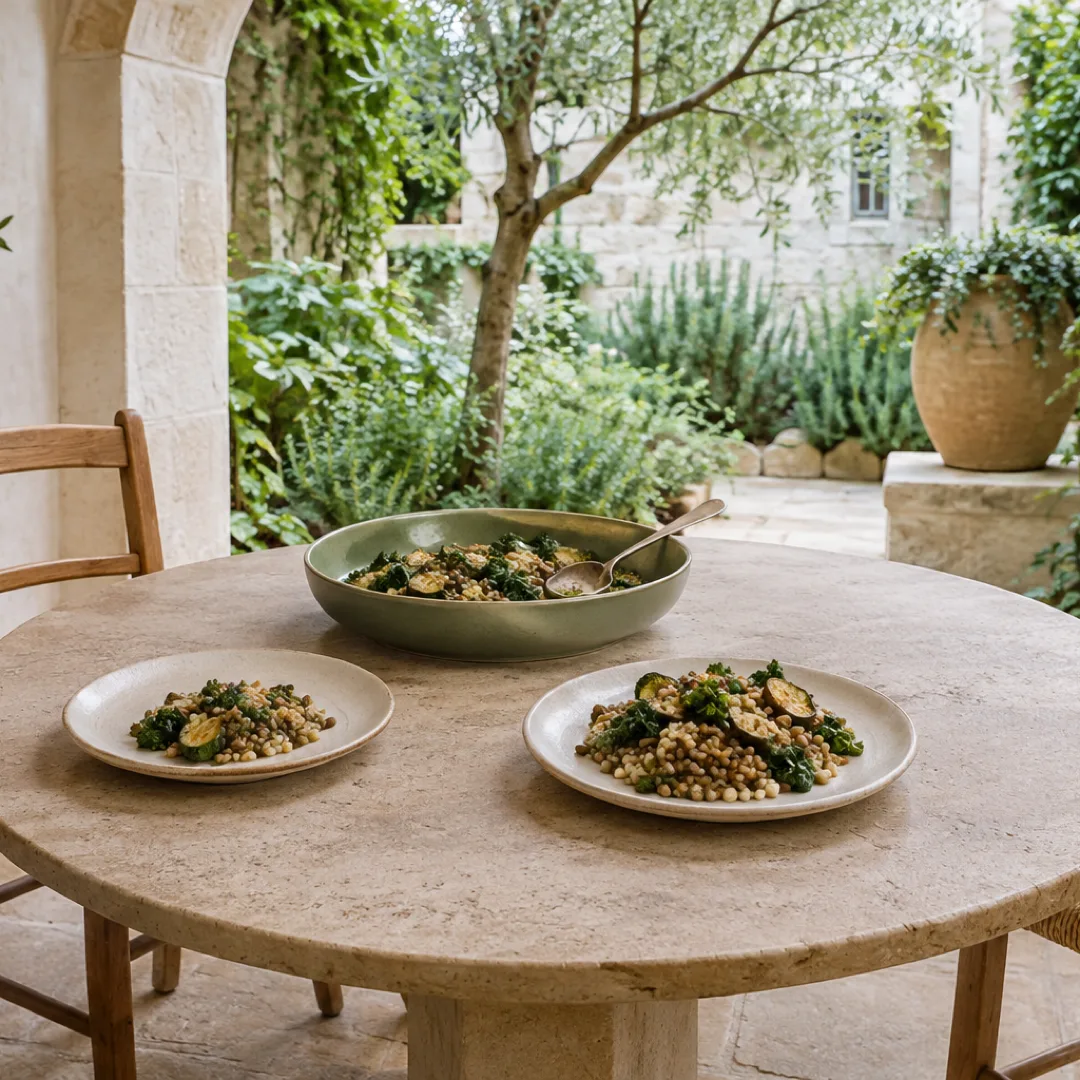
A portion is the amount of a food you choose to eat in one sitting. That is different from a serving, which is a standardized reference amount that appears on a nutrition label. The two are often confused, and a single portion on your plate can be smaller or much larger than one labeled serving.
Eating sensibly without calorie counting rests on three ideas that work together:
- Visual cues: using your own hand, a familiar plate, or everyday objects as rough measuring tools.
- Plate balance: deciding what share of a meal goes to vegetables, protein foods, and grains or starchy foods.
- Internal signals: noticing hunger and fullness (sometimes called interoception, which simply means sensing what is happening inside your body).
None of these require a food scale or an app. They do ask for a bit of attention, especially at first, and they are best understood as rough guides rather than precise measurements.
The hand-based method
Many dietitians and public health programs describe hand-based estimates because your hands are always with you and roughly scale with your body size. A closed fist is often used to picture a portion of grains or fruit. A palm is often used to picture a portion of protein foods. A cupped handful can stand in for a snack, and a thumb tip for fats like oil or nut butter. These are loose approximations, and individual needs vary a lot, so treat them as a starting point rather than a rule.
The plate-based method
According to the U.S. Department of Agriculture's MyPlate guidance, a balanced meal can be pictured as a plate divided into sections for fruits, vegetables, grains, and protein foods, with a side of dairy or a dairy alternative. The idea is that proportions on the plate, not exact amounts, shape the meal. Many people find this easier to remember than a list of numbers because it is a single image.
Situations Where This Approach Fits
Portion awareness without tracking tends to suit people who want a sustainable, low-effort way to eat more thoughtfully. It can be especially handy in everyday settings where measuring is awkward.
- Eating out: restaurant plates are often larger than what many people would serve at home, so using hand cues or planning to share or take part of the meal home can help.
- Home cooking: a smaller plate or bowl can make a normal amount of food look satisfying.
- Social events: a quick look at the buffet before filling a plate makes it easier to leave room for foods you really want.
- Busy weeks: when logging every meal feels like too much, a simple visual rule is easier to keep up.
Related reading: High Sodium Foods to Watch For in Everyday Meals
Tuning in to hunger and fullness
Hunger and fullness cues are another piece of the puzzle. Many people find it useful to pause partway through a meal and ask how hungry they still feel. Eating more slowly gives the body time to register fullness, and the National Institute of Diabetes and Digestive and Kidney Diseases (NIDDK) has noted in its general guidance that paying attention while eating, and limiting distractions such as screens, may help people notice how much they are eating.
That said, these signals are not equally easy for everyone to read. Stress, poor sleep, certain medications, and some medical conditions can blur or amplify appetite. If your hunger cues feel unreliable, that is useful information to bring to a professional rather than something to push through on your own.
Concepts People Often Mix Up With It
Several nearby ideas get lumped together, and separating them makes it easier to decide what fits your situation.
Portion versus serving
As mentioned, a serving is a label-based reference amount and a portion is what you actually eat. Think of it like a coffee cup: a "cup" in a recipe is a defined measure, but the mug you grab from the cupboard may hold far more. The label tells you about the first; your plate shows you the second.
Intuitive eating versus portion awareness
Intuitive eating is a broader framework centered on trusting internal cues and rejecting rigid food rules. Portion awareness is narrower. It is a set of practical tools for judging amounts, and it can be used alongside intuitive eating or on its own. Some people use visual cues as a gentle guide, while others find any structure around amounts uncomfortable, especially if they have a history of disordered eating.
Portion awareness versus a calorie target
Calorie counting tries to match intake to a numerical goal. Portion awareness aims for a similar outcome through habits instead of math. The trade-off is precision: visual methods are less exact, which may matter if someone has a specific medical or athletic goal. Neither approach is automatically better. They suit different people, and results vary.
Portion control versus restriction
Eating a reasonable amount of a food is not the same as banning it. Many nutrition educators describe a sustainable pattern as one that includes foods you enjoy in amounts that feel satisfying. Strict rules can backfire for some people by making certain foods feel forbidden, though this experience differs from person to person.
Why Portion Awareness Matters in Daily Life
The Centers for Disease Control and Prevention (CDC) has described in its general nutrition guidance that larger package and plate sizes can influence how much people eat, often without them noticing. This tends to be called the portion size effect: when more food is put in front of us, many of us eat more of it, even when we are not especially hungry. Knowing this pattern exists can help you spot it in your own routine.
Portion habits are also one piece of overall eating patterns. According to the Dietary Guidelines for Americans, the quality and variety of foods matter alongside amounts, so a thoughtful plate includes a mix of vegetables, fruits, whole grains, and protein foods. Focusing on amounts alone, without considering what is on the plate, gives an incomplete picture.
Limits and who should be careful
This approach is not a fit for everyone, and it is not a medical plan. Consider talking with a registered dietitian or other qualified professional if any of these apply:
- You have a medical condition such as diabetes, kidney disease, or a digestive disorder, where amounts and timing of food can matter for your health.
- You are pregnant, breastfeeding, or managing a significant change in weight.
- You have a history of an eating disorder, or find that thinking about portions leads to anxiety, guilt, or rigid rules.
- You are a child, teen, or older adult, whose nutritional needs differ from the general adult pattern.
- You take medications that affect appetite or blood sugar.
Warning signs worth taking seriously include persistent preoccupation with food, skipping meals regularly, feeling unable to stop eating, unexplained changes in weight, or feeling dizzy, weak, or unusually tired. If any of these sound familiar, seek care from a licensed clinician rather than relying on general tips.
How Understanding This Changes Your Decisions
Once you see portion awareness as a flexible set of habits instead of a strict system, two decisions often become simpler.
- You can choose tools that match your life. If tracking numbers makes you tense or is hard to keep up, visual cues and plate balance are reasonable options to try, while remembering they are approximations. If you have a health condition that calls for precise amounts, you can recognize that and ask a professional for a plan built around your needs.
- You can separate "how much" from "what kind." Instead of judging a meal only by size, you can look at both the amount and the mix of foods, and treat hunger and fullness cues as information rather than as a test you pass or fail.
In short, healthy portion sizes without counting calories are about building a rough, repeatable sense of enough, with room for personal variation and professional support when you need it.
Frequently asked questions
Is the hand method accurate enough to rely on?
If your goal is general everyday eating, hand cues can be a reasonable rough guide, since hands scale loosely with body size. They are approximations, though, so someone with a medical condition or a specific nutrition target would do better asking a registered dietitian for tailored guidance.
What if I never feel full or always feel hungry?
If hunger and fullness cues feel unreliable, factors such as stress, sleep, or certain medications may be involved, as noted above. In that case it makes sense to talk with a licensed clinician rather than relying on visual cues alone.
Can I use portion awareness if I have had disordered eating?
If thinking about amounts brings anxiety, guilt, or rigid rules, structured portion methods may not be a comfortable fit. A qualified professional can help decide what approach is appropriate, so it is worth raising before you begin.
Does a smaller plate really change how much I eat?
If you tend to fill whatever plate is in front of you, a smaller one may make a typical amount look satisfying, which fits the portion size effect described by the CDC. Responses differ between people, so it is one tool among several rather than a fix.
Disclaimer: This article is for informational purposes only and is not a substitute for professional medical advice, diagnosis, or treatment. Please consult a licensed professional for personal health decisions.