How Hobbies Support Emotional Health: What to Know
Maybe you finally have a free evening, and instead of relaxing, you scroll your phone until bedtime and wonder why you still feel flat. Or a friend swears that knitting, gardening, or pickup basketball helped them feel steadier, and you are not sure whether that is real or just a nice story. In general, how hobbies support emotional health comes down to a few things: they give the mind a break from worry, offer a sense of progress, and often bring people together, though the effect varies from person to person and is not a replacement for care.
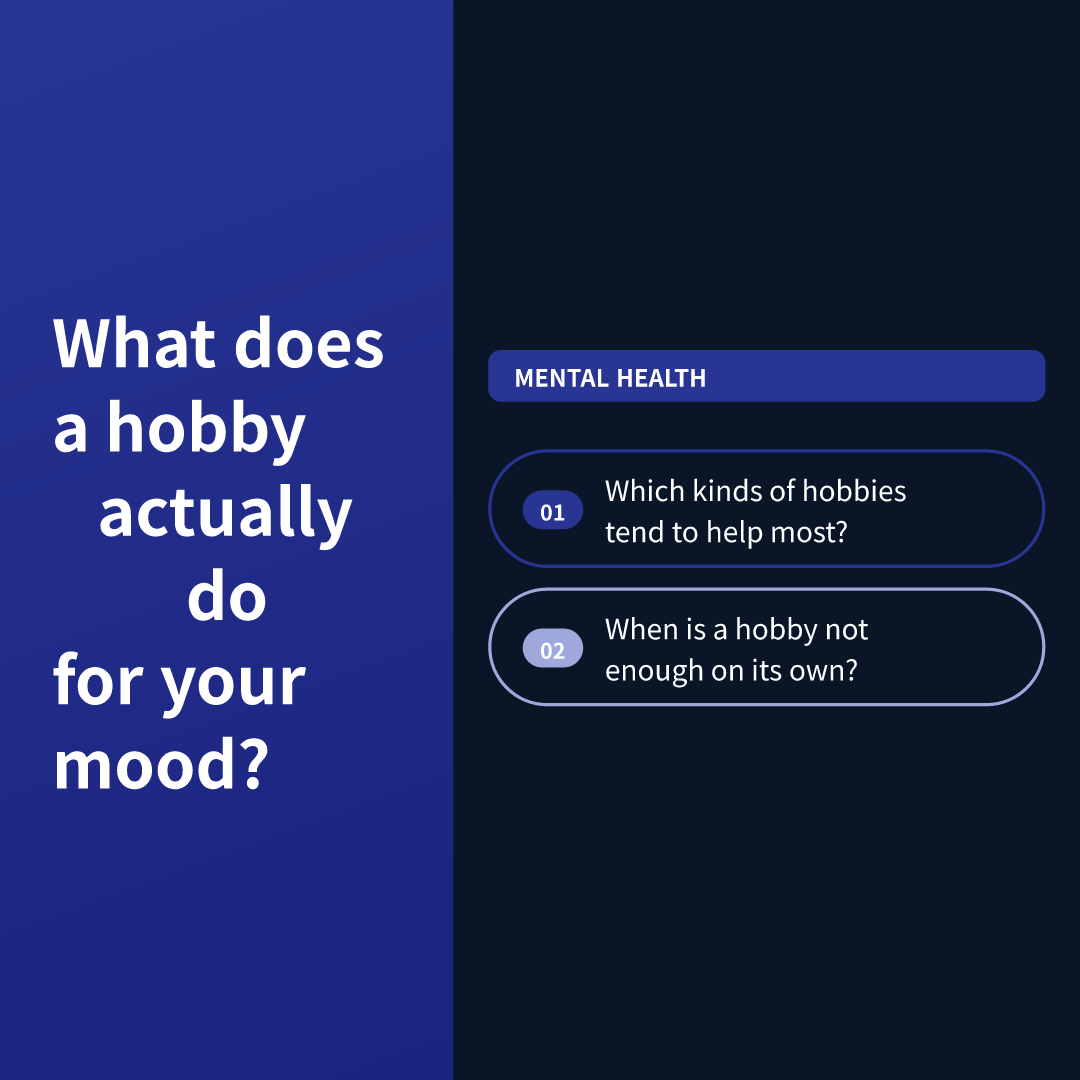
What does a hobby actually do for your mood?
A hobby usually gives your attention somewhere else to go. When you are absorbed in drawing, baking, or tuning a bike, there is less room for the loop of worries that tends to run in the background. Many people describe this as feeling "switched off" from work or family pressure, even for a short stretch.
Public health organizations broadly describe regular enjoyable activities as one part of looking after mental well-being. According to the National Institute of Mental Health's general guidance on caring for your mental health, healthy routines, physical activity, and time spent on things you enjoy can be part of managing stress. That is a general statement, not a promise that any one pastime will change how you feel.
Common ways hobbies may help
- A break from rumination: Focused, hands-on activities can interrupt repetitive negative thinking for a while.
- A sense of mastery: Learning a chord, finishing a puzzle, or growing a tomato plant offers small, visible progress.
- Structure and routine: A weekly class or a regular practice time can give days a shape, which some people find steadying.
- Self-expression: Writing, painting, or music can give words or form to feelings that are hard to say out loud.
- Connection: Clubs, teams, and group classes can reduce isolation for people who otherwise go days without much conversation.
Not every benefit shows up for every person. Someone who enjoys quiet solo time may get more from reading or woodworking, while someone who feels lonely may get more from a community choir. It often takes some trial and error to find a fit.
Where the evidence is more limited
Much of what is written about leisure and well-being relies on people reporting how they feel, and that can make it hard to separate cause from effect. People who already feel well may simply be more likely to take up hobbies. Researchers and health agencies tend to describe the link as encouraging rather than proven for any specific condition.
So it is fair to treat hobbies as a supportive habit, not a treatment. They may sit alongside other things that matter, such as sleep, movement, relationships, and professional care when it is needed.
Which kinds of hobbies tend to help most?
There is no single best hobby, and the right one depends on what you enjoy and what your life allows. Broadly, activities that feel absorbing, are at least a little challenging, and are done without heavy pressure to perform tend to be described most favorably. The key word is enjoyment: a hobby you dread is just another chore.
MedlinePlus, the U.S. National Library of Medicine's health information service, describes stress management as including things like physical activity, relaxation, and time for activities you like. That broad framing is useful, because it means many different pastimes can count.
Creative hobbies
Drawing, journaling, music, crafts, and photography let people put feelings or observations into a form they can see or hear. For some, this makes emotions feel more manageable. You do not need talent for this to be worthwhile, and the goal is the process rather than a polished result.
Movement-based hobbies
Walking groups, dancing, swimming, yoga, and recreational sports combine enjoyment with physical activity. The CDC's general guidance on mental health and physical activity notes that being active is often linked with better mood and stress management. If you have a health condition or an injury, it makes sense to ask a clinician what kinds of activity suit you before starting something new.
Nature and hands-on hobbies
Gardening, birdwatching, hiking, and cooking tend to engage the senses and slow the pace. Many people find time outdoors calming, though weather, access, and mobility can limit this. Indoor options such as houseplants or baking can offer some of the same quiet, practical satisfaction.
Social and group hobbies
Book clubs, volunteering, community theater, and board game nights add a layer of belonging. For people who feel isolated, regular contact with others around a shared interest can feel less demanding than open-ended socializing. If group settings make you anxious, starting with a small or online group may feel more approachable.
When is a hobby not enough on its own?
A hobby is not enough when low mood, anxiety, or other symptoms are persistent or get in the way of daily life. In that situation, enjoyable activities can still be a helpful addition, but they are not a stand-in for an assessment by a qualified professional. Emotional difficulties can have many causes, and a hobby cannot sort out which one is at play.
According to the National Institute of Mental Health, it is a good idea to talk with a health care provider if feelings of sadness, worry, or hopelessness last, or if they make it hard to function at work, at school, or in relationships. Warning signs worth taking seriously include losing interest in things you once enjoyed, big changes in sleep or appetite, withdrawing from people, or thoughts of harming yourself.
If you are in the United States and are thinking about suicide or are in emotional crisis, the 988 Suicide and Crisis Lifeline offers free, confidential support by call or text. If you are elsewhere, local emergency services or a national crisis line can help. In immediate danger, contact emergency services right away.
Signs a hobby may be becoming a problem
Hobbies are not always harmless in every form. Some people use an activity to avoid dealing with something painful, or it starts to crowd out sleep, work, relationships, or finances. Others feel intense pressure to be good at it, which can turn relaxation into stress.
If you notice that an activity feels compulsive, causes guilt or conflict, or leaves you feeling worse more often than better, it may help to talk it through with a counselor or other professional. Reactions vary, and noticing the pattern is a useful first step.
Practical ways to fit a hobby into a busy life
Time and money are real barriers, and it is normal for a new interest to feel awkward at first. Many people find it easier to begin small, choose something low-cost, and treat it as an experiment rather than a commitment. Libraries, community centers, and local parks departments often offer inexpensive or free classes and groups.
- Pick something you were curious about, not something you think you should like.
- Give it a fair trial before deciding it is not for you, since early frustration is common.
- Let go of the idea that every hobby must be productive or turn into a side income.
- Notice how you feel afterward over several sessions, rather than judging a single one.
Frequently asked questions
Can screen-based hobbies like gaming or streaming count?
They can for some people, depending on how they are used. Games that involve challenge, creativity, or playing with friends may feel rewarding, while hours of passive scrolling tends to leave many people feeling drained. If screen time is crowding out sleep, movement, or relationships, it may be worth stepping back or talking with a professional.
What if I feel too tired or low to start anything?
Low energy is common when mood is down, and it can make even enjoyable things feel out of reach. Many people start with something very small and low-pressure, and some find it helps to ask a friend or family member to join them. If this lack of energy or interest lasts, it is a reason to check in with a health care provider rather than push through alone.
Is it a problem if I keep switching hobbies?
Not necessarily. Trying different activities is a normal way to find what suits you, and curiosity itself can be enjoyable. It may be worth a closer look only if the switching is tied to restlessness, trouble finishing anything, or other changes that concern you, in which case a professional can help make sense of it.
Hobbies are one of several everyday habits that may support emotional health, and they work best as part of a wider picture that includes rest, relationships, and professional help when it is needed.
Disclaimer: This article is for informational purposes only and is not a substitute for professional medical advice, diagnosis, or treatment. Please consult a licensed professional for personal health decisions.