Mindfulness for Beginners: Simple Starting Points
Mindfulness for beginners usually starts with something small: paying attention to what is happening right now, on purpose, without trying to judge it. You do not need special equipment, a quiet mountain, or a calm personality. If you have no idea where to begin, that is completely normal, and this article walks through the path in order, from the moment you decide to try it to the first few weeks afterward.
I am a writer, not a clinician, so what follows is general information gathered in plain language. It is meant to help you feel less lost, not to tell you what your own mind or body needs.
Before You Start: What to Know First
It helps to clear up the vocabulary before anything else. A few terms come up constantly, and they sound more mysterious than they are.
What mindfulness actually means
Mindfulness is the habit of noticing your thoughts, feelings, body sensations, and surroundings as they happen. Think of it like watching weather through a window. You see the clouds move, but you do not have to go out and argue with them. Many people describe it as a way of paying attention rather than a way of emptying the mind.
Mindfulness, meditation, and relaxation are not the same thing
These words get mixed together. Meditation is a formal practice, often sitting quietly for a set time. Mindfulness is a quality of attention that you can bring to meditation or to everyday moments like washing dishes. Relaxation may happen along the way, but it is not the goal. Some sessions feel calm and others feel restless, and both can count as practice.
What it can and cannot do
Some research and public health organizations describe mindfulness-based approaches as potentially helpful for stress and everyday well-being, and results differ widely between individuals. The National Center for Complementary and Integrative Health offers a general overview of meditation and mindfulness at nccih.nih.gov. Mindfulness is not a replacement for professional care when someone is dealing with depression, anxiety disorders, trauma, or other health conditions.
Mindfulness is a skill you build gradually, not a test you pass or fail.
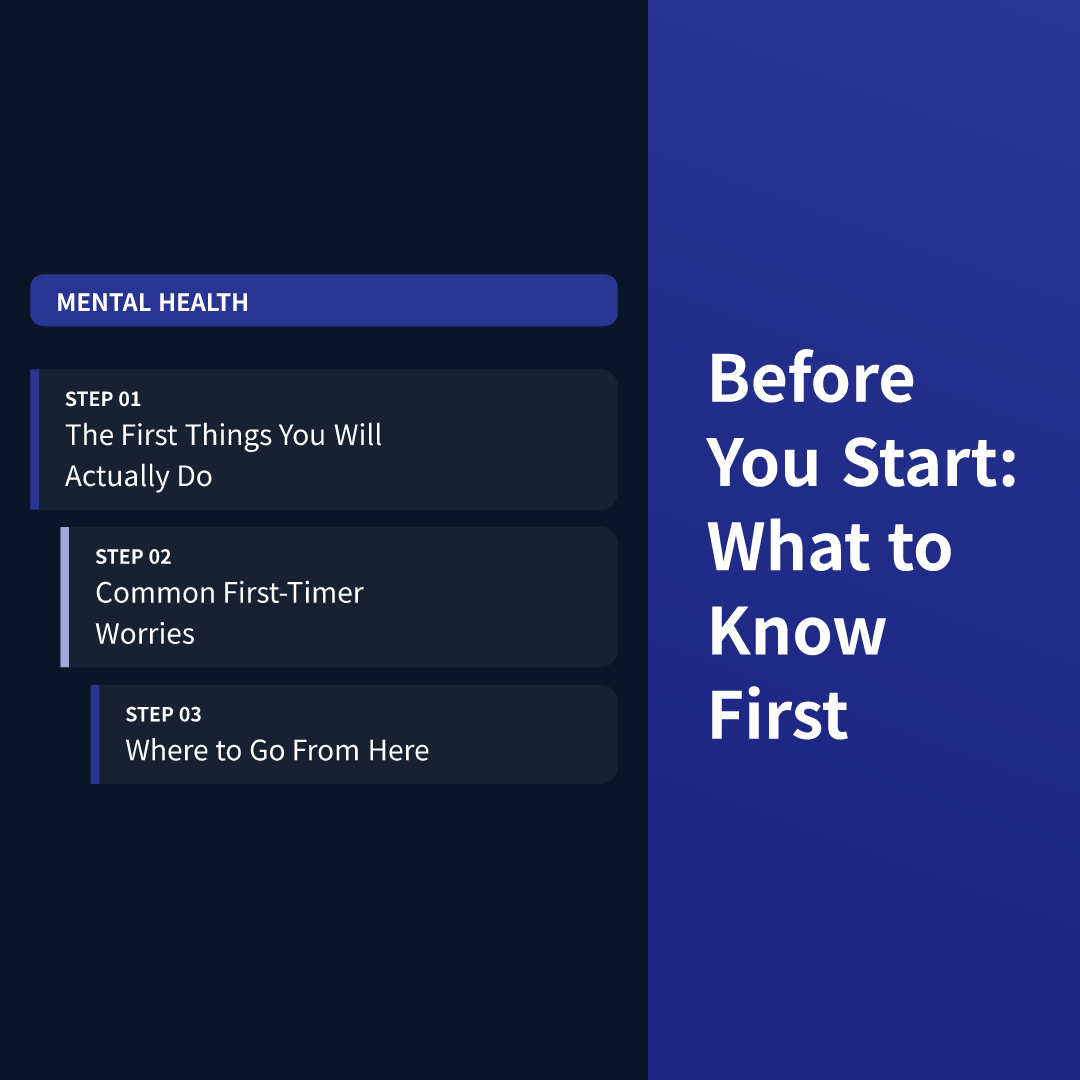
The First Things You Will Actually Do
Most beginner practices fit into a few simple categories. You can read about each one and decide which feels least intimidating.
Paying attention to your breathing
The breath is the most common starting point because it is always with you. The idea is simply to notice the feeling of breathing, such as air moving at the nostrils or the rise and fall of the chest, without trying to change it. When your attention wanders, which it will, the usual guidance is to notice that it wandered and gently come back. That moment of noticing is considered the core of the practice, not a mistake.
Body scan practices
A body scan moves attention slowly through different parts of the body, noticing sensations like warmth, tension, or tingling. Many guided recordings walk you through this step by step. Some people find it grounding, while others find it uncomfortable at first, especially if they have pain or a complicated relationship with their body. Skipping or adjusting a practice that does not feel right is a reasonable choice.
Everyday moments as practice
Formal sitting is not the only route. You can bring attention to a cup of tea, the sound of rain, the feel of your feet on the floor while you walk, or the first few bites of a meal. These informal moments are often easier to fit into a busy life, and many beginners find they are a gentler way in.
Guided audio and apps
Guided recordings let someone else’s voice do the steering, which can feel like training wheels. Libraries, community centers, and many free resources offer them. Different voices and styles suit different people, so it is fine to try a few before settling on one. Apps vary in quality and approach, so reading their descriptions with a bit of healthy skepticism is wise.
Common First-Timer Worries
Nearly everyone starts with doubts. Here are the ones that come up most, along with reasons they may be less worrying than they feel.
“My mind will not stop thinking”
This is probably the most frequent concern. Minds think; that is their job. Mindfulness teachers commonly explain that the aim is not to stop thoughts but to notice them. Realizing you have been lost in thought is generally treated as a normal part of the process, so a busy mind does not mean you are doing it wrong.
“I do not have time”
Many beginners worry they need long, uninterrupted blocks. In practice, lots of introductory programs and guided exercises are short, and informal practice can happen inside moments you already have, like waiting in line or walking to a bus stop. What works varies, so it is fine to start with whatever small amount feels realistic for you.
“I feel sleepy, bored, or fidgety”
All three are common. Sleepiness may simply mean you are tired. Boredom and restlessness are often treated as things to observe rather than problems to fix. Trying a different time of day, a different posture, or a walking version of the practice are options people often discuss, and a guide or teacher can help you sort out what suits you.
“Difficult feelings showed up”
Sometimes slowing down brings up sadness, anxiety, or memories you were not expecting. This can happen, and it is one reason mindfulness is not right for every person at every time. If strong or distressing feelings appear, or if you have a history of trauma or a mental health condition, it makes sense to talk with a qualified mental health professional before continuing or to look for a trauma-informed teacher. If you ever feel unsafe or in crisis, contact local emergency services or a crisis line in your area right away.
“I am not doing it right”
There is no single correct feeling to aim for. Some days feel spacious and some feel scattered. Many teachers describe the attitude of curiosity and kindness toward yourself as more important than any particular result. It is also normal to wonder whether it is working, and the honest answer is that benefits, if they come, tend to be subtle and uneven.
“Is this religious?”
Mindfulness has roots in contemplative traditions, including Buddhism, but many modern programs are presented in a secular way, without religious belief. If this matters to you, it is reasonable to check how a class, teacher, or app describes itself before joining.
Where to Go From Here
After the first few tries, people often wonder what comes next. There are a few natural directions, and none are required.
- Stay with short, simple practice. Many people keep a small, informal habit for a long time and find that enough.
- Try a structured class. Some community programs and courses teach mindfulness over several weeks, with a teacher who can answer questions.
- Explore related practices. Gentle movement, journaling, or spending quiet time outdoors appeal to some people who find sitting difficult.
- Talk with a professional. If stress, low mood, or worry is affecting daily life, a doctor or licensed therapist can discuss options that fit your situation, which may or may not include mindfulness.
Progress rarely looks dramatic. It may show up as noticing a tense jaw earlier in the day or pausing a moment before reacting, and some people notice very little at first. That is within the normal range of experience.
If you want one small action for today, pick a single ordinary moment, such as the first sip of your next drink, and give it your full attention for just that moment. When your mind drifts, notice it and come back. That is mindfulness for beginners in its simplest form, and you can build from there at whatever pace feels right.
Disclaimer: This article is for informational purposes only and is not a substitute for professional medical advice, diagnosis, or treatment. Please consult a licensed professional for personal health decisions.