Stress Eating Triggers and How to Handle Them
Reaching for chips, cookies, or a second helping of comfort food when work piles up or emotions run high is one of the most common patterns people describe when they talk about their relationship with food. It isn’t about willpower failing you — it’s usually your nervous system doing exactly what it’s wired to do under pressure. Understanding stress eating triggers and how to handle them works best when you approach it in order, starting with what’s happening in the moment and building toward habits that hold up over time.
Jumping straight to “just eat healthier” rarely works because stress eating isn’t really a food problem at its root — it’s a stress response that shows up as a food behavior. Solving it in the right sequence, from immediate steps to longer-term adjustments, tends to make a bigger difference than trying to overhaul everything at once.
Pinpointing What’s Really Behind the Urge to Eat
Before changing anything, it helps to get clear on what’s actually driving the behavior. Stress eating tends to fall into a few overlapping categories, and recognizing which one fits your situation makes the later steps more effective.
- Emotional relief eating — food is used to soothe anxiety, boredom, loneliness, or sadness rather than to satisfy physical hunger.
- Habit-based eating — certain times or places (late at night, in front of a screen, during a commute) automatically cue eating regardless of hunger.
- Physiological stress response — ongoing stress can affect appetite-regulating hormones and sleep, which in turn can increase cravings for high-sugar or high-fat foods for some people.
According to general guidance from health organizations such as the American Psychological Association, chronic stress can influence eating behavior and appetite, though the exact experience varies quite a bit from person to person. Some people lose their appetite under stress, while others crave more food, and both responses are considered common variations rather than something inherently wrong with you.
A simple way to start untangling your own pattern is to ask, before eating: Am I physically hungry, or am I trying to change how I feel? There’s no need to judge the answer — just noticing it is the groundwork for everything that follows.
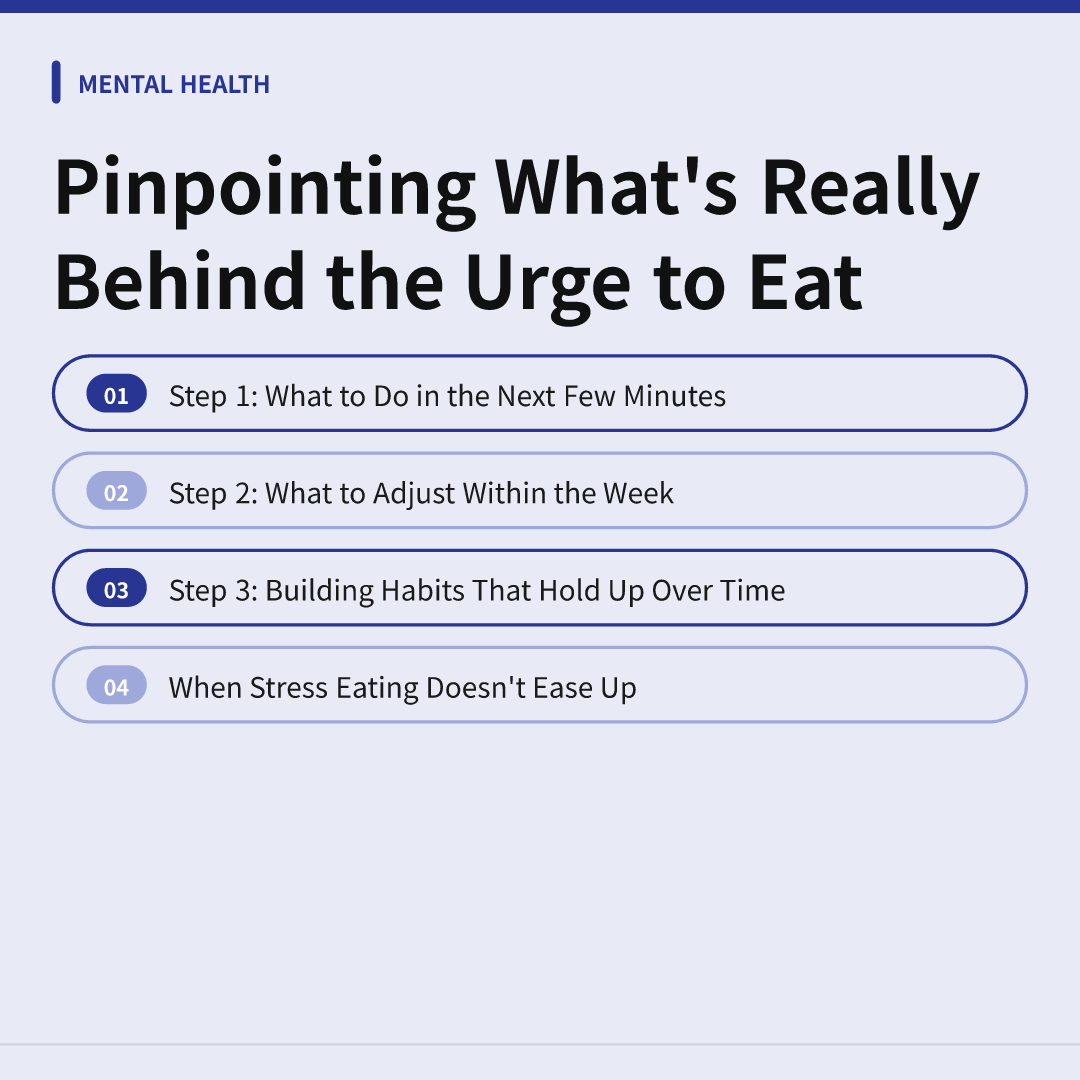
Step 1: What to Do in the Next Few Minutes
When an urge to eat hits and you suspect it’s stress-driven rather than hunger-driven, the goal isn’t to force yourself to skip eating altogether. It’s to create a small pause so you’re choosing rather than reacting on autopilot.
- Name the feeling. Silently or on paper, label what you’re feeling right now — stressed, anxious, tired, overwhelmed. Putting a word to the emotion can reduce its intensity slightly and interrupt the automatic food response.
- Wait five to ten minutes. Set a timer if that helps. Cravings tied to emotion often ease within a short window, while true physical hunger tends to stay steady or grow.
- Do one small physical reset. Step outside, stretch, splash cold water on your face, or take a few slow breaths. This shifts your body out of the reactive state that often fuels the urge to eat quickly.
Why this works: stress activates the body’s fight-or-flight response, and quick physical resets can help signal to your nervous system that the immediate “threat” has passed. This doesn’t erase the craving instantly, but it often takes the edge off enough to make a more intentional choice.
The goal at this stage isn’t perfect control — it’s simply creating a gap between the trigger and the response, even a small one.
Step 2: What to Adjust Within the Week
Once you’ve practiced pausing in the moment, the next layer is looking at the patterns that make stress eating more likely to happen in the first place. This is where small, practical changes over a few days start to add up.
Track patterns without obsessing over numbers
Keep a simple, low-pressure log for about a week — just a note of when you ate, how you felt beforehand, and whether you were physically hungry. The point isn’t calorie counting; it’s spotting recurring triggers like a specific meeting, a certain time of night, or a particular person or situation.
Stock your space intentionally
What’s easiest to grab in a stressed, low-willpower moment tends to be what gets eaten. Keeping a mix of easy, satisfying options on hand — rather than only ultra-processed snacks — can shift what happens automatically without requiring extra decision-making in the moment.
Protect basic sleep and meal timing
Irregular sleep and skipped meals can make cravings feel stronger and harder to resist later in the day. Aiming for a more regular meal rhythm this week, even if it’s imperfect, gives your body less reason to swing toward intense hunger or low blood sugar dips that often trigger overeating.
Why this matters: stress eating triggers and how to handle them isn’t just about the moment of eating — it’s also shaped by the hours and days leading up to it. Adjusting the surrounding conditions makes the in-the-moment pause from Step 1 noticeably easier to follow through on.
Related reading: How Sleep Affects Muscle Recovery Over Time
Step 3: Building Habits That Hold Up Over Time
After the immediate and weekly adjustments, the longer-term work is about building a steadier relationship with stress itself, since food is often standing in for a coping tool that hasn’t fully developed yet.
- Build a short list of non-food coping options. This might include a walk, a call to a friend, journaling, music, or a hobby you can turn to when stress builds. Having two or three go-to options ready in advance makes them easier to reach for than improvising in a stressful moment.
- Practice mindful eating regularly, not just during cravings. Slowing down during regular meals — noticing textures, flavors, and fullness cues — can make it easier to recognize the difference between physical hunger and emotional hunger when it counts.
- Address the stress source, not only the eating. If a specific job situation, relationship, or ongoing worry is behind most of your stress eating episodes, working on that root issue tends to reduce the frequency of triggers more than food-focused strategies alone.
- Be consistent rather than strict. Rigid food rules can sometimes backfire and increase cravings or guilt-driven eating. Aiming for a generally steady pattern, with room for flexibility, tends to be more sustainable for most people.
Why this stage takes longer: coping skills and stress-management habits build gradually, similar to any other skill. Expecting quick, complete change can set up unrealistic pressure, while steady, small practice over weeks tends to create more lasting shifts in behavior.
When Stress Eating Doesn’t Ease Up
For many people, the steps above gradually reduce how often stress eating happens and how intense the urges feel. But it’s worth being honest with yourself if the pattern isn’t shifting after consistent effort, or if it feels bigger than day-to-day stress management.
Consider reaching out to a qualified professional — such as a doctor, registered dietitian, or licensed mental health provider — if any of the following apply:
- Eating feels out of your control on a regular basis, even when you’re not physically hungry.
- You notice patterns of eating large amounts of food quickly, followed by strong guilt or shame.
- Stress eating is affecting your physical health, sleep, mood, or daily functioning.
- You’ve tried consistent changes over several weeks with little improvement.
- You suspect symptoms that could be related to binge eating disorder or another eating pattern that needs professional evaluation.
A professional can help sort out whether what you’re experiencing is a manageable stress response or something that needs more structured support, such as therapy focused on coping skills or, in some cases, a referral to a specialist. There’s no single “right” point to seek help — if the pattern is affecting your quality of life or your sense of control around food, that’s reason enough to ask for guidance.
Working through stress eating triggers and how to handle them is rarely a one-time fix. It tends to look more like a series of small adjustments — pausing in the moment, reshaping the surrounding week, and building steadier coping habits over time — with professional support available whenever the pattern feels bigger than you can manage on your own.
Disclaimer: This article is for informational purposes only and is not a substitute for professional medical advice, diagnosis, or treatment. Please consult a licensed professional for personal health decisions.