Warning Signs It Is Time to Talk to a Professional
Most people misread the early warning signs it is time to talk to a professional, because they look so much like ordinary life. A rough month, a bad stretch of sleep, a tired season: these feel normal, so the signals get filed under "just stress" and set aside. This article helps you separate the look-alikes, so you can tell a passing low point from a pattern that deserves a conversation with a licensed mental health provider.
Nothing here is a diagnosis, and no checklist can tell you what is happening inside your own head. What follows is a general framework drawn from how public health agencies describe mental health concerns, written by an editor rather than a clinician.
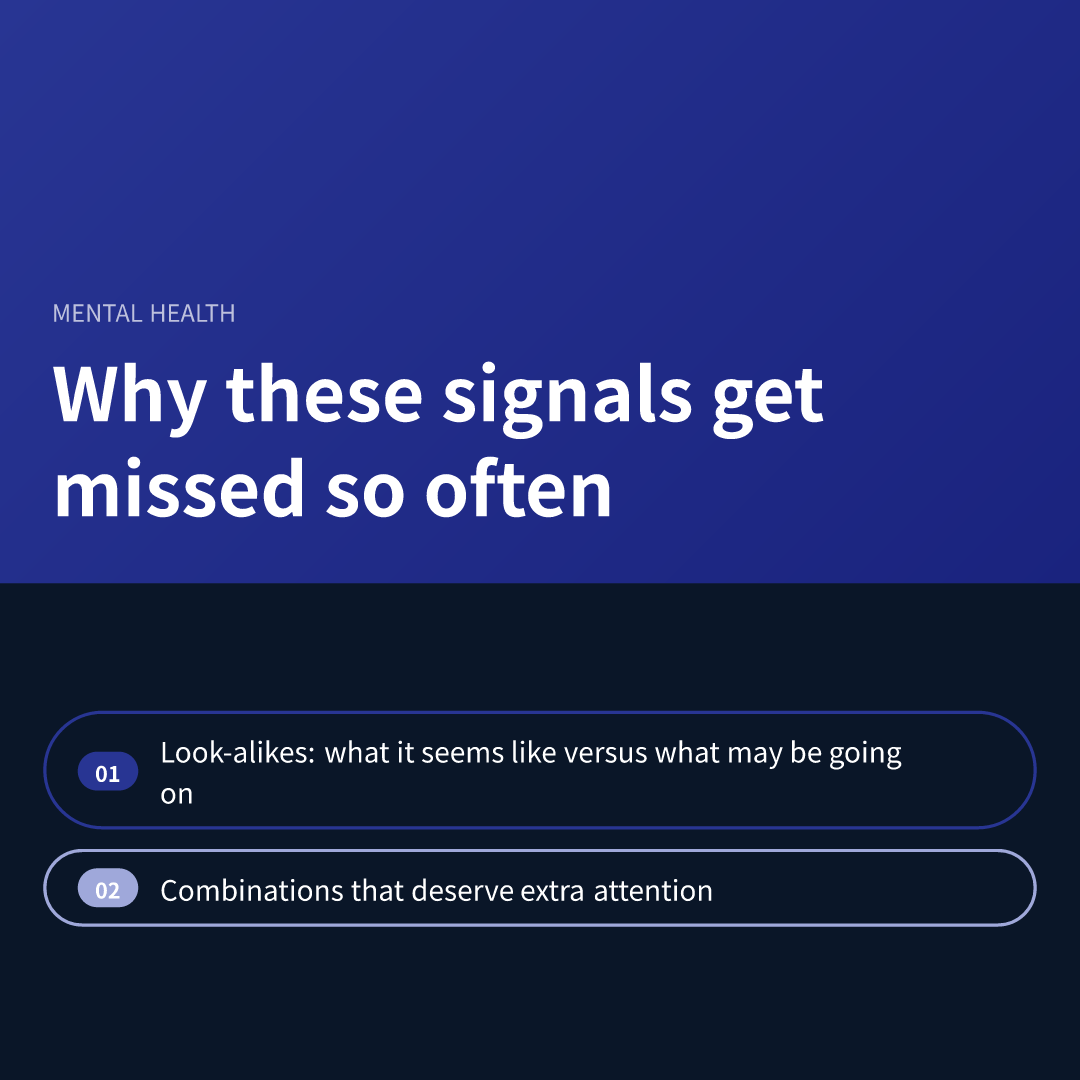
Why these signals get missed so often
Mental health changes rarely arrive with a clear label. They tend to creep in, which means each day looks only slightly different from the one before. By the time the shift is obvious to everyone else, you may have adapted to it so thoroughly that it feels like your new baseline.
Everyone is busy, so struggling hides in plain sight
Modern life gives us endless explanations. You are tired because work is demanding. You are irritable because the news is relentless. You are withdrawn because you are an introvert. Each explanation may be partly true, which is exactly why it is so convincing, and why a deeper pattern can sit underneath it for a long time.
Functioning well can mask real distress
Many people who are struggling still get to work, answer emails, and show up for family. The National Institute of Mental Health notes in its general public information that mental health conditions look different from person to person, and that some people keep up appearances while feeling very unwell inside. Being able to function is not proof that you are fine. It may only mean you are working very hard to hold things together.
Stigma and self-doubt add a second layer
Plenty of people tell themselves that other people have it worse, or that asking for help means they failed to cope. That thinking is common, and it delays conversations that might have been useful earlier. Reaching out is not a verdict on your character. It is a way of gathering information.
Look-alikes: what it seems like versus what may be going on
The most useful habit is to compare what you are noticing against its ordinary twin. The differences usually come down to duration, intensity, and how much the experience interferes with daily life. These pairs are general patterns, not tests.
Sadness that seems like a bad week, but lingers
Feeling down after a disappointment is a normal human response and usually eases as circumstances change. Low mood that stays heavy for a long stretch, shows up without an obvious trigger, or drains interest from things you used to enjoy is different. According to the National Institute of Mental Health, persistent sadness, loss of interest, and changes in energy, sleep, or appetite are among the commonly described features of depression, and a licensed professional is the right person to assess them.
Worry that seems like being a careful person, but takes over
Everyone worries before a big presentation or a medical test. What sets concerning anxiety apart is that it feels hard to control, spreads across many areas of life, or comes with physical symptoms like a racing heart, tension, or trouble sleeping. If worry is steering your decisions, making you avoid things, or leaving you exhausted, that is worth raising with a professional.
Poor sleep that seems like a busy schedule, but follows you
One short night before a deadline is ordinary. Ongoing trouble falling asleep, staying asleep, or sleeping far more than usual can be tied to many things, including stress, medical conditions, and mood or anxiety concerns. Because sleep problems have many possible causes, a healthcare provider can help sort out what is behind yours.
Withdrawal that seems like needing space, but feels like pulling away from everything
Needing quiet time to recharge is healthy. Quietly dropping friends, skipping things you once looked forward to, or feeling numb around people you love is a different experience. The distinction often lies in how it feels: recharging leaves you restored, while withdrawal from distress tends to leave you more alone.
Irritability that seems like a short fuse, but feels out of character
Snapping at people during a stressful week happens. If anger, edginess, or frustration has become a regular part of your days, and others have started to comment on it, it may be a sign that something deeper is going on. Irritability is a commonly reported part of several mental health conditions, so it is worth mentioning rather than dismissing.
Substance use that seems like unwinding, but becomes a coping tool
A drink with friends is not the same as relying on alcohol or other substances to get through the day or quiet your thoughts. The Substance Abuse and Mental Health Services Administration, a U.S. public health agency, offers general information on how substance use and mental health concerns often overlap. If you notice you are reaching for something to manage how you feel, that is a good reason to talk with a professional.
Combinations that deserve extra attention
A single sign on its own may mean very little. What matters more is the cluster: several changes appearing together, lasting for a while, and starting to get in the way of ordinary life. The pairings below are the ones that most often signal it is worth reaching out sooner rather than later.
- Low mood plus changes in sleep and appetite. When sadness comes with noticeable shifts in how you sleep and eat, it points to something affecting your whole system, not just a rough patch.
- Constant worry plus physical symptoms. A racing heart, tight chest, or stomach trouble alongside nonstop worry is a combination to bring to a healthcare provider, who can also rule out physical causes.
- Withdrawal plus loss of interest. Pulling back from people while also losing enjoyment in hobbies or work is a pattern many mental health resources describe as worth discussing.
- Changes in work, school, or relationships. When your struggles start to affect performance, attendance, or closeness with others, the problem has moved beyond private discomfort.
- Increased substance use alongside emotional strain. Using more to cope can quietly deepen the underlying problem.
- Feeling hopeless or like a burden. These thoughts deserve attention right away, and they should never be waved off as just a mood.
If you are having thoughts of harming yourself or ending your life, treat that as urgent. In the United States, the 988 Suicide and Crisis Lifeline offers free, confidential support by call or text at any hour, and emergency services are available by calling 911. If you are outside the U.S., local emergency numbers and crisis lines serve the same purpose. You do not need to wait until things feel bad enough to reach out.
Why timing matters more than severity
Many people assume they need to hit a breaking point before seeking help. Public health guidance generally frames it the other way: earlier conversations tend to give people more options and more time to find a supportive approach. You do not have to be in crisis to deserve a professional's attention.
What a first conversation may look like
Reaching out can start with a primary care provider, a licensed therapist, a counselor, or a psychiatrist, depending on what is available to you. They will usually ask about what you have noticed, how long it has been happening, and how it affects your days. Those conversations are about understanding your situation, not about judging it, and what happens next varies from person to person.
Related reading: Magnesium Types and Which One Fits Your Needs
Frequently asked questions
Can I talk to a professional even if nothing is seriously wrong?
Yes, a conversation with a professional does not require a crisis or a formal diagnosis. Many people go simply because something feels off, or because they want help sorting through a hard transition. A provider can help you work out whether what you are feeling needs further support.
What if my symptoms come and go?
Symptoms that fluctuate are still worth mentioning. Mental health concerns do not always follow a steady line, and good days can make it easier to dismiss the harder ones. Keeping simple notes about when things feel worse can give a provider useful context, though the notes are not required to start a conversation.
How do I know whether to start with my regular doctor or a therapist?
Either can be a reasonable starting point, and the better choice often depends on access, cost, and comfort. A primary care provider can check for physical factors that sometimes overlap with mood and anxiety, and can point you toward mental health specialists. A licensed therapist or counselor can speak with you directly about what you are experiencing.
When should I seek urgent help rather than booking a regular appointment?
Urgent help is appropriate if you are thinking about harming yourself or someone else, feel unable to stay safe, or are experiencing a sudden, severe change in thinking or behavior. In the U.S., you can call or text 988 or call 911 right away. For anything that is distressing but not an emergency, scheduling an appointment with a licensed professional is a sound next step, and noticing these warning signs it is time to talk to a professional is reason enough to make that call.
Disclaimer: This article is for informational purposes only and is not a substitute for professional medical advice, diagnosis, or treatment. Please consult a licensed professional for personal health decisions.