Best Evening Habits for Deeper Sleep, Minus the Overwhelm
The best evening habits for deeper sleep usually come down to just one or two consistent anchors, not a ten-step routine. Most people who try to overhaul their whole night at once end up quitting within a week because it feels like homework. If you’re looking for a realistic starting point rather than a perfect checklist, this is where to begin.
A lot of sleep advice online reads like a to-do list: dim the lights, journal, stretch, drink tea, avoid screens, take a bath, meditate. Individually, none of these ideas are bad. But when someone tries to do all of them on the same night, the routine itself becomes a source of pressure instead of relaxation. It’s worth stepping back and asking which parts actually move the needle, and which parts are just nice extras.
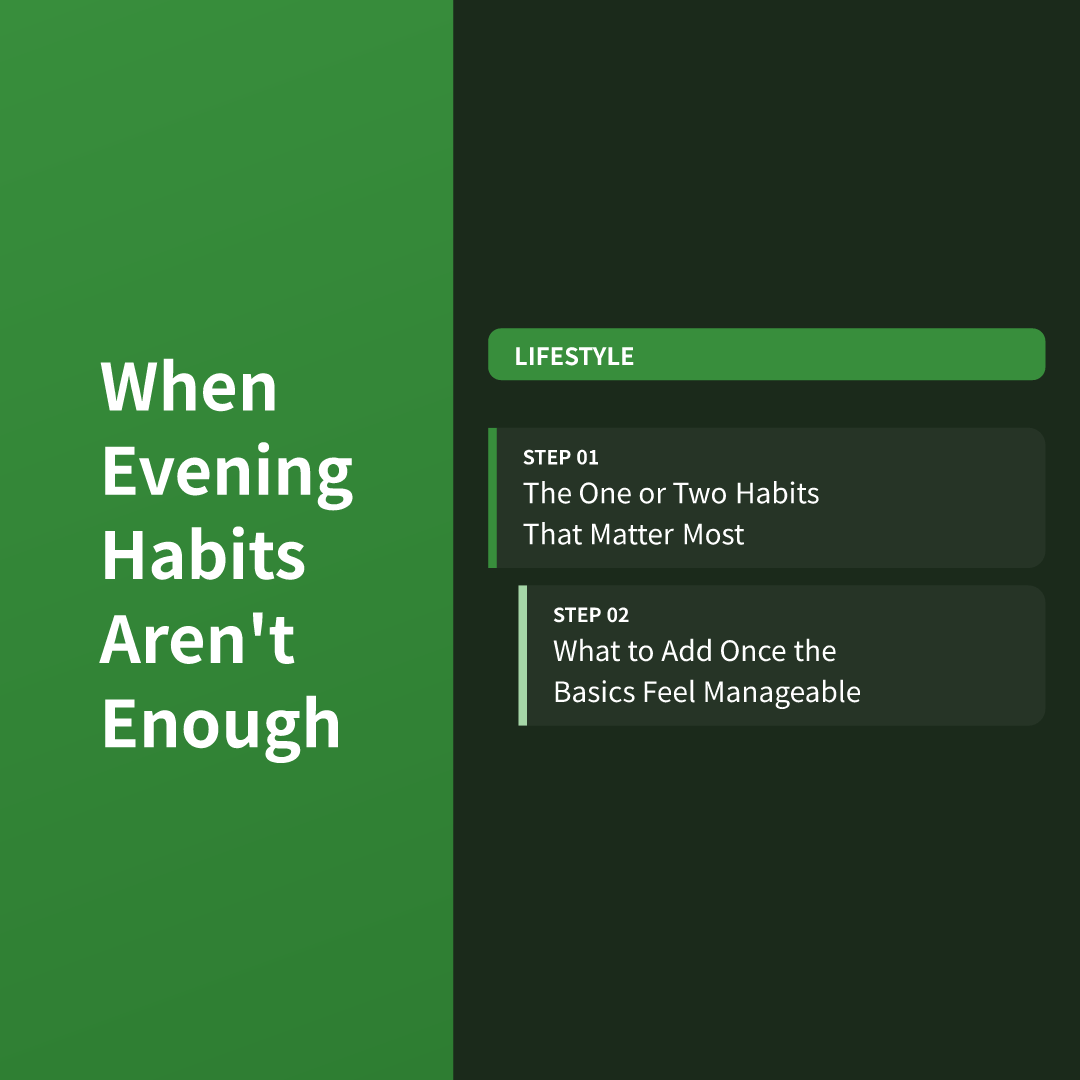
The One or Two Habits That Matter Most
If there’s a short list of evening habits worth protecting, it’s a consistent sleep-wake time and a wind-down period that signals to your body it’s time to slow down. Everything else tends to support these two, rather than replace them.
Keeping a Steady Bedtime and Wake Time
Going to bed and waking up around the same time each day, including weekends, is often described as one of the more reliable habits for supporting sleep quality over time. This consistency helps regulate your internal body clock, so falling asleep and waking up naturally becomes easier. It doesn’t need to be exact to the minute — a window of thirty minutes or so is usually enough for most people to notice a difference.
The catch is that this habit is also the hardest to maintain, especially with irregular work schedules or social plans. If perfect consistency isn’t realistic for your life right now, aim for keeping your wake-up time steady first, since that tends to anchor the rest of your rhythm even if bedtime shifts a bit.
Giving Yourself a Real Wind-Down Window
A short buffer period — somewhere between twenty and sixty minutes — between finishing your day’s tasks and getting into bed gives your mind and body a chance to shift gears. This doesn’t require a specific ritual. It can be as simple as lower lighting, quieter activities, and stepping away from stressful conversations or urgent tasks.
According to general sleep guidance shared by the CDC’s sleep health resources, a calm pre-bed period and a dim environment are commonly recommended as part of good sleep hygiene. The exact activities matter less than the fact that you’re consistently giving yourself that transition time instead of going straight from a bright screen to lying in the dark.
If you only have energy for one change tonight, protecting your wind-down window is usually a better return on effort than adding a long list of new rituals.
What to Add Once the Basics Feel Manageable
Once a steady schedule and a wind-down window feel like a normal part of your evening rather than a chore, there’s room to layer in a few more supportive habits. These aren’t essential, but many people find they add a bit more benefit once the foundation is already in place.
Dimming Lights and Reducing Screen Brightness
Bright light in the hour or two before bed, especially from screens, can interfere with the body’s natural signal to start winding down. Lowering household lighting and reducing screen brightness — or switching devices to night mode — is a small adjustment that some people find makes falling asleep noticeably easier. It’s a reasonable next step once your core routine is stable.
Light Stretching or Slow Breathing
Gentle stretching, slow breathing exercises, or a few minutes of quiet stillness can help ease physical tension built up during the day. This isn’t a guaranteed fix for restlessness, but for some people it’s a useful transition activity that fits naturally into a wind-down window.
Keeping the Bedroom Cool and Quiet
A cooler room temperature and reduced noise are frequently mentioned in general sleep hygiene guidance as supportive of deeper, less interrupted sleep. If your bedroom tends to run warm or noisy, addressing that environment can be worth more than adding another ritual on top of an already-solid routine.
Related reading: How Sleep Affects Muscle Recovery Over Time
A Consistent, Low-Key Pre-Bed Activity
Reading a physical book, listening to calm music, or journaling briefly are common choices for a low-stimulation pre-bed activity. The specific activity matters less than whether it’s genuinely relaxing for you personally — what works well for one person might feel like another task on someone else’s list.
What You Don’t Need to Force Into Your Routine
Part of building a sustainable evening routine is knowing what to leave out. Trying to adopt every habit you’ve read about is often what causes people to abandon the whole idea within a few weeks.
- Elaborate skincare or self-care rituals — pleasant, but not something your sleep depends on.
- Specific herbal teas or supplements — some people enjoy them, but they aren’t a required step, and anyone considering supplements regularly should check with a pharmacist or doctor first.
- A completely dark, silent, temperature-perfect bedroom every single night — helpful when possible, but occasional imperfect conditions aren’t something to stress over.
- Long guided meditations or lengthy journaling sessions — useful for some, but not necessary if they feel like a burden rather than a relief.
- A strict no-screens-ever rule — reducing screen time is generally supportive, but an occasional exception isn’t likely to undo an otherwise consistent routine.
The idea is to build a routine that fits realistically into your actual evenings, not one that only works on a perfect day with no interruptions. A shorter routine you actually do every night tends to help more than a longer one you skip half the time.
When Evening Habits Aren’t Enough
Evening habits can support sleep quality, but they aren’t a substitute for addressing underlying sleep problems. If you’re consistently struggling to fall asleep, waking frequently through the night, or feeling exhausted despite a full night in bed, it may be worth speaking with a doctor rather than relying only on routine changes. Ongoing sleep difficulty can sometimes be linked to conditions such as insomnia, sleep apnea, anxiety, or other health factors that a professional would need to evaluate.
It’s also worth checking in with a healthcare provider if sleep problems are affecting your daytime functioning, mood, or safety — for example, if you’re feeling drowsy while driving. Self-guided routine adjustments are a reasonable first step, but they have limits, and persistent issues deserve a proper evaluation rather than more habit-stacking.
Frequently Asked Questions

Do I need to do all of these habits every single night?
No. Most people benefit more from consistently keeping one or two core habits than from occasionally attempting a long list. Start with a steady schedule and a short wind-down window, then add more only if it feels sustainable.
What if I can’t fall asleep even with a good evening routine?
An evening routine reduces some obstacles to sleep, but it doesn’t address every possible cause of difficulty falling or staying asleep. If this continues for more than a few weeks, it’s reasonable to bring it up with a doctor rather than assuming the routine itself needs to be more elaborate.
Is it okay to use my phone in bed occasionally?
Occasional screen use likely won’t undo an otherwise consistent routine. The general concern with screens before bed relates to habitual, nightly bright-light exposure close to sleep, not a single exception here and there.
How long does it usually take to notice a difference?
This varies quite a bit from person to person. Some people notice small changes in how quickly they fall asleep within a week or two of a steady schedule, while others need longer, especially if sleep difficulties have been ongoing. Consistency over several weeks tends to matter more than any single night’s routine, and if you see no improvement after a reasonable trial period, that’s a good signal to check in with a healthcare provider.
Building the best evening habits for deeper sleep doesn’t require perfection — it usually comes down to protecting a couple of consistent anchors and letting go of the rest. Pay attention to how your body responds, adjust gradually, and treat persistent sleep problems as a reason to seek professional guidance rather than a personal failure of routine.
⚠️ Disclaimer: This article is for informational purposes only and does not replace professional medical advice.
Disclaimer: This article is for informational purposes only and is not a substitute for professional medical advice, diagnosis, or treatment. Please consult a licensed professional for personal health decisions.