Caffeine Cutoff Time for Better Sleep, Explained Simply
A caffeine cutoff time for better sleep is the point in your day after which you stop consuming caffeine so it has enough time to clear your system before bedtime. It’s based on the idea that caffeine lingers in the body for hours, not minutes, and can quietly interfere with sleep even if you don’t feel “wired.” In this piece, you’ll learn what this cutoff really means, when it matters most, how it differs from ideas people often confuse it with, and why getting the timing right can matter more than cutting caffeine out altogether.
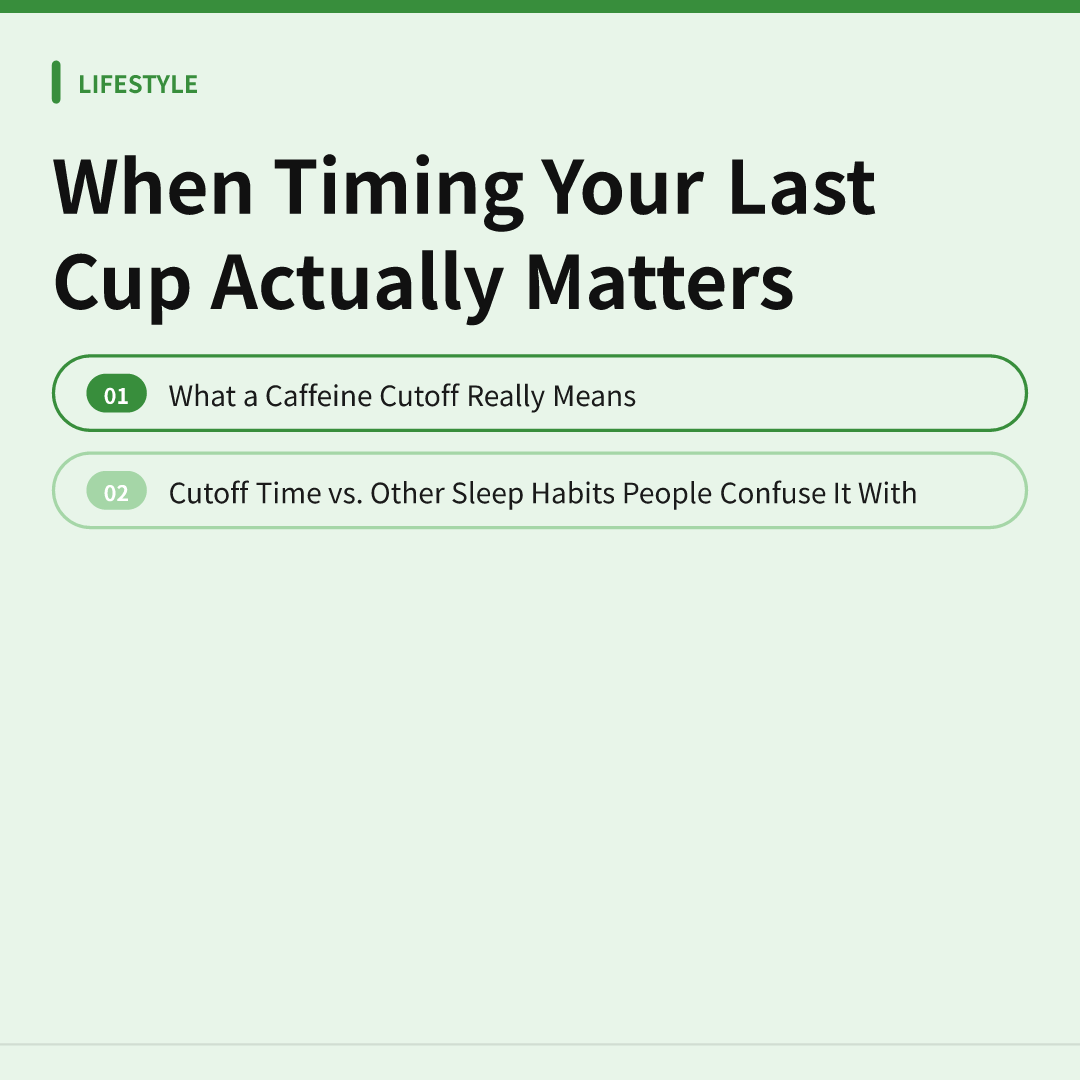
What a Caffeine Cutoff Really Means
At its core, a caffeine cutoff is a personal deadline—something like “no coffee after 2 p.m.”—chosen so that caffeine’s stimulating effects have mostly worn off by the time you want to fall asleep. This isn’t a fixed medical rule stamped on every person; it’s a general planning concept built around how caffeine tends to behave in the body over time.
The reason timing matters is a concept called half-life, which simply means the time it takes for roughly half of a substance to leave your bloodstream. According to the U.S. Food and Drug Administration, caffeine can stay in your system for several hours after you drink it, which is why an afternoon coffee can still be active in your body well into the evening.
Because half-life varies from person to person, there’s no single universal cutoff time that works for everyone. Some people metabolize caffeine faster, others slower, and factors like age, medication use, pregnancy, liver function, and regular caffeine habits can all shift that timeline. This is one reason sleep guidance tends to speak in ranges (“several hours before bed”) rather than exact numbers.
When Timing Your Last Cup Actually Matters
The cutoff concept becomes most relevant in a few everyday situations rather than as a rule you need to obsess over daily.
- You have trouble falling asleep even though you feel tired, especially on days with afternoon coffee, tea, or energy drinks.
- You wake up frequently at night and can’t explain why, since caffeine may fragment sleep even when it doesn’t stop you from dozing off initially.
- You’re sensitive to stimulants — some people simply feel effects longer than others, and past experience is often the best personal guide here.
- You rely on caffeine later in the day to push through an afternoon slump, which can create a cycle where poor sleep leads to more caffeine the next day.
On the other hand, if you sleep fine after an evening cup of tea, the cutoff concept may simply be less relevant to your body. Individual variation is real, and this is exactly the kind of thing worth noticing through your own patterns rather than assuming one rule fits everyone.
Think of caffeine like a slow-releasing dye in water — even after the initial color fades from view, trace amounts can still be present long after you’d expect.
Cutoff Time vs. Other Sleep Habits People Confuse It With
It’s easy to lump caffeine timing in with other sleep hygiene ideas, but they’re not interchangeable concepts.
Caffeine Cutoff vs. Total Caffeine Limit
A cutoff time is about when you stop, while a daily limit is about how much you consume overall. You could stay under a general daily amount but still drink it too late in the day, or you could drink caffeine early and still exceed what feels comfortable for your body. Both matter, but they solve different problems.
Caffeine Cutoff vs. “Just Avoiding Coffee at Night”
Many people think avoiding coffee after dinner is enough, but caffeine hides in places beyond coffee — certain teas, chocolate, some sodas, and pre-workout or diet supplements. A true cutoff time accounts for all caffeine sources, not just the obvious cup in your hand.
Caffeine Cutoff vs. General Sleep Hygiene
Sleep hygiene is the broader umbrella term for habits that support sleep, such as consistent bedtimes, limiting screens, and keeping a cool room. Caffeine timing is just one piece of that puzzle, not a replacement for the rest of it. Someone with excellent caffeine timing can still sleep poorly if other habits are working against them.
Why Getting This Timing Right Is Worth Paying Attention To
Sleep quality isn’t just about how long you sleep — it’s also about how deep and uninterrupted that sleep is, and caffeine consumed too late can quietly shift you toward lighter, more fragmented sleep even if you technically fall asleep on time. Because caffeine works partly by blocking adenosine, a chemical involved in feeling sleepy, an active dose in your system at bedtime can work against your body’s natural wind-down signals.
This matters more for some groups than others. People who are pregnant, managing anxiety, dealing with existing sleep disorders, or taking certain medications may want to pay closer attention to timing, and this is exactly the kind of situation where checking with a doctor or pharmacist is more useful than following a generic online rule. Caffeine sensitivity also tends to shift with age, and what worked in your twenties may not work the same way later on.
It’s also worth being honest about limits here: cutoff times are a general planning tool, not a guaranteed fix for insomnia or chronic sleep problems. If sleep issues are persistent, severe, or affecting daily functioning, that’s a signal worth bringing to a healthcare professional rather than something to solve through timing alone.
Once you understand what a caffeine cutoff time for better sleep actually involves, two practical judgments tend to shift. First, you stop treating it as a strict universal rule and start treating it as a personal experiment — testing your own cutoff based on how you actually feel the next morning. Second, you start scanning for hidden caffeine sources beyond coffee, since a cutoff time only works if it accounts for everything you’re consuming, not just the most obvious cup.
Disclaimer: This article is for informational purposes only and is not a substitute for professional medical advice, diagnosis, or treatment. Please consult a licensed professional for personal health decisions.
Related reading: Heart Rate Zones Explained for Smarter Training