Foam Rolling Benefits for Sore Muscles Explained
Foam rolling benefits for sore muscles are generally described as modest and short-term: many people find that rolling makes tight, achy areas feel looser for a while, but it is not a cure for soreness or injury. Foam rollers have moved from physical therapy clinics and gym corners into living rooms, office corners, and social media feeds. That popularity is the main reason the question comes up so often.
Foam rolling is a form of self-massage, often called self-myofascial release. A person uses their own body weight to press a cylinder of firm foam against a muscle group and moves slowly over it. The goal is usually comfort, a feeling of looser movement, or a place in a warm-up or cool-down routine, rather than any dramatic physical change.
Where Foam Rolling Shows Up in Everyday Life
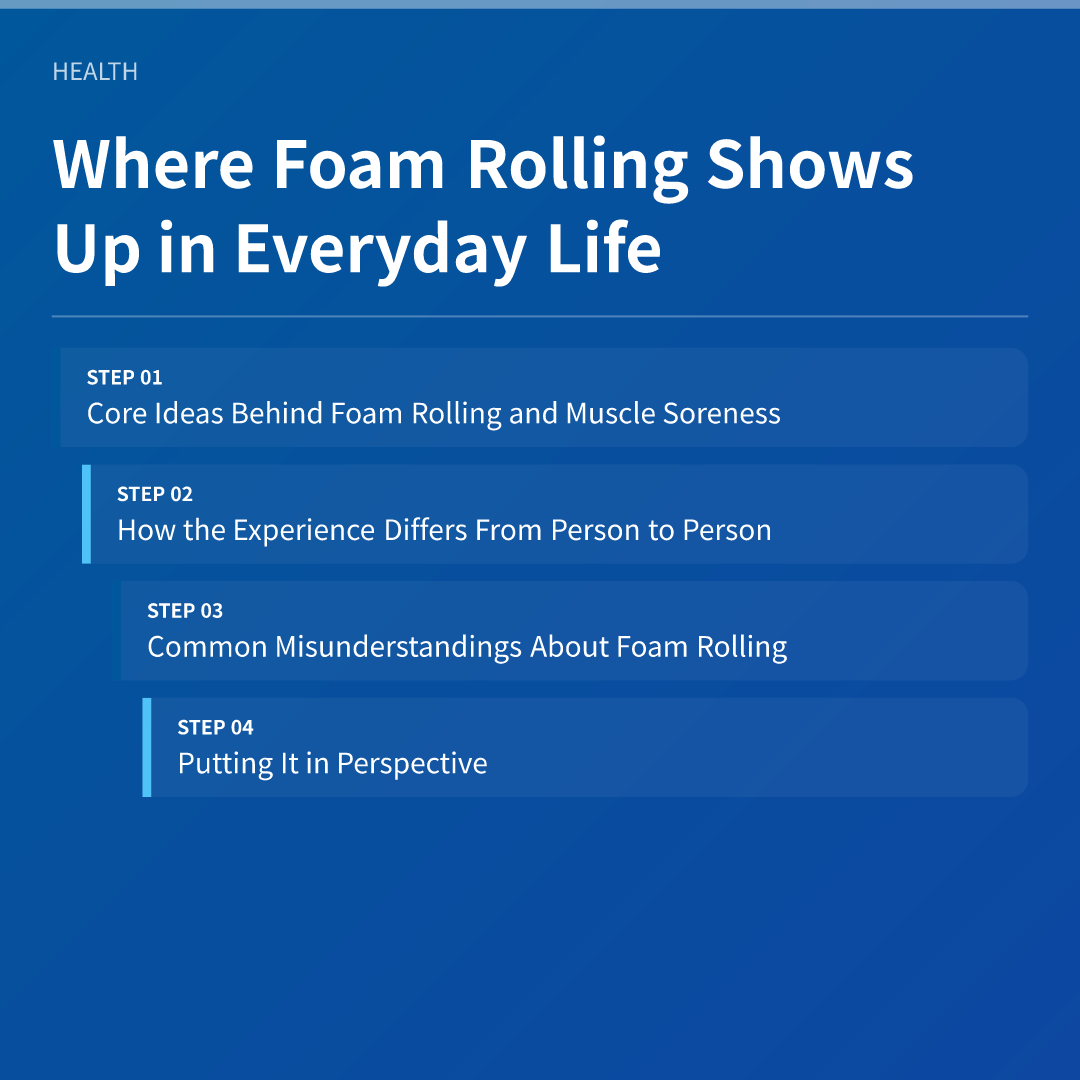
Foam rolling tends to appear in a few familiar settings. Runners and gym-goers use it around workouts. People with desk jobs reach for it when their back, hips, or thighs feel stiff after long hours of sitting. Physical therapists and trainers sometimes include it in programs as one tool among many.
Two everyday scenarios show how this plays out. They are general illustrations, not accounts of real individuals.
Scenario one: the weekend runner
Imagine someone who ran a longer route than usual and wakes up the next day with heavy, tender calves and thighs. This kind of delayed soreness after unfamiliar exercise is common. Some people in this situation find that gentle rolling leaves their legs feeling less tight and makes walking around easier, even though the soreness still runs its natural course.
Scenario two: the desk worker
Now picture someone who sits most of the day and notices a stiff upper back and tight hips by evening. Rolling may feel pleasant because the pressure and movement break up a long period of staying still. In this case the relief may owe as much to moving and changing position as to the roller itself.
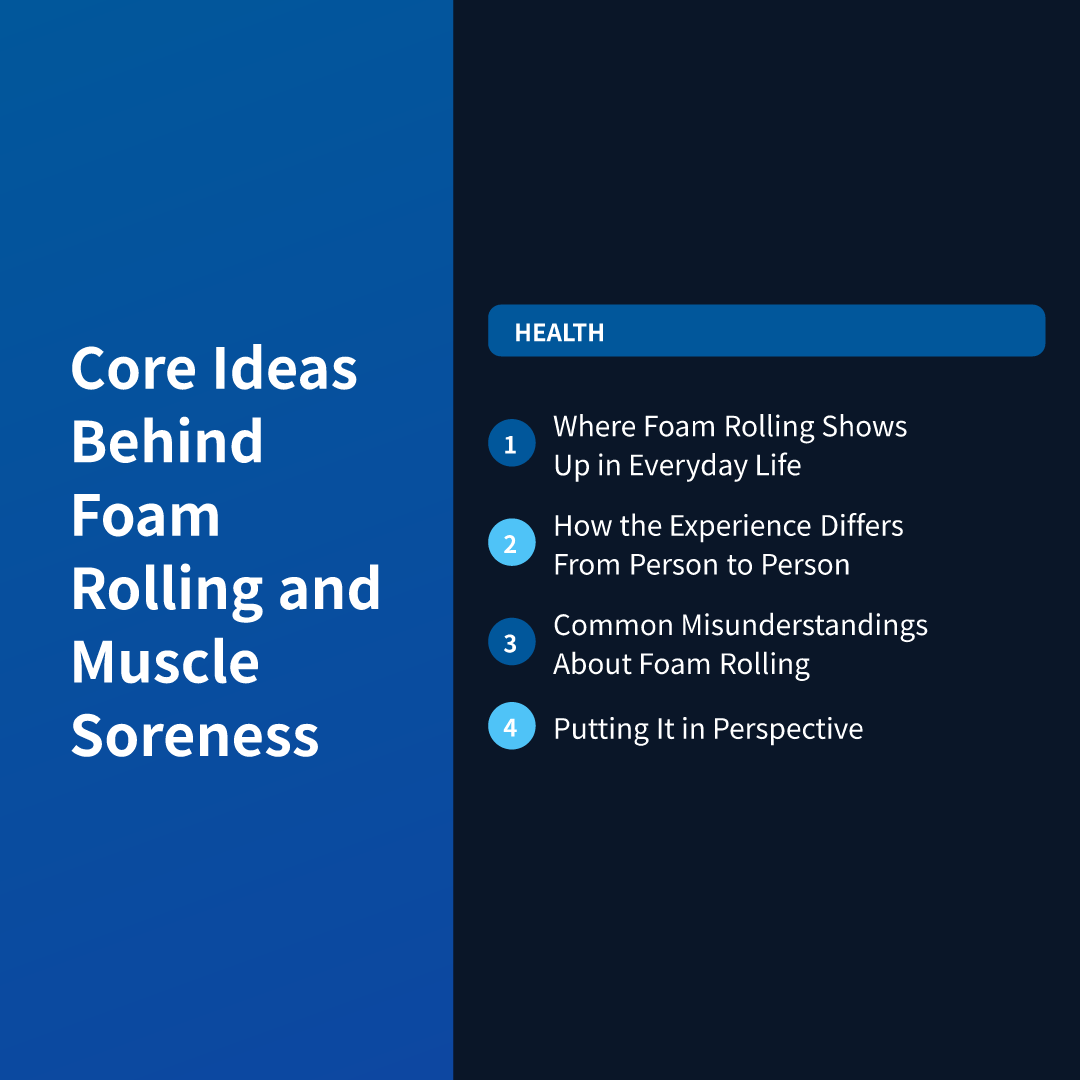
Core Ideas Behind Foam Rolling and Muscle Soreness
What soreness actually is
According to general guidance from MedlinePlus, muscle soreness after unaccustomed activity is common and usually settles on its own over days. Exercise-related soreness is often linked to the muscles being challenged in a new way. It is typically different from the sharp, sudden pain of an injury.
What rolling may do
Researchers and clinicians have proposed several explanations for why rolling can feel helpful. Pressure on soft tissue may change how the nervous system perceives tightness or discomfort. Rolling also increases blood flow to an area for a short time and encourages gentle movement. Many people use foam rolling as part of their warm-up or recovery routine, and experiences with joint movement and muscle soreness differ from one person to the next.
It helps to keep expectations realistic. Rolling is not known to "break up knots" in a literal sense, and it does not speed healing in a way that has been firmly established. What many people report is a short-term change in how a muscle feels.
Common reasons people use it
- Warm-up support: Some people roll briefly before activity to feel more ready to move.
- Recovery routine: Others add it after workouts as a calming, low-effort habit.
- Stiffness from sitting: Rolling can offer a break from static posture.
- Body awareness: Some find it helps them notice where they hold tension.
Related reading: How to Reduce Muscle Soreness After a Hard Workout
How the Experience Differs From Person to Person
Responses to foam rolling vary widely. Body size, pain sensitivity, fitness level, the area being rolled, and the firmness of the roller all play a role. A person who finds a firm roller soothing may find the same one uncomfortable if they are new to exercise or particularly sensitive to pressure.
Different goals, different expectations
Someone hoping for a pleasant way to wind down after training may be satisfied with a mild, temporary loosening feeling. Someone hoping that rolling will resolve ongoing pain is more likely to be disappointed. The Mayo Clinic and other major health organizations generally describe stretching, gradual training progression, rest, and adequate sleep as core parts of recovery, with rolling as an optional extra.
Areas that need extra care
Some areas of the body are more delicate than others. The lower back, neck, and the backs of the knees are places where firm pressure can be uncomfortable for many people, and bony areas generally do not respond well to rolling. Rolling over a swollen, bruised, or recently injured spot is something people are commonly advised to avoid unless a clinician has said otherwise.
People who may want to ask first
Certain situations call for a conversation with a healthcare professional before starting. These include:
- Recent injury, surgery, or a known muscle or tendon tear
- Osteoporosis or fragile bones
- Circulation problems or a history of blood clots
- Blood-thinning medication is prescribed and monitored by a clinician, who decides whether it suits the person.
- Pregnancy
- Nerve-related symptoms such as numbness or tingling
Common Misunderstandings About Foam Rolling
"More pressure means more benefit"
This is probably the most common mix-up. Pain is not a measure of effectiveness. Many physical therapy resources describe the sensation as tolerable pressure, sometimes called "good discomfort," rather than sharp or intense pain. Pressing hard enough to cause bruising or lingering soreness is generally not considered a sign of progress.
"Rolling repairs muscle damage"
Soreness after exercise is part of how the body adapts, and it generally resolves with time. Rolling may change how the muscle feels, but the idea that it repairs tissue or removes damage is not well supported. Treating it as a comfort tool is more consistent with what is generally known.
"Sharp pain is just a tight muscle"
Soreness feels dull, achy, and widespread. Sharp, stabbing, burning, or localized pain that does not ease is a different signal. According to general guidance from the National Institutes of Health, pain that is severe, getting worse, or accompanied by swelling, bruising, or loss of function deserves medical attention rather than more rolling.
"It replaces other recovery habits"
Rolling does not substitute for rest, sleep, hydration, balanced nutrition, or gradually increasing activity. It is better understood as one small piece of a broader routine. People sometimes expect a roller to undo the effects of overdoing a workout, and that expectation tends to set them up for frustration.
"Everyone needs it"
Plenty of active people never use a foam roller and recover well. Others like it because it feels good or fits their routine. Whether it is worth the time is a personal call, and enjoyment is a perfectly reasonable factor.
Putting It in Perspective
Foam rolling sits in a middle ground. It is low-cost, widely used, and often described as pleasant, but the evidence for strong or lasting effects is limited and mixed. The most honest summary is that it may offer short-term comfort and a feeling of looser movement for some people, while results vary and it does not replace proper recovery or medical care.
If you decide to try it, learning the technique from a qualified trainer or physical therapist is a sensible route, since they can adapt the approach to your body, activity level, and any health conditions. Product instructions and professional guidance should take priority over general articles like this one.
Conclusion
Foam rolling benefits for sore muscles are best understood as modest, temporary, and personal. Here is the short version:
- Rolling may make sore or stiff muscles feel looser for a while, but it is not a cure and does not speed healing in a proven way.
- Responses differ by person, body area, and pressure, and more intensity is not better.
- Rest, sleep, gradual training, and movement remain the foundation of recovery.
Consider talking with a doctor or physical therapist if soreness is severe, lasts well beyond what seems normal, follows an injury, comes with swelling, bruising, numbness, or tingling, or if you have a medical condition that affects bones, circulation, or clotting.
Disclaimer: This article is for informational purposes only and is not a substitute for professional medical advice, diagnosis, or treatment. Please consult a licensed professional for personal health decisions.