How Chronic Stress Affects Your Body Over Time
Chronic stress is stress that keeps going for weeks or months without a real break, so the body's alarm system stays switched on longer than it was built to. How chronic stress affects your body comes down to this prolonged activation, which can gradually touch sleep, digestion, the heart and blood vessels, immunity, and mood. Below, you will find what the term means, when it applies, how it differs from similar ideas, and why it matters for everyday decisions.
What Chronic Stress Actually Means
Stress is the body's reaction to a demand or threat. In the short term, that reaction is useful: heart rate rises, muscles tense, and attention sharpens. Chronic stress describes what happens when the demand does not let up, such as long-term financial strain, caregiving, a difficult job, or an unresolved conflict.
The stress response in plain terms
When the brain senses a threat, it signals the adrenal glands (small hormone-producing glands above the kidneys) to release stress hormones such as cortisol and adrenaline. According to the National Institute of Mental Health, the body's stress response is meant to be temporary, and problems are more likely when it stays active for a long time. Think of it like a car alarm: helpful when something is wrong, exhausting for everyone when it will not shut off.
Why duration matters
A single stressful day usually fades once the situation passes. Chronic stress is different because the body rarely gets a chance to return to its resting baseline. Over time, that lack of recovery is what many health organizations point to as the concern, rather than any one stressful moment.
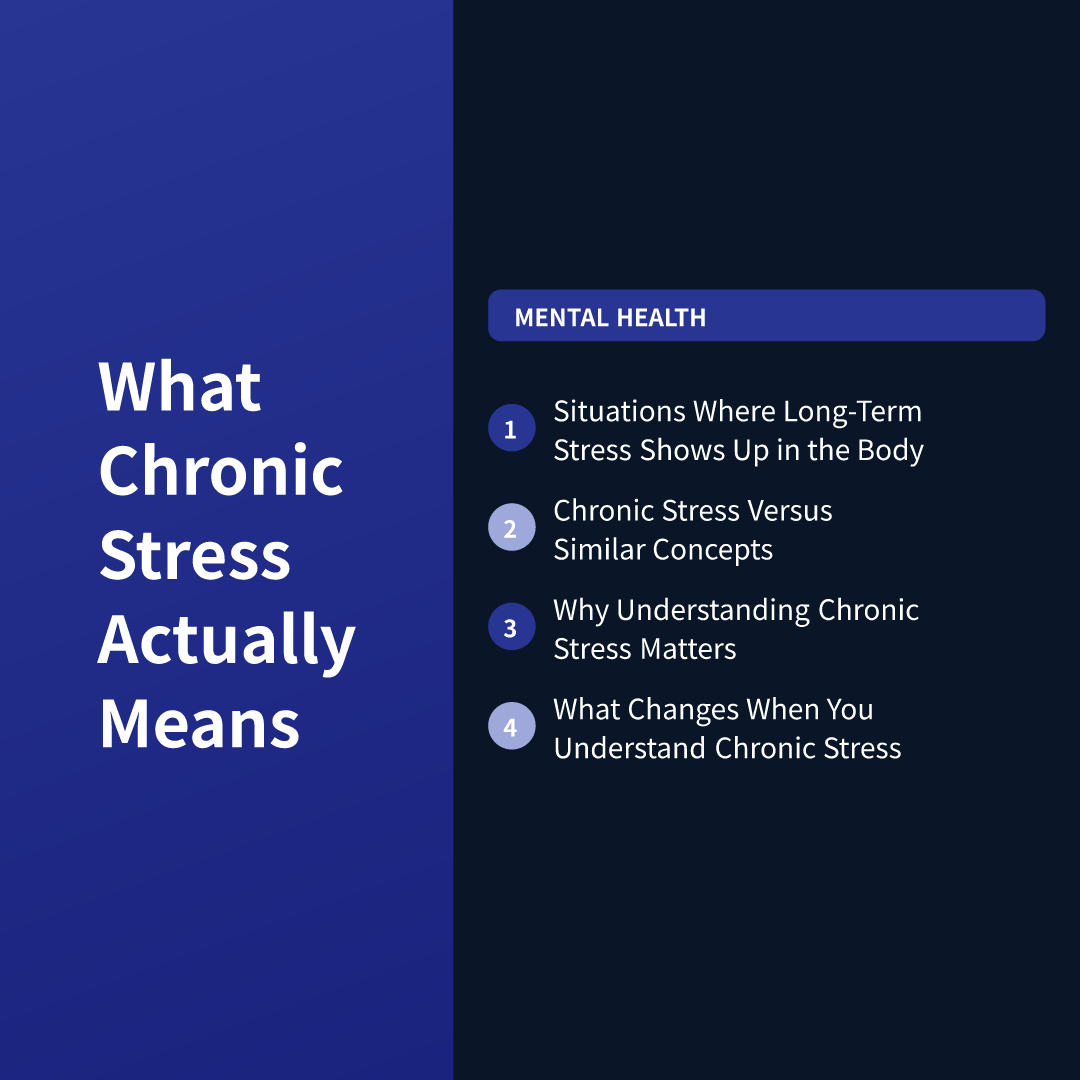
Situations Where Long-Term Stress Shows Up in the Body
Chronic stress does not look the same in everyone. Some people notice it mostly in their bodies, others in their thoughts or behavior, and some barely notice until something gives. Personal history, support systems, genetics, and other health conditions all shape how it plays out.
Sleep and energy
Trouble falling asleep, waking in the night, or feeling tired even after a full night in bed are commonly described with ongoing stress. The American Psychological Association has noted in its public stress resources that stress and poor sleep can feed each other, which makes the cycle hard to break without attention to both.
Digestion and appetite
The gut and brain communicate constantly, so it is not surprising that stress is often linked with stomachaches, nausea, changes in bowel habits, or shifts in appetite. Some people eat more when stressed, others barely eat. These symptoms can also come from many other causes, so persistent digestive changes deserve a medical conversation rather than guesswork.
Heart, blood pressure, and muscles
According to the Centers for Disease Control and Prevention and the American Heart Association's general guidance, ongoing stress may contribute to habits and body changes that affect heart health, such as raised blood pressure or less physical activity. Muscle tension, especially in the neck, shoulders, and jaw, is another common complaint. Tension headaches are often mentioned alongside it.
Immunity and getting sick
Many people notice they catch colds more often or recover more slowly during demanding stretches of life. The National Institutes of Health describes the stress hormone system as closely connected to immune function, though the exact effects vary widely between individuals.
Mood, focus, and behavior
Irritability, worry, low mood, trouble concentrating, and withdrawing from friends are all commonly reported. Some people also lean more heavily on alcohol, tobacco, or other coping habits, which can add their own health effects.
Chronic Stress Versus Similar Concepts
The word "stress" gets used loosely, which can blur some important distinctions. Sorting them out helps you describe what you are experiencing more accurately to a professional.
Acute stress
Acute stress is short-lived, like a looming deadline or a near miss in traffic. It typically resolves once the event passes. Chronic stress, by contrast, lingers or repeats without a clear end.
Anxiety disorders
Anxiety is a feeling of worry or fear that can continue even without an obvious trigger. According to the National Institute of Mental Health, anxiety disorders are recognized medical conditions, and they are not identical to ordinary stress, although the two can overlap and influence each other. Only a qualified professional can tell them apart for a particular person.
Burnout
Burnout is usually described as exhaustion, cynicism, and reduced effectiveness tied to prolonged work-related stress. It is often discussed as a result of chronic stress in one area of life, rather than a separate condition that applies to every situation.
Depression
Long-term stress can be a contributing factor for some people, but depression is a distinct medical condition with its own signs, such as persistent sadness or loss of interest. If low mood lasts or feels heavy, it is worth speaking with a licensed professional instead of assuming it is only stress.
Trauma-related stress
Stress that follows a frightening or harmful event can involve additional symptoms, like intrusive memories or feeling constantly on guard. These patterns are generally evaluated differently from everyday chronic stress, and specialized support is often recommended.
Why Understanding Chronic Stress Matters
Recognizing the connection between ongoing stress and physical symptoms can change how people interpret what is happening to them. Without that link, it is easy to treat each symptom in isolation, or to dismiss it as "just in my head."
Common approaches people discuss
Public health agencies such as the CDC and the NIH commonly mention regular physical activity, consistent sleep routines, time outdoors, social connection, and relaxation practices like deep breathing or mindfulness as general ways people manage stress. These are broad lifestyle ideas, not guaranteed fixes, and what helps varies from person to person.
Limits of self-management
Lifestyle habits can only do so much when the source of stress is structural, such as unsafe housing, unmanageable workloads, or caregiving without relief. In those cases, practical changes, support services, or workplace conversations may matter as much as personal coping skills. Blaming yourself for not "handling it better" is rarely accurate or useful.
Signs it is time to get professional support
Consider contacting a licensed health professional if you notice any of the following:
- Symptoms that persist for weeks or keep getting worse
- Sleep problems, appetite changes, or physical pain that interfere with daily life
- Chest pain, shortness of breath, or other symptoms that could have a medical cause
- Heavy reliance on alcohol, drugs, or other substances to cope
- Feeling hopeless, or having thoughts of harming yourself
If you are in crisis or worried about your safety, contact local emergency services right away. In the United States, the 988 Suicide and Crisis Lifeline offers support by call or text. Questions about medicines or supplements marketed for stress should go to a pharmacist or doctor before anything is used.
What Changes When You Understand Chronic Stress
Knowing how chronic stress affects your body shifts two everyday judgments in particular.
- You treat recurring physical symptoms as worth noticing, not worth ignoring. Poor sleep, tension, stomach upset, or frequent illness may have several causes, and stress is one possibility among them. That awareness can prompt a timely conversation with a clinician, who can check for other explanations instead of leaving you to assume.
- You judge coping strategies by fit and by the source of the stress. Rest, movement, and support can be valuable, yet they are not a substitute for changing a situation that keeps the alarm ringing, or for professional care when symptoms persist. Realistic expectations make it easier to choose next steps without guilt or quick-fix promises.
Disclaimer: This article is for informational purposes only and is not a substitute for professional medical advice, diagnosis, or treatment. Please consult a licensed professional for personal health decisions.
Related reading: How to Set Boundaries to Reduce Daily Stress