How Nature Time Improves Mood, Depending on the Cause
The same low mood can come from very different places, and that is why a walk in the park lifts some people and does little for others. Understanding how nature time improves mood starts with asking what is actually weighing on you: mental fatigue, stress, isolation, a lack of movement, or something deeper that outdoor time cannot reach on its own. Generally, time in green or blue spaces is associated with better mood for many people, but the benefit depends on the reason you feel off in the first place.
This piece is written from an editor's point of view, drawing on general public-health guidance rather than personal treatment experience. It sorts common causes into branches, explains how to tell which one may fit, and notes where outdoor time is likely to be a helpful addition and where it is not enough.
Sorting Out Why You Feel Low in the First Place
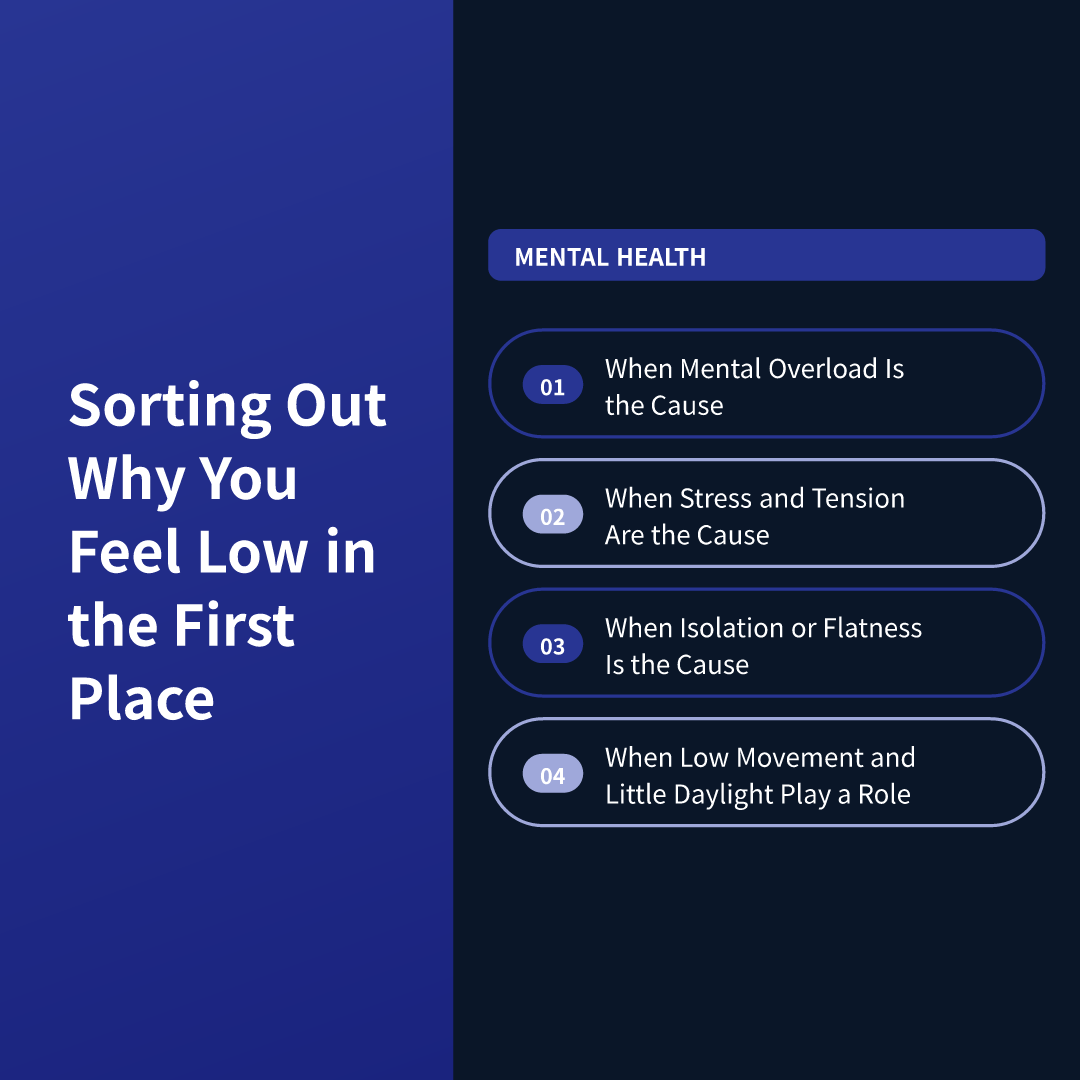
Before reaching for a remedy, it helps to separate a few broad patterns. They overlap in real life, and personal variation is large, but these groupings make the choices easier to think about.
- Mental overload: screens, notifications, and constant decision-making leave you drained and scattered.
- Stress and tension: your body feels wound up, your thoughts race, and rest does not come easily.
- Isolation or flatness: days feel repetitive, you have little contact with others, and little feels interesting.
- Low movement and low daylight: you spend most of the day indoors and sitting.
According to the National Institute of Mental Health, mood changes can also be linked to conditions such as depression and anxiety that deserve proper evaluation. Nature time is better thought of as a supportive habit than as a stand-in for that kind of care.
Guessing wrong is not dangerous, but it can be wasteful. Someone whose low mood comes mainly from loneliness may spend weeks hiking alone and wonder why little changes. Someone with persistent symptoms may hope a weekend outdoors will do the work that a professional conversation should.
When Mental Overload Is the Cause
How to tell if this is your pattern
You may notice that your mood is worst after long stretches of focused work or scrolling. Small tasks feel oddly hard, you get irritable over minor things, and a quiet break indoors does not seem to refresh you. Many people describe a sense that their head is simply "full."
What nature time may offer
One idea often discussed in environmental psychology is that natural settings ask for gentler, less effortful attention than screens and traffic do, which may give the focusing parts of the mind a chance to rest. Research in this area suggests that people often report feeling calmer and more mentally clear after time in green spaces, although results vary and the effects are usually modest rather than dramatic.
In practice, people often find that a break away from devices matters as much as the scenery. A tree-lined street or small neighborhood park can serve the purpose for many, so it does not have to be a mountain trail. Leaving the phone in a pocket tends to make the break more restful, though preferences differ.
If you guessed wrong
If your fatigue is physical, persistent, or accompanied by changes in sleep or appetite, an outdoor break will not address the underlying issue. A primary care provider can help sort out whether something else, such as a medical condition, is involved.
When Stress and Tension Are the Cause
How to tell if this is your pattern
Stress-driven low mood often shows up in the body: tight shoulders, a clenched jaw, shallow breathing, or a feeling of being on edge even when nothing is happening. Your thoughts may loop around deadlines, conflicts, or worries. Winding down at night may be difficult.
What nature time may offer
According to the National Institutes of Health, spending time in natural settings has been studied in relation to stress, and some findings suggest that people tend to feel more relaxed in such environments. The sounds, light, and slower pace may help the body shift out of a keyed-up state for some people. Others find that quiet outdoor settings feel unsettling or boring, and that is a perfectly normal difference.
Pairing outdoor time with gentle activity, like an unhurried walk, may add to the effect. The American Psychological Association has described time in nature as one of several approaches people use to cope with stress, alongside things like social support and rest. It works best as one piece of a broader routine.
If you guessed wrong
If your stress is tied to a specific situation, such as an overloaded job or a strained relationship, a walk may take the edge off without changing the source. Pleasant moments outdoors can coexist with a problem that still needs a practical solution. Talking with a counselor or trusted person about the cause may help more than extra hours outside.
When Isolation or Flatness Is the Cause
How to tell if this is your pattern
If your days are quiet, if weeks pass with little meaningful conversation, or if you feel disconnected and unmotivated, loneliness may be a bigger piece of the picture than fatigue. You might not feel anxious so much as empty or bored. Things you used to enjoy may feel muted.
What nature time may offer
Here, outdoor time can still help, but how you do it matters. Going somewhere with other people, such as a community garden, a walking group, or a shared park routine, may offer both the setting and the social contact. The Centers for Disease Control and Prevention has noted that social connection is linked with better health and well-being, which is one reason group outdoor activities appeal to many people.
Some people also find that simply seeing familiar faces at the park or on a regular route creates a gentle sense of belonging. It is a low-pressure way to be around others without needing a full conversation.
If you guessed wrong
Solo time outdoors may feel peaceful but will not fill a gap in connection by itself. If low mood comes with hopelessness, loss of interest lasting for weeks, or changes in sleep and appetite, that is worth raising with a qualified professional rather than managing alone. Persistent flatness is not a personal failing, and support exists.
When Low Movement and Little Daylight Play a Role
How to tell if this is your pattern
You may spend most days indoors, sit for long periods, and notice your mood dips during darker months or after stretches inside. Your energy may feel sluggish and your sleep schedule may drift.
What nature time may offer
Going outside combines several things that people commonly associate with feeling better: daylight, light physical activity, and a change of scene. The Mayo Clinic and other health organizations have noted that physical activity is generally associated with improved mood for many people, and being outdoors is one easy way to build it in. Daylight exposure may also support a more regular sleep and wake rhythm, though individual responses differ. (Source: WHO Fact sheet: Physical activity)
Seasonal changes in mood are a recognized pattern for some people. The National Institute of Mental Health describes seasonal affective disorder as a form of depression that follows a seasonal pattern, and it is typically evaluated and managed with professional guidance. If your mood reliably drops in certain seasons and affects daily life, a clinician can discuss options with you; outdoor time may be a helpful addition but is not a replacement for that conversation.
If you guessed wrong
If you are already active and outdoors often, adding more may not shift much. In that case, the cause may lie elsewhere, and it may be worth looking at sleep, workload, relationships, or health concerns.
What Tends to Help Across All of These Causes
Whatever the root, a few common threads show up in general guidance and in how people describe their experience.
- Regularity over intensity: many people find that short, repeated visits to green space fit life better than occasional long trips.
- Attention to the moment: noticing sounds, colors, and air, rather than replaying worries, may deepen the break.
- Comfort and access: a place that feels safe, reachable, and pleasant is more likely to become a habit. Urban parks, tree-lined streets, and even a garden bench count.
- Realistic expectations: the effect is usually gentle and gradual, and it varies by person, weather, and mood that day.
There are also practical cautions. Weather, allergies, heat, and uneven ground can all affect how outdoor time feels and how safe it is for you. People with health conditions, mobility limits, or pollen sensitivities may want to talk with a healthcare provider about what suits them. And if you feel unsafe in a particular area, choosing a different spot or going with someone is entirely reasonable.
Conclusion
How nature time improves mood depends on what is driving the low mood. When the cause is mental overload, a screen-free break among trees or grass may help the mind settle. When stress is the main issue, slower outdoor time may help the body unwind, though the source of the stress may still need attention. When isolation is behind it, doing outdoor activities with other people may matter more than the scenery. When low movement and little daylight play a role, getting outside can add light, motion, and a change of pace.
If you cannot tell which branch fits, it is reasonable to try regular outdoor time for a while and notice what changes, while staying open to the idea that more than one cause may be at work. If your mood stays low, worsens, or interferes with daily life, a primary care provider or mental health professional can help you sort it out. If you ever feel in crisis or have thoughts of harming yourself, contact local emergency services or a crisis line right away. Nature time can be a kind companion to care, but it is not a substitute for it.
Disclaimer: This article is for informational purposes only and is not a substitute for professional medical advice, diagnosis, or treatment. Please consult a licensed professional for personal health decisions.
Related reading: How to Handle Negative Self Talk Based on Its Cause