How to Build a Simple Wellness Routine That Sticks
The easiest way to build a simple wellness routine is not to create a brand-new schedule from scratch, but to attach one small wellness action to a habit you already do without thinking — like brushing your teeth, making coffee, or waiting for your laptop to boot up. This approach, often called habit stacking, works because it borrows the reminder system your brain has already built for an existing routine instead of asking you to remember something new. Once you see how this pairing works, putting together a full daily wellness routine feels a lot less overwhelming.
Most people who try to overhaul their health habits all at once end up quitting within a couple of weeks, not because they lack willpower, but because the plan asked for too much change too fast. A gentler, more realistic method is to look at your day as it already exists, then slide small actions into the cracks. This article walks through how to find those anchor habits, which small actions pair well with them, and — just as importantly — how to recover when your routine inevitably slips.
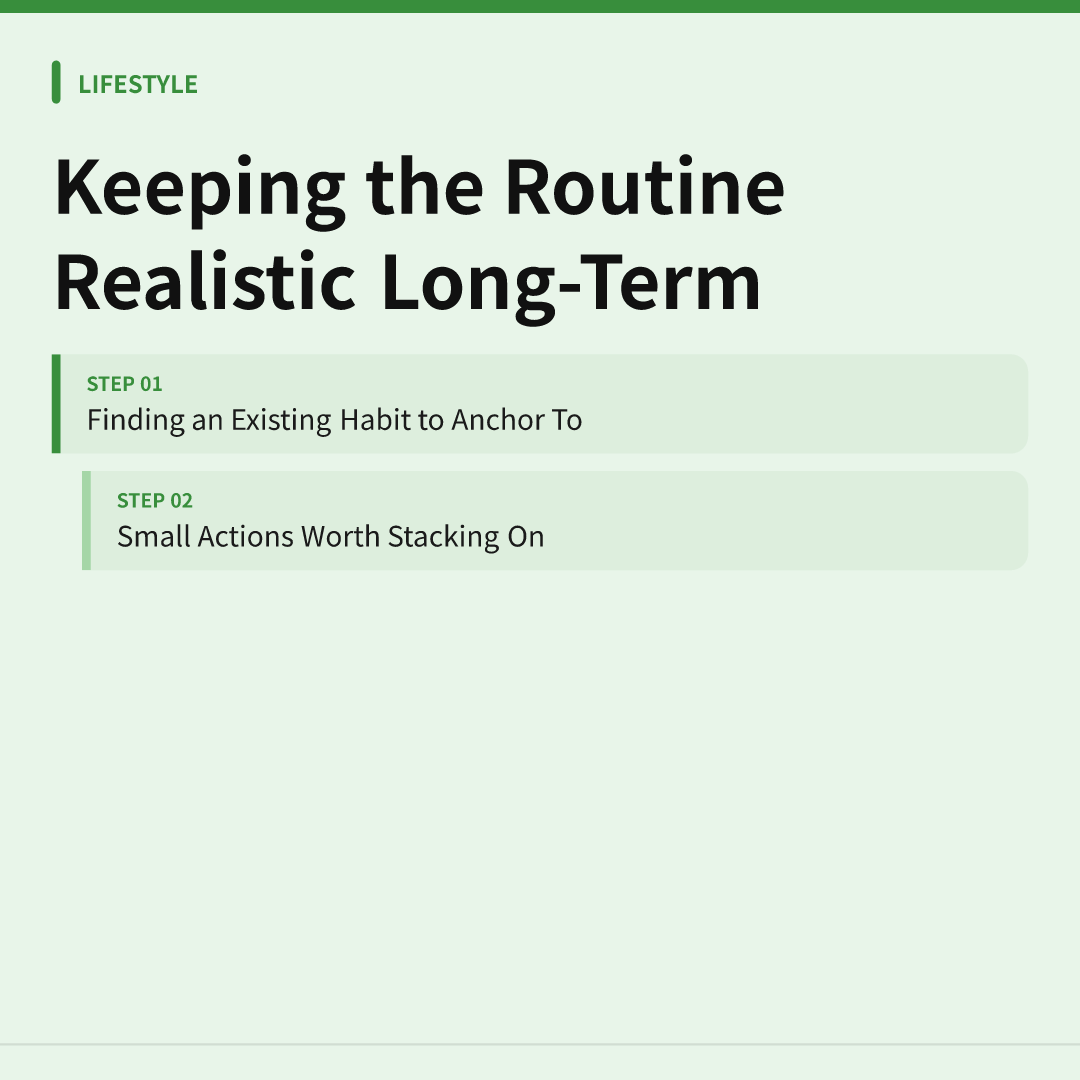
Finding an Existing Habit to Anchor To

Before adding anything new, it helps to map out the habits you already do on autopilot every day. These are the moments your brain doesn’t need convincing for — you just do them. Think about your morning coffee, brushing your teeth, sitting down at your desk, or plugging in your phone at night.
A good anchor habit usually has three qualities: it happens at roughly the same time every day, it requires little to no decision-making, and it’s something you rarely skip. Skipping the search for a “perfect” time slot and instead using what’s already stable in your day is often what separates a wellness routine that lasts from one that fades out after a week or two.
- Waking up and reaching for your phone
- Making your morning coffee or tea
- Brushing your teeth (morning or night)
- Sitting down to eat lunch
- Commuting or walking to the bus stop
- Closing your laptop at the end of the workday
Pick one or two of these to start. Trying to stack new habits onto five different anchors at once tends to backfire, since you’re essentially building five new routines instead of one manageable one.
Small Actions Worth Stacking On
Once you’ve picked an anchor, the next step is choosing a small wellness habit that takes under two minutes and doesn’t require special equipment or a big mood shift to start. The goal is to make the new action almost embarrassingly easy, at least at first — you can always build from there once it feels automatic.
Morning anchor pairings
- While the coffee brews → drink a glass of water first
- After brushing your teeth → do 30 seconds of stretching
- While waiting for your laptop to start → write down one thing you’re looking forward to that day
Midday anchor pairings
- Before opening your lunch → take three slow breaths away from your screen
- After lunch → take a five-minute walk, even just around the block or office floor
Evening anchor pairings
- After closing your laptop → jot down one task for tomorrow so it stops looping in your head
- Before brushing your teeth at night → put your phone in another room
- While your face wash is on → take a moment to notice how your body feels, without judging it
Notice that none of these require buying anything or blocking out a big chunk of time. That’s intentional. A common trap in wellness culture is assuming a “real” routine needs supplements, apps, expensive equipment, or an hour every morning. In practice, consistency with something small tends to matter more than intensity with something you’ll quit in ten days.
If you’re interested in the sleep side of a wellness routine specifically, it’s worth looking at how light exposure and screen habits affect rest — the CDC’s general sleep guidance is a reasonable starting point for understanding the basics without wading into unverified claims.
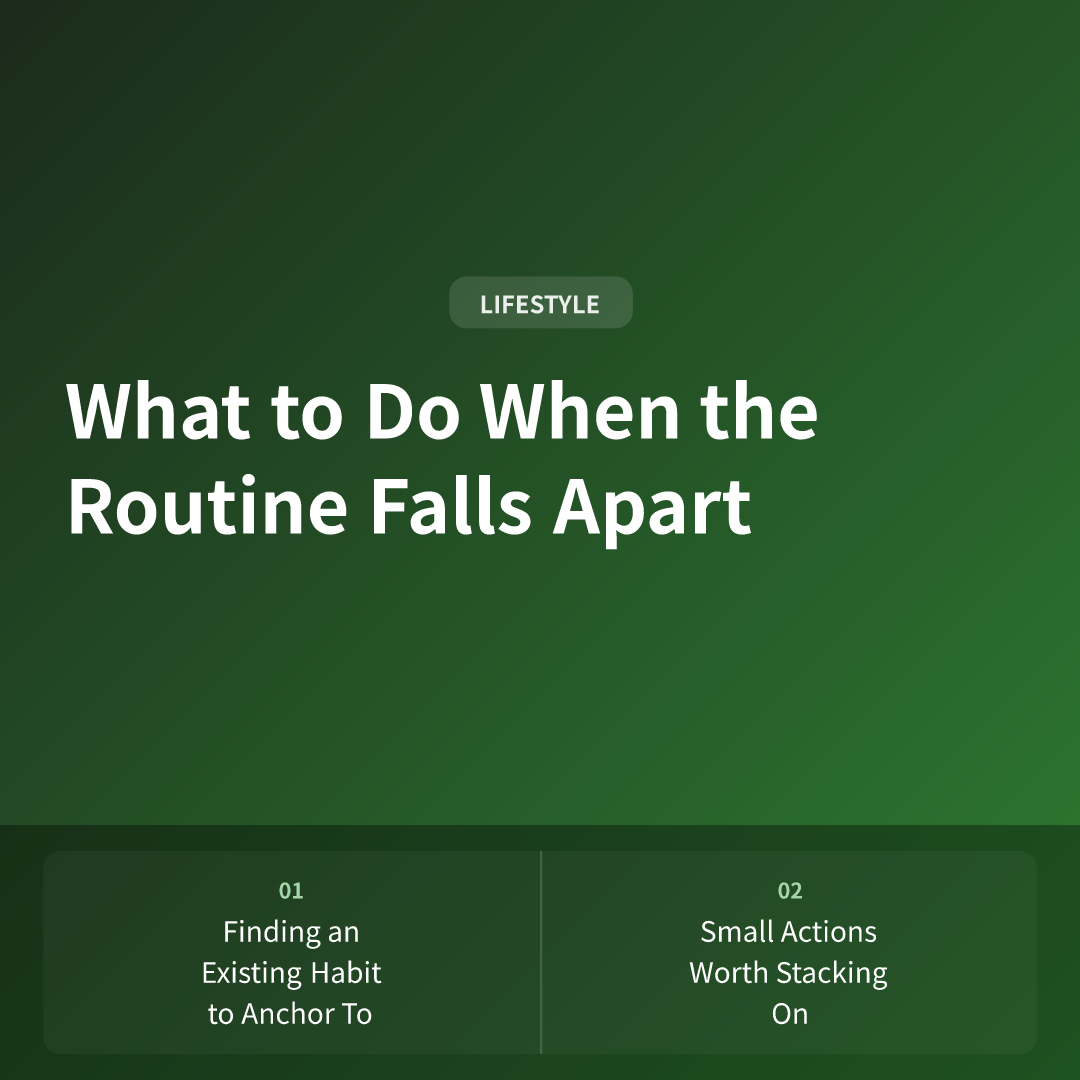
What to Do When the Routine Falls Apart
Almost everyone who builds a habit will break the streak at some point — a busy week, travel, illness, or just a day where nothing goes to plan. What separates a lasting wellness routine from one that quietly disappears isn’t whether you slip up, but what you do in the days right after.
A useful mental rule here is the “never miss twice” idea: missing one day is just a data point, but missing two days in a row is often where a habit starts to unravel completely. Rather than treating a missed day as failure, it can help to treat it as information — maybe the anchor habit wasn’t stable that day, or the new action was too ambitious for how tired you were.
Recovery isn’t about willpower alone — it’s usually easier to shrink the habit back down than to force yourself through it at full size.
If you notice you’ve skipped your stacked habit for a few days, try these adjustments instead of quitting outright:
- Shrink it further. If a five-minute walk stopped happening, try just stepping outside for thirty seconds instead.
- Re-anchor it. Maybe your original anchor habit changed (you stopped making coffee at home, for example) — pick a new one that’s currently stable.
- Drop the guilt narrative. Telling yourself you “ruined” your routine tends to make restarting feel harder than it needs to be.
- Restart with the same anchor, not a new plan. Redesigning your whole routine after a slip often creates more friction than simply resuming where you left off.
It’s also worth being honest about the difference between a normal off-week and a pattern worth paying closer attention to. If low energy, disrupted sleep, or a lack of motivation to care for yourself lasts for weeks rather than days, that may point to something beyond a simple habit-formation issue, and it’s reasonable to bring it up with a doctor or a licensed mental health professional rather than trying to habit-stack your way through it.
Keeping the Routine Realistic Long-Term
Once a stacked habit feels automatic — usually somewhere between a few weeks and a couple of months, since this varies quite a bit from person to person — you can consider adding a second small action onto a different anchor. Layering one habit at a time tends to hold up better than trying to redesign your entire day in one go.
It’s also fine, and honestly normal, for a routine to evolve. An anchor habit that worked well during one season of life (say, a daily commute) might disappear when your schedule changes. When that happens, the skill you’re really building isn’t “always drink water after coffee” — it’s the broader ability to notice your day’s natural checkpoints and attach something helpful to them.
Conclusion
Building a simple wellness routine doesn’t require a dramatic life overhaul — it usually starts with noticing what you already do every day and quietly attaching one small, easy action to it. For the first two weeks, three rules tend to make the biggest difference: stack only one new habit onto one stable anchor, keep the new action small enough that skipping it feels harder than doing it, and if you miss a day, simply resume the next day instead of restarting a whole new plan. Wellness routines built this way tend to survive real life a lot better than the all-or-nothing versions.
⚠️ Disclaimer: This article is for general information only and is not a substitute for professional medical advice. If you’re dealing with ongoing fatigue, sleep problems, or emotional distress, please consult a qualified healthcare provider.
Disclaimer: This article is for informational purposes only and is not a substitute for professional medical advice, diagnosis, or treatment. Please consult a licensed professional for personal health decisions.
Related reading: Easy Stretching Routine for Desk Workers Throughout Your Day