How to Eat More Vegetables Without Forcing It
Two people can both say “I just don’t eat enough vegetables” and have completely different problems. One may dislike the taste, while the other may simply never have them on hand when hunger hits. If you want to know how to eat more vegetables without forcing it, the most useful first step is to work out which problem is yours, because the fix for one often does nothing for the other.
This guide splits the problem into a few common causes, explains how to tell which one fits, and then covers what tends to help across all of them. It is general information, not personal nutrition advice, and what works varies a lot from person to person.
Why Vegetables Feel Hard: Sorting Out the Cause
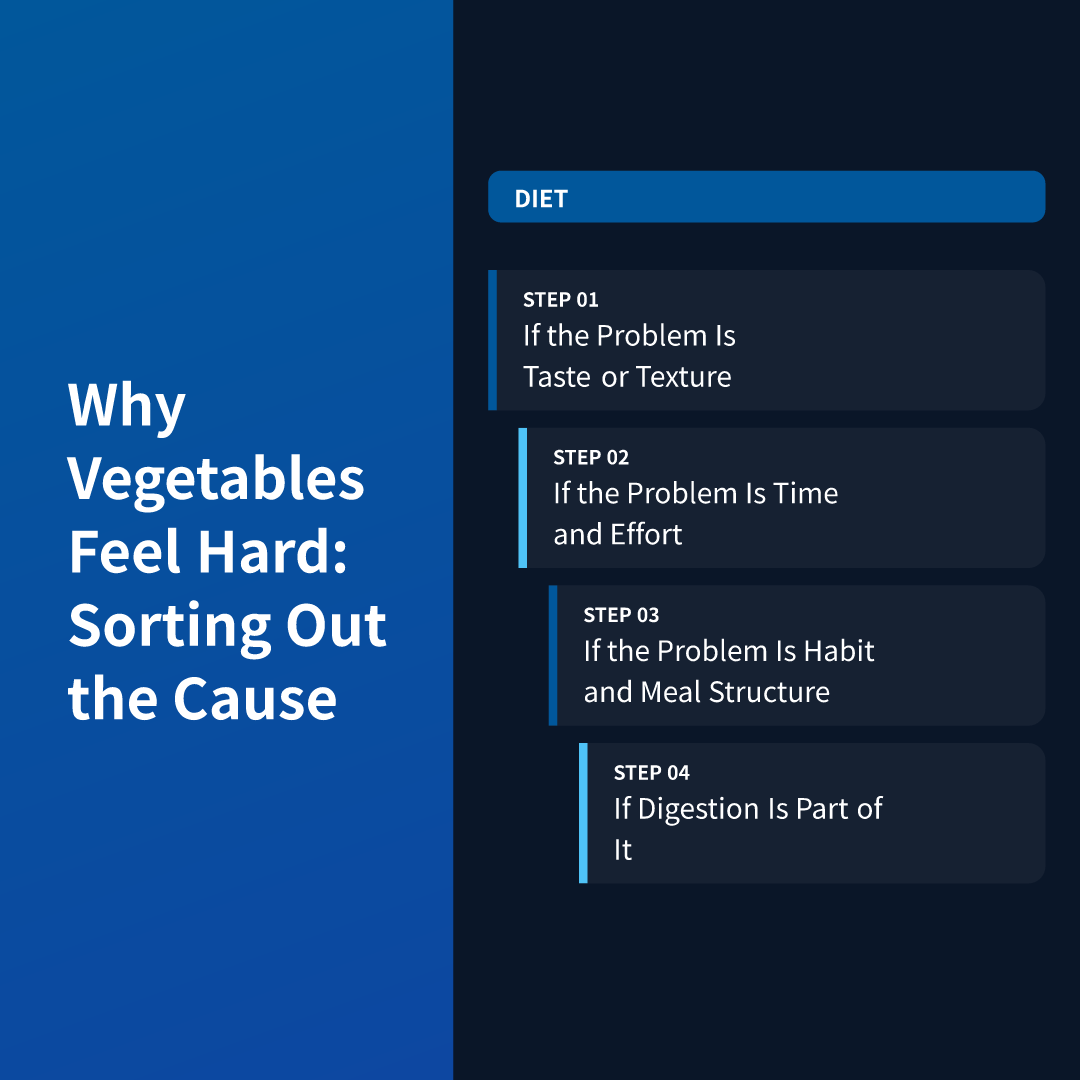
Most struggles with vegetables fall into a few overlapping buckets. Naming yours saves you from the classic mistake of trying a dozen recipes when the real obstacle was something else entirely.
- Taste and texture: Bitterness, sliminess, or a mushy bite makes vegetables unpleasant.
- Logistics: You like them fine, but washing, chopping, and cooking feel like too much effort on a busy day.
- Habit and meal structure: Your usual meals simply have no obvious place for them.
- Digestive comfort: Some vegetables leave you bloated or gassy, so you quietly avoid them.
You might fit more than one bucket, and that is normal. The goal here is to find the biggest one first. If you try to fix everything at once, the whole thing starts to feel like a chore, which is exactly the “forcing” feeling you are trying to avoid.
A quick way to sort yourself
Think back to the last time you skipped vegetables. Was it because the food in front of you did not appeal, because nothing was ready, because it did not occur to you, or because of how you felt afterward? Your honest first answer usually points to the main cause. Jot it down for a week if that helps, without judging yourself.
If the Problem Is Taste or Texture
How to tell this is your situation
You push vegetables to the side of the plate, or you can eat a few kinds but others make you wince. You may notice that you tolerate vegetables in some forms (say, roasted) but not others (say, boiled). That pattern is a strong sign that preparation, not vegetables as a whole, is the issue.
What tends to help
Preparation changes flavor and texture more than most people expect. Many home cooks find that roasting or sautéing brings out a sweeter, more caramelized taste than steaming or boiling, which can leave some vegetables soft and sulfurous. Cutting the same vegetable differently, such as thin shavings versus thick chunks, also changes how it feels in the mouth.
Flavor helps too. Vegetables often become far more appealing with familiar additions like olive oil, garlic, lemon, herbs, spices, cheese, or a sauce you already like. Nothing says the vegetable has to be eaten plain. Pairing a less-loved vegetable with a food you enjoy is a gentle way to build familiarity.
- Try one vegetable in two or three different preparations before deciding you dislike it.
- Start with milder options such as carrots, sweet peppers, corn, or peas, then branch out slowly.
- Blend vegetables into sauces, soups, or smoothies if texture is the main barrier.
- Pair bitter greens with something rich or acidic, which many people find softens the edge.
Some researchers and public health groups note that tastes can shift with repeated, low-pressure exposure, so a vegetable you dislike today is not necessarily a permanent no. That is a general pattern, not a promise, and it varies by person.
The waste to avoid
If your issue is texture, buying a huge amount of steamed-friendly produce and forcing yourself through it usually backfires. You end up with spoiled food, guilt, and a stronger dislike. Narrow the experiment instead: one vegetable, a few cooking styles, small portions.
If the Problem Is Time and Effort
How to tell this is your situation
You enjoy vegetables at restaurants or at someone else’s table, but at home they rarely happen. Produce goes limp in the fridge. You think “I should make a salad” and then order food instead. This points to friction, not preference.
What tends to help
Reducing steps is the whole game here. Many people find that having vegetables already washed, cut, and visible makes them far more likely to be eaten. Pre-cut, bagged, frozen, and canned options are all commonly used, and the MyPlate guidance from the U.S. Department of Agriculture generally recognizes fresh, frozen, and canned vegetables as part of a varied eating pattern. Check labels if you are watching things like added salt or sauces.
- Wash and chop a few vegetables once, then store them where you will see them.
- Keep frozen vegetables on hand for meals when fresh ones have run out.
- Choose one sheet-pan or one-pot meal that cooks vegetables alongside the main dish.
- Buy smaller amounts more often if waste is a recurring frustration.
The waste to avoid
If effort is the barrier, a complicated new recipe is the wrong answer. Ambitious plans tend to collapse by midweek. A simple, repeatable habit beats an impressive but exhausting one.
If the Problem Is Habit and Meal Structure
How to tell this is your situation
You do not dislike vegetables and you are not especially rushed, but your meals just do not include them. Breakfast is toast or cereal, lunch is a sandwich, dinner is pasta. Vegetables are an afterthought you remember at the end of the day, if at all.
What tends to help
Instead of adding a separate “vegetable moment,” try folding vegetables into meals you already eat. Think spinach in eggs, tomatoes or cucumbers on a sandwich, grated zucchini in pasta sauce, or extra vegetables in a stir-fry, soup, or chili. These small additions feel natural because they do not ask you to change the whole meal.
Anchoring vegetables to a regular meal also helps. Some people decide that dinner always has one vegetable on the plate, which turns a decision into a default. Snacks can work as well, such as raw vegetables with hummus or yogurt dip, if that appeals to you.
- Add vegetables to a dish you already make rather than starting from scratch.
- Choose one meal of the day as your “default vegetable” meal.
- Keep a go-to dip or dressing that you genuinely like.
The waste to avoid
If your meals simply lack a slot for vegetables, working on taste will not change much. You can love roasted broccoli and still never eat it because it is never on the table. Fix the structure first.
If Digestion Is Part of It
How to tell this is your situation
You notice bloating, gas, or discomfort after certain vegetables, and you have started avoiding them without really deciding to. Some people find that raw vegetables, or certain types like cruciferous vegetables, onions, or legumes, bother them more than others.
What tends to help
Digestive tolerance differs widely. Cooked vegetables are often gentler than raw ones for some people, and portion size and variety can matter. Increasing fiber gradually, rather than all at once, is commonly mentioned in general nutrition guidance, including from the National Institutes of Health, as a way to give the body time to adjust.
That said, ongoing or severe digestive symptoms deserve attention beyond tips from an article. Persistent pain, unexplained weight loss, blood in the stool, or symptoms that are getting worse are reasons to talk with a doctor or registered dietitian rather than experimenting on your own. A health professional can help figure out whether a specific condition or food sensitivity is involved.
The waste to avoid
Cutting out whole groups of vegetables because of a vague worry can narrow your diet unnecessarily. At the same time, pushing through real discomfort is not a good plan. A professional can help you find the middle ground.
What Helps Across All the Causes
Whichever cause fits you, a few ideas show up again and again. They all share one theme: lower the pressure and raise the ease.
Start smaller than feels useful
Adding one extra serving to one meal is a perfectly reasonable beginning. Big overhauls often fade quickly, while small changes tend to stick because they barely register as effort. You can always build on a habit that is already running.
Think variety, not perfection
Different vegetables offer different mixes of nutrients, and general dietary guidance from the U.S. Dietary Guidelines for Americans encourages a range of vegetables over time. You do not need to love every one. A short list of vegetables you genuinely enjoy, rotated through the week, is a solid starting point.
Drop the guilt
Treating vegetables as a moral test usually makes them less appealing. Frozen, canned, cooked, blended, hidden in a sauce, or served with your favorite dip all count as ways of eating vegetables. If something is making a meal feel like punishment, it is probably worth changing the approach.
Notice what you already like
Take a quick inventory. Most people already enjoy a handful of vegetables, like tomatoes in sauce, onions in a stir-fry, potatoes, corn, or lettuce on a burger. Building outward from existing favorites feels more natural than starting from the vegetables you dislike most.
Who should check in with a professional
Some people have specific needs. If you take certain medications, have a kidney condition, a digestive disorder, a history of disordered eating, or you are pregnant, changing how much or which vegetables you eat may call for individual guidance. A doctor or registered dietitian can tailor advice to your situation in a way general articles cannot.
Bringing It Together
If vegetables taste or feel unpleasant, the useful move is changing how they are prepared and what they are paired with, not trying harder. If they are a hassle, the answer is reducing steps with prepped, frozen, or one-pan options. If your meals have no obvious place for them, adding vegetables to dishes you already eat tends to work better than designing new meals. And if digestion is the quiet reason you avoid them, gradual changes and a conversation with a health professional are more sensible than guessing.
When you cannot tell which cause is yours, pick the one that sounds most likely and try a single small change for a week or two. If nothing shifts, move to the next cause. That is a perfectly good way to learn how to eat more vegetables without forcing it, and it keeps the process kind to you. If you want a more tailored plan, a registered dietitian is the natural next step.
Disclaimer: This article is for informational purposes only and is not a substitute for professional medical advice, diagnosis, or treatment. Please consult a licensed professional for personal health decisions.