Morning Routines That Lower Daily Stress, Realistically
Most people don’t fail at morning routines because they pick the wrong habits — they fail because they try to do all of them at once. A ten-step routine with journaling, cold showers, stretching, gratitude lists, and a green smoothie sounds great on paper, but it rarely survives a Tuesday when the alarm doesn’t go off on time. If you’re looking for morning routines that lower daily stress, the more useful question isn’t “what should I add,” it’s “what’s the smallest version of this that I’ll actually keep doing.”
This piece is organized around that idea. We’ll start with the one or two habits that tend to matter most, move on to optional extras for days when you have more time and energy, then talk about what you genuinely don’t need to force into your morning. A short FAQ at the end covers common questions, including how long it usually takes before people notice any difference.
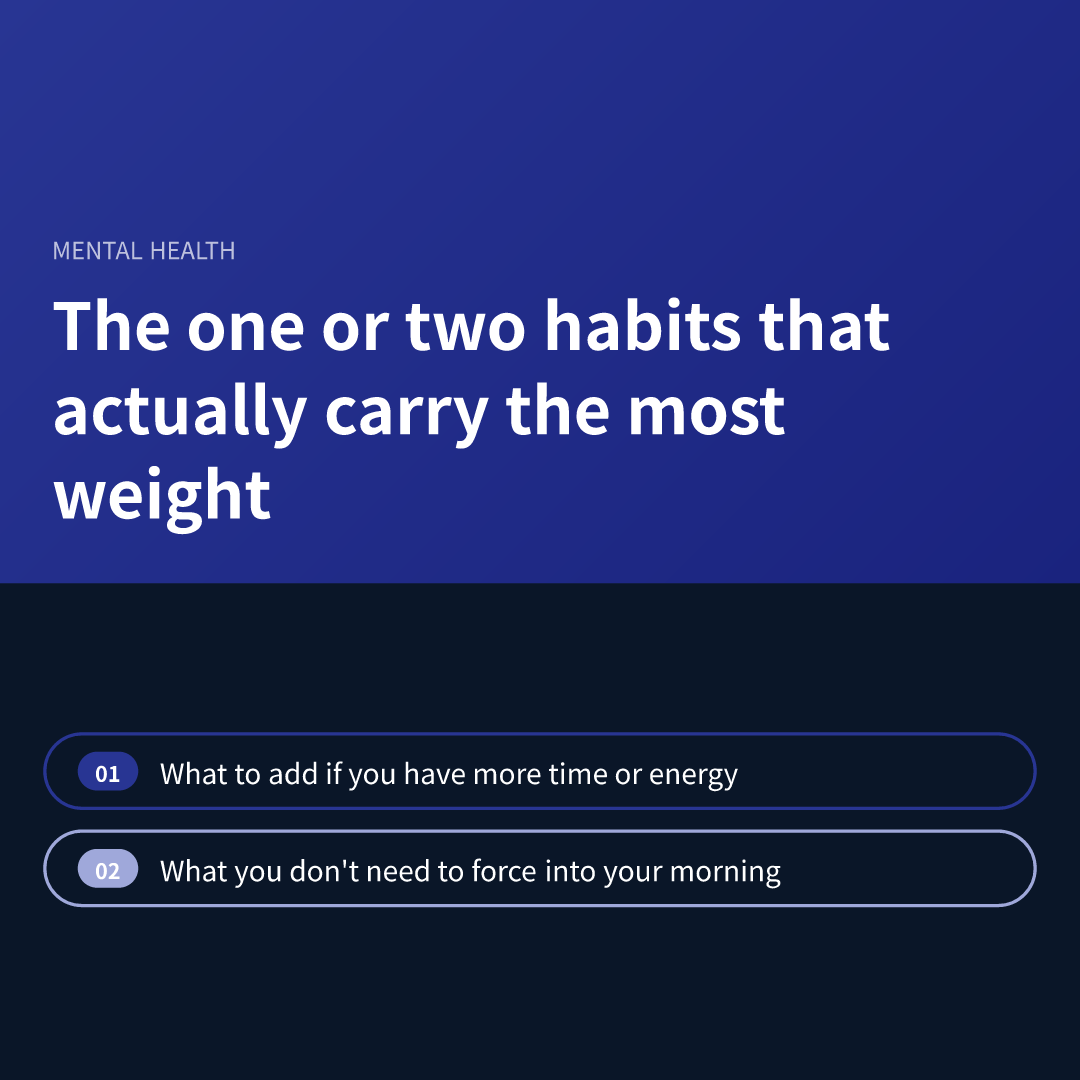
The one or two habits that actually carry the most weight
If you only have five or ten minutes before the day pulls you in different directions, two things tend to matter more than the rest: waking up at a consistent time, and giving yourself a short buffer before checking your phone.
A steady wake-up time, even on weekends
Sleep and stress are closely linked, and an irregular wake-up schedule can make mornings feel chaotic no matter what you do once you’re up. Waking at roughly the same time each day — including weekends, as much as your life allows — is one of the more consistently mentioned pieces of general sleep guidance, and it doesn’t require any special equipment or extra minutes in your morning. It simply asks you to protect the schedule you already have.
That said, this isn’t a strict rule that guarantees calmer days. Shift workers, parents of young children, and people with irregular schedules may find a fixed wake time unrealistic, and that’s a legitimate limitation rather than a personal failure. In those cases, aiming for a narrower range of wake-up times rather than one exact hour can still be a reasonable middle ground.
A short delay before opening your phone
Checking messages, news, or social media within the first minutes of waking up tends to shift your mind straight into other people’s priorities before you’ve had a chance to settle into your own. Many people find that even a brief pause — making coffee, sitting quietly, or just looking out a window before reaching for a screen — makes the transition into the day feel less rushed.
This isn’t about avoiding phones entirely, and it isn’t a rule that works identically for everyone. Some people genuinely need to check a work schedule or a child’s messages first thing, and that’s fine. The point is simply noticing whether an immediate scroll session tends to leave you feeling more wound up, and adjusting from there if it does.
A routine that survives your actual mornings — including the rushed ones — is more useful than a longer one you only manage a few times a month.
What to add if you have more time or energy
Once the basics feel steady, there are a few additions people commonly find helpful. None of these are required, and skipping them doesn’t undo the benefit of the first two habits.
- Light movement. A short walk, some stretching, or a few minutes of light exercise can help some people feel more alert and less tense, though the effect and the amount of time needed varies quite a bit from person to person.
- Natural light exposure. Getting outside or near a window relatively soon after waking is sometimes mentioned in general wellness guidance as supportive for daily rhythm, though this depends on your climate, schedule, and personal sensitivity to light.
- A few minutes of quiet reflection. This could be journaling, sitting with a cup of tea, or simply planning the day’s priorities. The goal isn’t a perfect gratitude list — it’s giving your mind a moment to orient itself before the day’s demands take over.
- A slower breakfast. Eating something without simultaneously scrolling or rushing out the door can make mornings feel less frantic, though the specific foods you choose matter less than the pace at which you eat them.
It’s worth being honest that none of these additions are backed by a promise of feeling calmer every single day. They’re small adjustments that some people notice a benefit from, and others find make little difference. Trying one at a time, rather than all four together, makes it easier to tell what’s actually helping you.
What you don’t need to force into your morning
This is the part that often gets left out of routine advice, and it matters just as much as the additions above. If a habit consistently makes your morning feel more stressful rather than less, it’s reasonable to drop it, no matter how popular it is.
- Cold showers or extreme wellness challenges. Some people enjoy them, but they aren’t necessary for a calmer morning, and forcing something uncomfortable can add stress rather than remove it.
- Long meditation sessions. A lengthy practice isn’t required to get some benefit from a quiet moment. A few slow breaths while the kettle boils can serve a similar purpose without adding pressure to “do it properly.”
- An elaborate skincare or self-care sequence. These can be enjoyable, but treating them as mandatory steps in a stress-reduction routine can turn something relaxing into another item on a to-do list.
- Perfect execution every single day. Missing a morning, sleeping through an alarm, or skipping your usual habit because life got in the way doesn’t cancel out the routine. Consistency over time matters more than any single morning going exactly as planned.
If your mornings feel persistently overwhelming despite trying a simpler routine, or if you notice ongoing anxiety, low mood, or trouble functioning that doesn’t seem tied to any specific habit, that’s worth mentioning to a doctor or mental health professional rather than trying to solve through routine adjustments alone. General information on stress and coping, such as the overview from the American Psychological Association, can be a useful starting point, but it isn’t a substitute for individual guidance.
Frequently asked questions about morning routines and stress
Do I need to wake up early for a morning routine to help?
Not necessarily. What tends to matter more is consistency and a sense of order before the day’s demands begin, whether that’s at 6 a.m. or 9 a.m. A later riser with a steady, unhurried start can benefit just as much as an early riser, depending on their schedule and personality.
What if I only have five minutes in the morning?
Five minutes is enough to do something. A brief pause before checking your phone, a few slow breaths, or simply sitting with your first cup of coffee without multitasking can still make a difference for some people. The size of the routine matters less than whether you can actually keep it going on busy days.
Can a morning routine replace treatment for anxiety or chronic stress?
No. A morning routine can be a helpful piece of daily self-care, but it isn’t a treatment, and it isn’t designed to address ongoing anxiety, depression, or chronic stress on its own. If stress is affecting your sleep, relationships, or ability to function day to day, it’s worth talking with a qualified healthcare provider or mental health professional who can look at your specific situation.
How long before I notice a difference?
This varies quite a bit between people. Some notice a small shift in how rushed or settled their mornings feel within a week or two of keeping a simple routine steady, while others need longer, or find the effect is subtle rather than dramatic. A few people don’t notice much change at all, which may mean the routine needs adjusting or that other factors — sleep, workload, or underlying stress — need more direct attention. Giving a simplified routine a few consistent weeks before judging whether it’s working is generally a reasonable approach, but expecting an identical result to someone else’s experience isn’t realistic.
Building calmer mornings usually comes down to picking one or two habits you can actually repeat, rather than chasing a long list you’ll abandon by the end of the month. Morning routines that lower daily stress tend to work not because they’re elaborate, but because they’re small enough to survive real life — and flexible enough to adjust when they stop fitting your days.
⚠️ Disclaimer: This article is for informational purposes only and does not replace professional medical advice.
Related reading: Daily Habits That Support Mental Wellbeing: Start Small