Nutrition Labels Explained Simply for Everyday Shoppers
A nutrition label is the standardized panel on packaged food that lists serving size, calories, and the amounts of certain nutrients in that serving. Nutrition labels explained simply come down to one idea: every number on the panel refers to a single serving, not to the whole package. Below, you will find what each part of the label means, where people commonly get tripped up, and why reading it can shape everyday food choices.
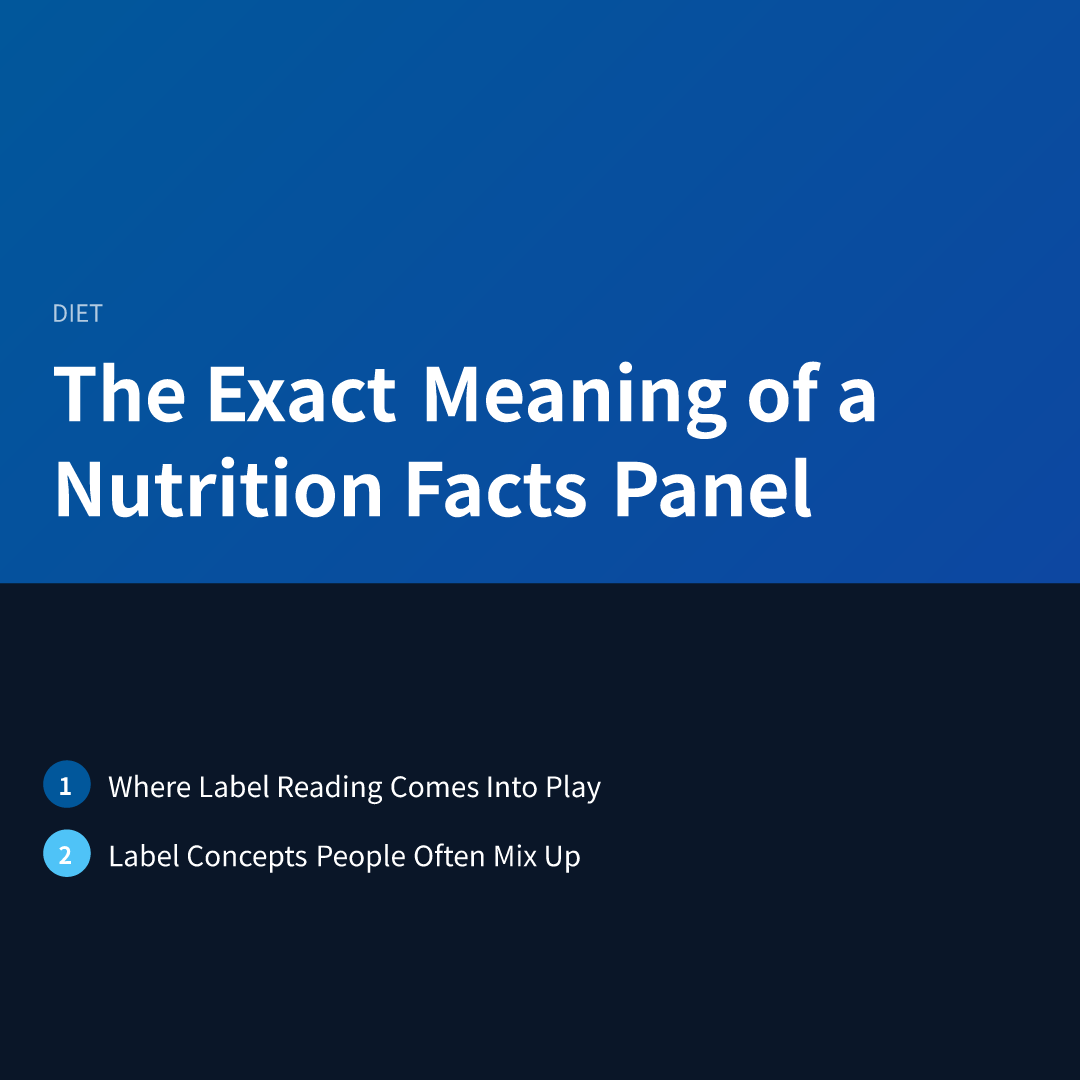
The Exact Meaning of a Nutrition Facts Panel
According to the U.S. Food and Drug Administration (FDA), most packaged foods carry a Nutrition Facts label with a consistent layout. That consistency is the point: you can pick up two boxes of cereal, or a cereal and a granola bar, and look at the same lines in the same order. The panel is a snapshot of what is in a defined portion of that food.
Think of the panel like a receipt. A receipt tells you what you are being charged for each item, and the label tells you what you are "paying" in calories and nutrients for each serving. If you buy two of an item, the receipt doubles; if you eat two servings, the label doubles too.
Serving size and servings per container
These two lines sit at the top and shape everything beneath them. Serving size is the amount the manufacturer lists as one portion, usually shown in a household measure such as cups or pieces, along with a metric amount. Servings per container tells you how many of those portions the package holds.
The FDA has explained that serving sizes are meant to reflect amounts people typically eat, not amounts anyone is advised to eat. That distinction matters. A listed serving is a reference point for comparison, not a recommendation.
Calories
Calories are a measure of the energy a serving provides. The number is printed in large, bold type because it is often the first thing people look for. How many calories suit a particular person varies with age, body size, activity level, and health circumstances, so a single figure on a package cannot say what is right for you.
Nutrients to look at more closely
Below calories, the panel lists nutrients such as total fat, saturated fat, sodium, total carbohydrates, dietary fiber, total sugars, added sugars, and protein. It also lists some vitamins and minerals. According to the FDA, the panel highlights nutrients that many people are trying to limit as well as some that many people do not get enough of. Which ones matter most to you depends on your own situation.
- Saturated fat and sodium: commonly watched by people who are paying attention to heart health, though individual needs differ.
- Dietary fiber: a type of carbohydrate the body does not fully digest, found in plant foods like beans, whole grains, and vegetables.
- Added sugars: sugars put in during processing or preparation, listed separately from sugars that occur naturally in foods such as milk or fruit.
- Vitamins and minerals: often included because some are commonly under-consumed, such as vitamin D, calcium, iron, and potassium.
Where Label Reading Comes Into Play
Labels are most useful at the moment of comparison. Standing in an aisle with two similar products, the panel gives you a quick, side-by-side way to see differences in sodium, added sugars, or fiber. It is also helpful at home when you are deciding how much of something to put on your plate.
People also use labels in more specific situations. Someone managing a medical condition, such as high blood pressure or diabetes, may be given guidance by their care team about which numbers to watch. A parent may check labels for a child with a food allergy. In those cases, the label is a tool that works alongside professional guidance, not a replacement for it.
The percent daily value column
The right-hand column shows percent Daily Value, often written as %DV. The FDA describes it as a way to see how much a nutrient in one serving contributes to a general daily eating pattern. A common rule of thumb, mentioned in FDA consumer materials, is that a low %DV is roughly on the lower end and a high %DV is roughly on the higher end, which can help you judge whether a food is a small or large source of a nutrient.
Keep in mind that %DV is built around a general reference diet. Your own needs may be higher or lower, so treat it as a rough guide rather than a personal target. If you have a health condition, a registered dietitian or your doctor can tell you what is appropriate for you.
The ingredient list and allergen statement
Separate from the Nutrition Facts panel, packaged foods carry an ingredient list. Ingredients are generally listed in descending order by weight, so the first few items make up most of the product. This is useful for spotting whether a food is built mostly from whole grains, for example, or mostly from sweeteners and refined starches.
The FDA also requires that major food allergens be identified on labels, often in a "Contains" statement near the ingredient list. If you or a family member has a food allergy, this is a key part of the package to read carefully every time, since recipes can change.
Label Concepts People Often Mix Up
Several terms look similar but mean different things. Sorting them out removes much of the confusion people feel in the grocery store.
Total sugars versus added sugars
Total sugars include both sugars found naturally in a food and any that were added. A plain yogurt or a piece of fruit can show total sugars even with none added. The added sugars line is meant to show how much of that total was put in during manufacturing. Reading both lines together gives a clearer picture than either one alone.
Serving size versus portion
A serving is a standardized reference amount on the label. A portion is however much you actually eat. If a bag of chips lists several servings and you finish the bag, you have eaten every serving, and the calories and nutrients multiply accordingly. This mismatch is one of the most common reasons people are surprised by what they have consumed.
Front-of-package claims versus the panel
Phrases on the front of a box, such as "natural," "light," or "made with whole grains," are marketing language that may or may not tell the full story. The FDA regulates certain nutrient content claims like "low sodium" or "high fiber," with defined meanings, but other front-of-package wording can be looser. The Nutrition Facts panel and ingredient list on the back or side are generally the more reliable place to check what is actually inside.
"Best by" dates versus nutrition information
Date labels relate to quality or freshness, not to nutrient content. They are a different topic from the Nutrition Facts panel, and according to the U.S. Department of Agriculture, they are not generally the same thing as a safety deadline for most foods. If you have questions about food safety and storage, the USDA and FDA both publish consumer guidance.
Why Reading Labels Matters in Daily Life
Most of us make a large number of small food decisions over time, and labels give those decisions some information to work with. The point is not to scrutinize every item or to turn eating into a math problem. It is to notice patterns, such as which snack foods tend to be high in added sugars or which breads offer more fiber.
Labels can also help when you are comparing products that look nearly identical. Two sauces, two cereals, or two soups can differ quite a bit in sodium or added sugars. A quick glance can show those differences without any special training.
Limits worth keeping in mind
A label describes a food, not a person. It cannot tell you whether a product is appropriate for your body, your medications, or your health condition. It also does not capture how a food is prepared at home, how much you add to it, or how it fits into the rest of your day.
Labels can also encourage an overly narrow focus on single numbers. Some people find that fixating on calories or a single nutrient makes eating feel stressful. If label reading starts to cause anxiety, or if you have a history of disordered eating, it may be worth talking with a qualified health professional about a healthier approach.
When to ask a professional
Consider speaking with your doctor or a registered dietitian if you have a medical condition that affects what you should eat, such as kidney disease, diabetes, or a food allergy. The same goes for pregnancy, for feeding young children with special needs, or for any situation where you have been told to track particular nutrients. A professional can interpret label numbers in the context of your own health, which a general guide cannot do.
What Changes When You Understand Labels
Once the basics of nutrition labels are clear, two judgments tend to shift in practice.
- You compare by serving, not by package size. Instead of assuming a small package is a single portion, you check servings per container and decide how much of it you are actually eating before you judge the numbers.
- You weigh the back of the package over the front. Rather than relying on eye-catching claims, you turn to the Nutrition Facts panel and ingredient list to see what a product contains, and you ask a professional when your health situation calls for more than a general label can offer.
Disclaimer: This article is for informational purposes only and is not a substitute for professional medical advice, diagnosis, or treatment. Please consult a licensed professional for personal health decisions.