Plant Based Diet for Beginners: Where to Start Based on Your Situation
There isn’t one single “right way” to begin a plant based diet for beginners, because the best starting point depends on your age, your digestion, your activity level, and how much time you actually have to cook. Someone juggling a full-time job and takeout habits needs a different entry point than someone managing a digestive condition or trying to protect muscle mass later in life. Rather than following one generic meal plan, it usually helps more to figure out which situation sounds like yours first.
This guide walks through a few common starting points people fall into when they consider eating more plants and less animal food, along with the kind of approach that tends to fit each one — and the mistakes that tend to trip people up along the way.
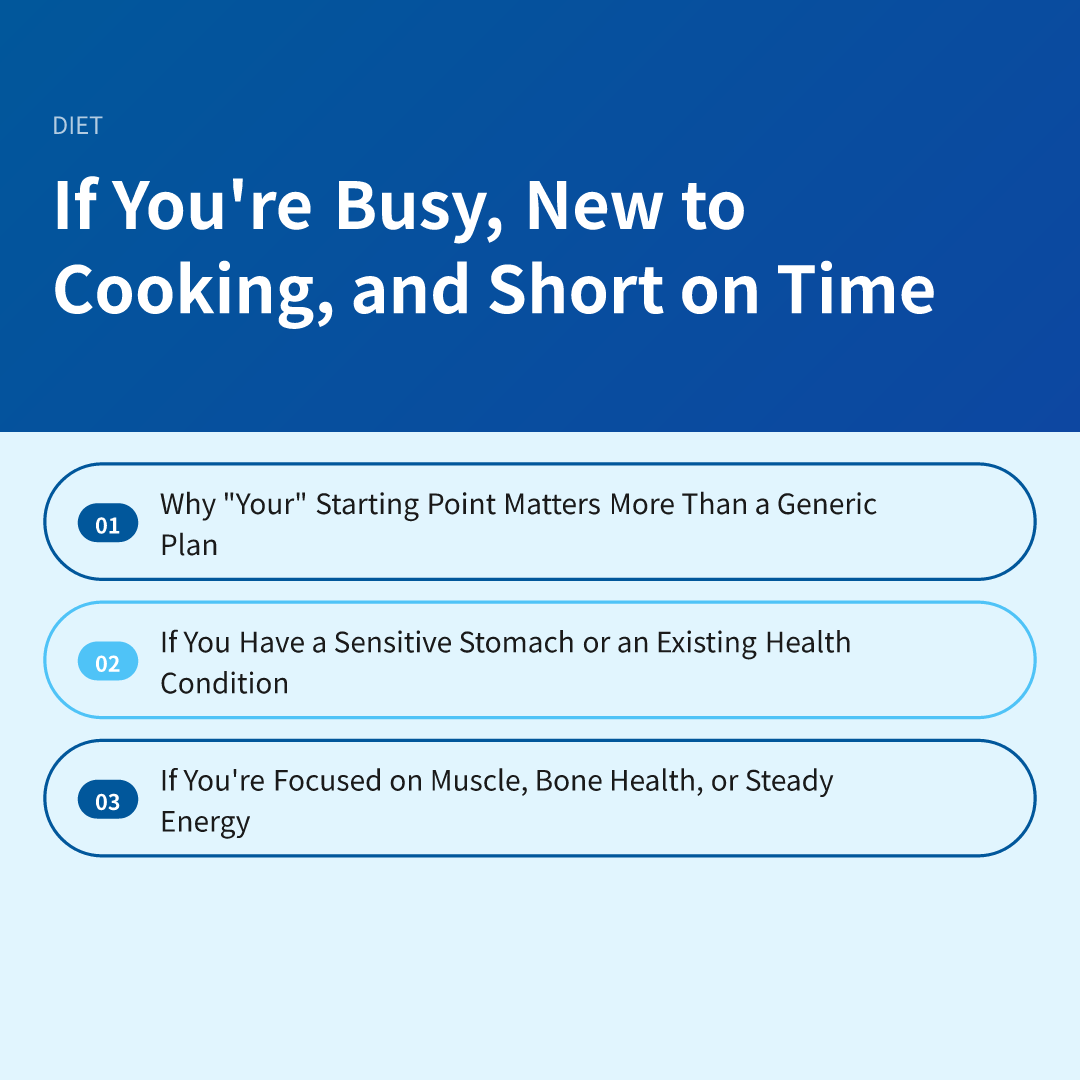
Why “Your” Starting Point Matters More Than a Generic Plan
Plant-based eating covers a wide range, from simply adding more vegetables and legumes to your existing meals, all the way to a fully whole food plant-based diet with no animal products at all. Because the spectrum is so broad, two people can both say they’re “going plant-based” while eating almost nothing alike. What matters for beginners is matching the level of change to your actual life, not to whatever version looks most impressive online.
Below are three situations that come up often. Read the one that feels closest to your own life, and treat the others as background rather than a checklist you need to complete.
If You’re Busy, New to Cooking, and Short on Time
The situation: Your kitchen skills are limited, your schedule is unpredictable, and most of your current meals come from convenience foods, delivery apps, or quick reheats. The idea of an entirely new way of cooking feels exhausting before you’ve even started.
What tends to work: Instead of overhauling every meal, many beginners find it easier to swap one meal a day — often lunch or dinner — for a simple plant-based option built around things that don’t require much technique: canned beans, frozen vegetables, pre-washed greens, and grains like rice or oats that mostly cook themselves. Sheet-pan vegetable meals and simple grain bowls are popular starting points precisely because they involve minimal decision-making.
It also helps to keep a short rotating list of five or six meals you actually enjoy, rather than trying a new recipe every night. Repetition early on tends to matter more than variety for people who are still building the habit.
What to avoid: Trying to batch-cook elaborate meals for the whole week in one sitting is a common way people burn out within the first month. Buying a long list of unfamiliar specialty ingredients before you’ve confirmed you’ll actually use them regularly is another frequent stumbling block.
If You Have a Sensitive Stomach or an Existing Health Condition
The situation: You deal with digestive sensitivity, a condition like diabetes or irritable bowel symptoms, or you’re already managing something like anemia or a thyroid issue. Adding a large volume of fiber-rich plant food quickly, as many “beginner” plant-based guides suggest, sounds like it could make things worse rather than better.
What tends to work: A slower, staged approach is usually more realistic here. Increasing fiber gradually — rather than switching from a low-fiber diet to a high-legume, high-vegetable one overnight — tends to be gentler on digestion for many people. Cooking vegetables and legumes thoroughly, rather than eating them raw or only lightly cooked, can also make them easier to tolerate while your system adjusts.
For anyone managing a condition like diabetes, it’s worth paying attention to how starchy plant foods (like potatoes, rice, or certain fruits) affect your levels individually, since plant-based doesn’t automatically mean lower impact on blood sugar. General guidance from sources like the USDA’s MyPlate resources can offer a useful starting framework for balancing food groups, though it isn’t a substitute for advice tailored to your specific condition.
What to avoid: Jumping straight into a very high-fiber, all-raw approach because it’s trending online is one of the more common reasons people with sensitive digestion give up on plant-based eating within the first few weeks. Ignoring ongoing symptoms like persistent bloating, fatigue, or changes in bowel habits — rather than mentioning them to a healthcare provider — is another pattern worth avoiding.
If You’re Focused on Muscle, Bone Health, or Steady Energy
The situation: You’re either an active adult trying to maintain muscle, or you’re older and thinking about bone density, protein intake, or general energy levels as you age. You’ve heard that plant-based diets can sometimes fall short on protein or certain nutrients if they aren’t planned carefully.
What tends to work: The concern about protein is manageable with some planning rather than luck. Beans, lentils, tofu, tempeh, edamame, and certain grains together can add up to a reasonably protein-dense pattern, especially when spread across meals rather than concentrated in just one. Because plant proteins vary in their amino acid profiles, eating a variety of sources across the day — rather than relying on just one — is generally considered a sensible approach.
Calcium, vitamin D, iron, and vitamin B12 are the nutrients most often flagged as worth watching on a fully plant-based diet, since B12 in particular is not naturally present in plant foods in meaningful amounts. Many beginners choose to discuss testing or supplementation for these with a doctor or registered dietitian rather than guessing.
What to avoid: Assuming that “plant-based” automatically means nutritionally complete without any attention to variety is a common misstep. Skipping protein-rich plant foods in favor of mostly refined carbohydrates (white bread, pasta, sugary snacks that happen to be vegan) is another version of this mistake — it technically fits the label without supporting the goal.
Cautions Worth Keeping in Mind No Matter Which Path You’re On
Whichever situation matches yours, a few general cautions apply across the board. Sudden, dramatic dietary changes — even toward foods generally considered healthy — can sometimes cause temporary digestive discomfort, and that’s worth expecting rather than panicking over in the first couple of weeks.
That said, some signs are worth taking seriously rather than waiting out. Persistent fatigue, dizziness, unusual hair or skin changes, ongoing digestive distress, or noticeable changes in blood sugar or blood pressure readings are all reasons to check in with a doctor or registered dietitian, especially if you’re also managing an existing health condition or taking medication. Anyone who is pregnant, breastfeeding, elderly with limited food intake, or managing a chronic illness should treat a shift toward plant-based eating as something to plan together with a healthcare provider, not something to navigate alone based on general articles like this one.
It’s also worth remembering that individual response to diet varies quite a bit — what works smoothly for one person’s energy levels or digestion may not work the same way for someone else, even with a similar starting point. A plant based diet for beginners doesn’t have to mean perfection from day one; for most people, a gradual, situation-appropriate approach tends to be more sustainable than an all-or-nothing switch, and checking in with a professional along the way can help make sure the changes actually fit your body rather than just a general template.
Disclaimer: This article is for informational purposes only and is not a substitute for professional medical advice, diagnosis, or treatment. Please consult a licensed professional for personal health decisions.
Related reading: Balanced Diet Basics for Beginners Made Simple