Posture Habits to Prevent Back Pain You Can Actually Keep
The easiest posture habits to prevent back pain are the ones you attach to something you already do every day, like brewing coffee, sitting down at a desk, or brushing your teeth. This approach is often called habit stacking, and it works because the old habit acts as a built-in reminder. No single posture is a guaranteed shield, and back pain has many causes, but small and repeatable changes in how you sit, stand, and move are commonly suggested for supporting a more comfortable back over time.
According to the National Institutes of Health general guidance on back pain, staying active and avoiding long stretches in one position are common themes in everyday back care. The sections below show how to pick anchor habits, what to pair with them, and how to get back on track when a busy week wipes out your good intentions.
Finding the Everyday Habits You Can Build On
Before adding anything new, take a quiet inventory of what you already do without thinking. The best anchors are things that happen at roughly the same point each day and that you rarely skip. If a habit only happens sometimes, it makes a shaky foundation.
What makes a good anchor habit
A useful anchor has three qualities. It happens reliably, it has a clear start or end moment, and it naturally puts your body in a position where a posture cue makes sense. Sitting down, standing up, and waiting are all good examples because they involve your spine in some way.
- Sitting down at a desk, at the dinner table, or in the car.
- Standing still while a kettle boils, a microwave runs, or you brush your teeth.
- Transitions such as finishing a call, closing a laptop, or arriving home.
- Waiting in line, at a crosswalk, or for an elevator.
Why timing matters more than effort
Many people try to overhaul their posture all at once and give up within days. Linking a tiny action to an existing moment asks far less willpower. You are not trying to remember to sit well all day, which is nearly impossible. You are only trying to reset once, at a specific trigger.
Personal variation matters here too. Someone who works from a kitchen counter has different anchors than a delivery driver or a nurse on their feet for hours. Choose triggers that fit your actual day rather than an ideal one.
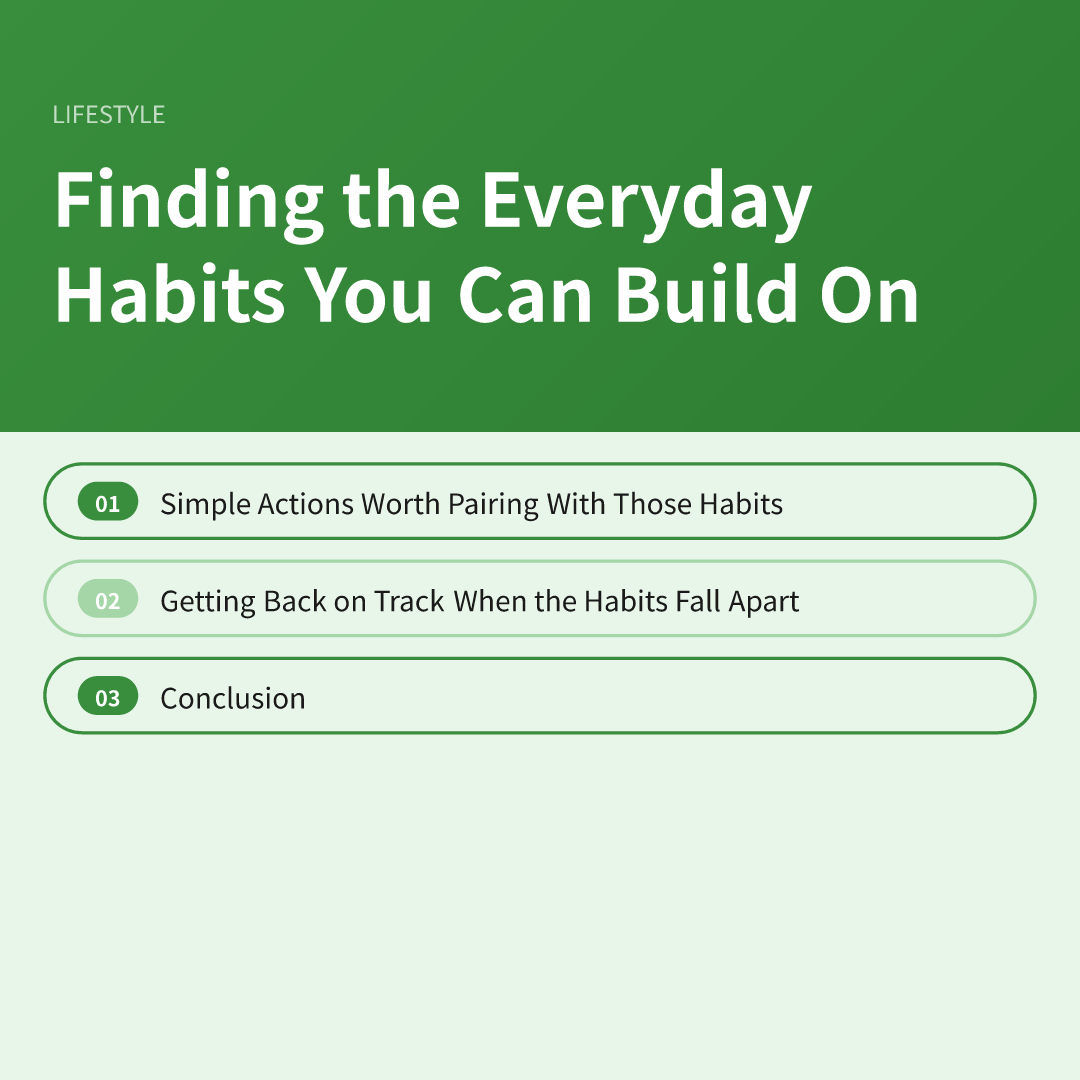
Simple Actions Worth Pairing With Those Habits
Once you have two or three anchors, you can pair each with one small behavior. Keep each pairing short enough that it takes only a few seconds, since the goal is consistency rather than intensity. The combinations below are examples to adapt, not a fixed program.
Pairings for desk and screen time
- Sit down, then scoot back. Each time you sit, shift your hips toward the back of the chair so your lower back has support, and let your feet rest flat on the floor.
- Open the laptop, then check screen height. A screen that sits closer to eye level is often suggested so your head is not pushed forward for long periods.
- Finish a meeting, then stand up. Using the end of a call as a cue to stand and walk a short distance breaks up long sitting.
- Hit send on an email, then roll your shoulders. It takes moments and interrupts the slow slump many people drift into.
The Mayo Clinic's general back care guidance and the CDC's broader information on physical activity both emphasize moving regularly rather than holding any one position for too long. Even a very good chair setup does not replace changing positions.
Pairings for standing and household tasks
- Brush your teeth, then soften your knees. Standing with knees slightly unlocked and weight spread across both feet can feel less tiring than locking your legs.
- Wait for the kettle, then stand tall. Think of lengthening through the top of your head while keeping your ribs stacked over your hips.
- Pick something up, then bend at the hips and knees. Many general back care resources, including MedlinePlus, describe keeping loads close to the body and avoiding sudden twisting while lifting.
- Load the dishwasher, then switch sides. Alternating which foot is forward spreads the effort around.
Pairings for commuting and downtime
- Buckle the seat belt, then adjust the seat. A quick check that your back is supported and your knees are not locked can make long drives less tiring.
- Sit on the couch, then add a small cushion if needed. Soft sofas often encourage slumping, so some people like to support the lower back.
- Get into bed, then check your position. Some people find a pillow between the knees or under them more comfortable, though preferences vary widely.
- Walk to the bus stop, then relax your grip. Carrying a bag on one shoulder all the time can tilt your posture, so switching sides or choosing a balanced bag may help.
Keep movement in the mix
Posture is only part of the picture. The NIH and CDC both describe regular physical activity, including walking and general strengthening, as a common part of looking after the back. If you are unsure which exercises suit you, a physical therapist or doctor can help tailor suggestions, especially if you have had an injury or a medical condition affecting your spine.
Getting Back on Track When the Habits Fall Apart
Here is the honest part: habits will slip. A deadline, a trip, a cold, or a bad week will knock out your routine, and that is normal rather than a failure. Planning for it in advance keeps one missed day from turning into a missed month.
Recovery rules that expect imperfection
- Never skip twice. One missed day is just a day. Treat the second day as the one that matters and restart there, even with a tiny version.
- Shrink the habit, don't drop it. If you cannot manage three pairings, keep one. A single anchor kept alive is easier to rebuild from than an abandoned routine.
- Return to the anchor, not the guilt. Skip the catch-up. Just do the next pairing at the next trigger.
- Change the cue if it stopped working. If you no longer make coffee at home, the coffee anchor is gone. Pick a new one rather than forcing the old one.
Making reminders do some of the work
A sticky note on the monitor, a repeating phone reminder, or a small object on your desk can nudge you back during a rough patch. These are temporary scaffolding. Once the pairing feels automatic again, you can usually remove them.
When pain is a signal, not a habit problem
Posture habits are everyday self-care, not a way to diagnose or treat pain. According to the NIH and MedlinePlus general guidance, certain symptoms call for prompt medical attention rather than more posture tweaking. These commonly include:
- Back pain after a fall, accident, or significant injury.
- Numbness, tingling, or weakness in the legs.
- Loss of bladder or bowel control.
- Fever together with back pain.
- Pain that is severe, keeps getting worse, or wakes you at night.
- Pain that lingers for a long time without improving.
If any of these apply, contact a doctor or urgent care service instead of waiting to see whether better habits help. A qualified professional can assess what is going on and suggest options suited to you.
Conclusion
Lasting posture habits to prevent back pain usually come from small, well-timed actions tied to routines you already have, not from rigid rules or perfect form. Results differ from person to person, and posture is only one piece alongside regular movement, sleep, and overall health. If you have ongoing or worsening pain, a healthcare professional is the right person to look at your specific situation.
Your first two weeks, in three lines:
- Pick two anchor habits and attach one tiny posture action to each, nothing more.
- If you miss a day, do the smallest version the next day and never skip twice in a row.
- At the end of two weeks, keep what felt easy, swap out what did not, and talk to a professional if pain persists.
Disclaimer: This article is for informational purposes only and is not a substitute for professional medical advice, diagnosis, or treatment. Please consult a licensed professional for personal health decisions.
Related reading: Best Evening Habits for Deeper Sleep, Minus the Overwhelm