Signs of Overtraining You Should Not Ignore
It often starts with something small: a warm-up that feels heavier than usual, or a workout you used to enjoy that now feels like a chore. Many people brush this off as a bad week, a poor night of sleep, or simply "getting older." But these quiet changes can be early signs of overtraining you should not ignore, because they show up well before an injury or a long layoff forces you to stop. Knowing what the early signals look like, and what they are easily confused with, helps you respond while the problem is still small.
This is general information, not a diagnosis. Fatigue and performance dips have many possible causes, and only a qualified professional can sort out what is going on for a specific person.
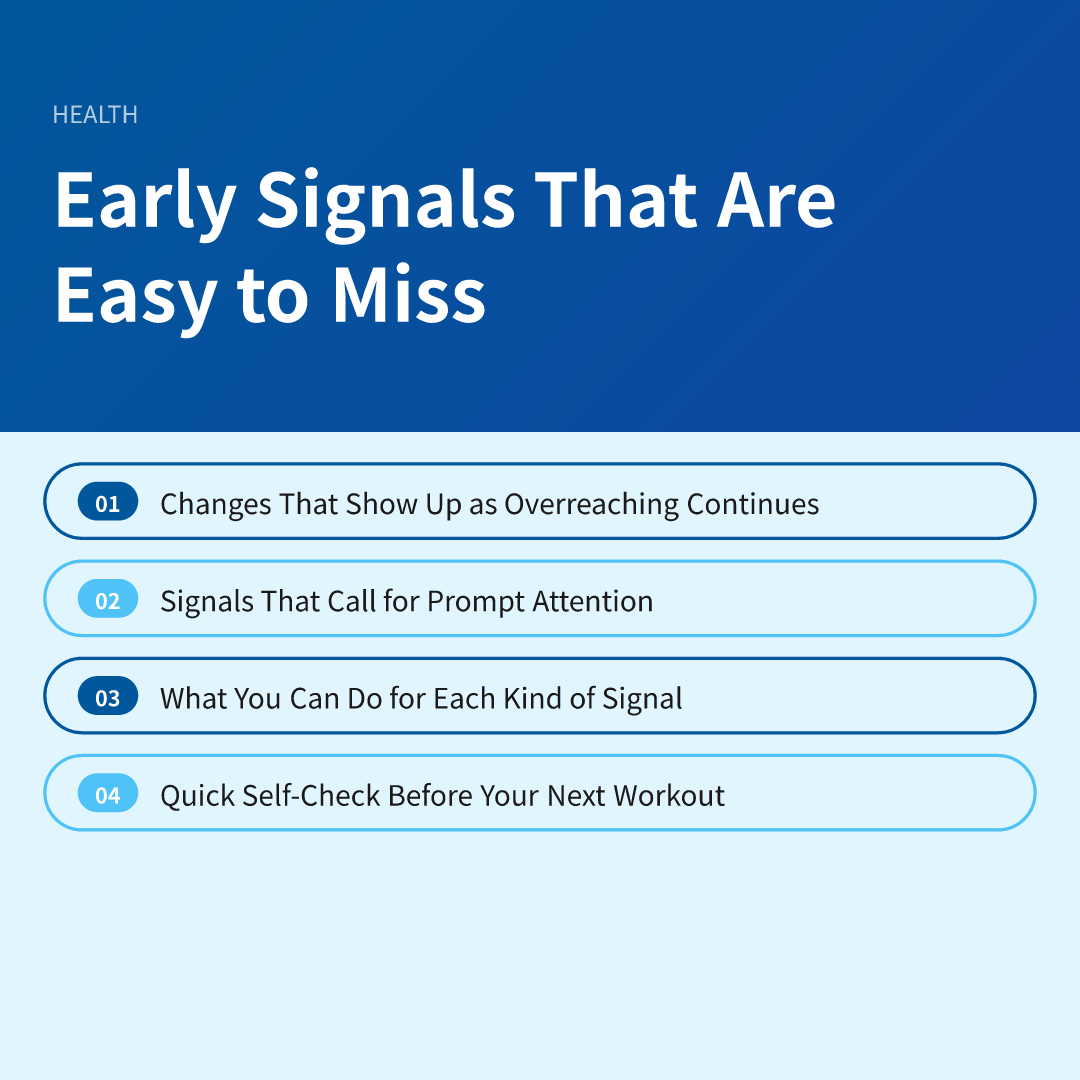
Early Signals That Are Easy to Miss
Overtraining is usually described as a pattern in which training stress outpaces recovery for a prolonged period. According to general guidance from the National Institutes of Health and MedlinePlus, rest and recovery are a normal and necessary part of any exercise routine. Early warning signs tend to be subtle, and they often arrive in clusters rather than one at a time.
Fatigue that does not lift with rest
What it looks like: You feel tired in a way that a rest day or a good night of sleep does not seem to fix. Everyday tasks, like climbing stairs or carrying groceries, feel harder than they should.
What it gets confused with: Ordinary post-workout tiredness, which usually eases within a day or two. It can also overlap with a busy work period, a poor diet, or an illness coming on, so the pattern over time matters more than a single bad day.
Performance that stalls or slips
What it looks like: Your usual pace feels harder, weights feel heavier, or you cannot finish sessions you used to handle comfortably. Progress that was steady simply stops.
What it gets confused with: A normal plateau. Plateaus happen to nearly everyone, but they typically do not come with ongoing exhaustion or a sense of dread about training. When the plateau arrives together with other signs on this list, it deserves more attention.
Muscle soreness that lingers
What it looks like: Soreness that sticks around well past the usual window, or a general heaviness in the legs or arms that never quite goes away.
What it gets confused with: Delayed-onset muscle soreness after trying something new, which is common and generally settles on its own. The difference is persistence: soreness that never clears between sessions is worth noting.
Changes That Show Up as Overreaching Continues
If the early signals are missed, the picture often broadens beyond the gym. Sports medicine sources commonly describe a spectrum, from short-term overreaching that recovers with rest to a more prolonged state that can take much longer to turn around. Individual responses vary widely, and the same training load can feel manageable for one person and excessive for another.
Sleep and mood changes
What it looks like: Trouble falling asleep or staying asleep despite feeling exhausted, along with irritability, low motivation, anxiety, or a flat mood. Some people notice they lose interest in activities they normally like.
What it gets confused with: General stress, seasonal mood shifts, or depression. These can overlap with overtraining, and they can also happen on their own. If low mood is persistent or heavy, it deserves professional attention whether or not exercise is involved.
Frequent illness and slow recovery
What it looks like: More colds or minor infections than usual, or ones that linger. Small cuts or niggles seem to take longer to settle.
What it gets confused with: Seasonal bugs, exposure through work or family, or other health conditions. Because many factors affect immunity, frequent illness is a reason to look at the whole picture, not just training.
Resting heart rate and body changes
What it looks like: Some people who track their heart rate notice their resting numbers drifting from their usual baseline, or feel their heart racing at lower effort. Others notice unexpected changes in appetite or weight.
What it gets confused with: Caffeine, dehydration, poor sleep, illness, or a device reading error. A single odd reading means little, and wearable data is not a diagnostic tool.
Recurring aches and injuries
What it looks like: Nagging joint or tendon pain, or repeated minor injuries that seem to come one after another.
What it gets confused with: A one-off strain from poor form or a sudden jump in activity. Repeated problems, though, can point toward load and recovery that are out of balance, which a coach or clinician can help assess.
Related reading: Active Recovery vs Rest Days: Which to Choose?
Signals That Call for Prompt Attention
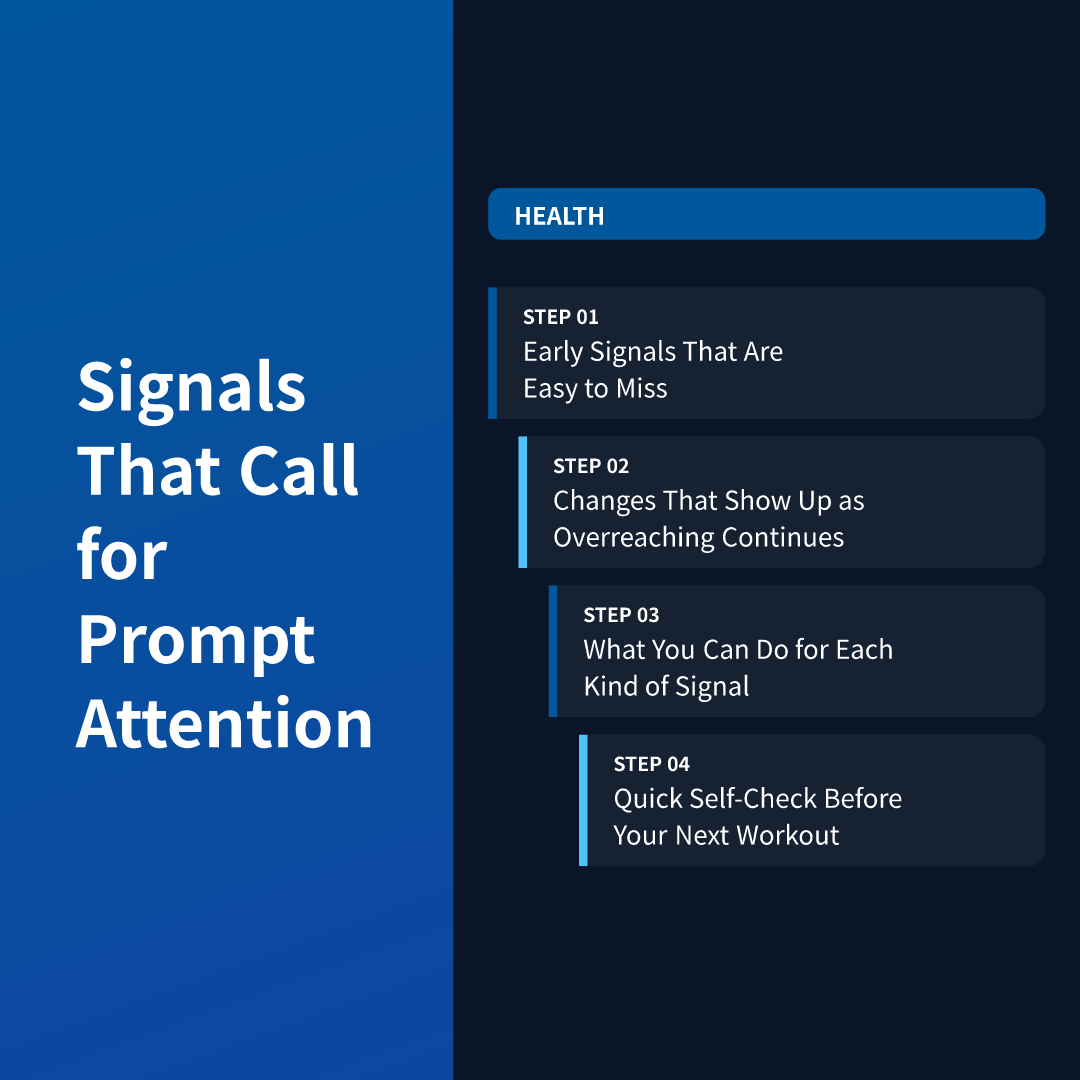
Some symptoms should not be treated as simple training fatigue. They can be linked to heart, breathing, or other medical problems that have nothing to do with overtraining and need to be checked quickly. General public health guidance, including from the CDC and MedlinePlus, advises seeking urgent care for certain warning symptoms during or after physical activity.
- Chest pain, pressure, or tightness during or after exercise.
- Fainting, near-fainting, or severe dizziness.
- Shortness of breath that is out of proportion to effort or does not settle with rest.
- A racing, pounding, or irregular heartbeat that is unusual for you.
- Dark or very reduced urine, or severe muscle pain and swelling, which can be associated with serious muscle breakdown.
- Thoughts of self-harm or a mood that feels unmanageable.
If any of these occur, stopping activity and contacting emergency services or a qualified professional promptly is the generally recommended approach. Do not wait to see whether it passes just because you are in the middle of a training block.
Feeling worse the harder you try is information, not a character flaw. It is worth listening to.
What You Can Do for Each Kind of Signal
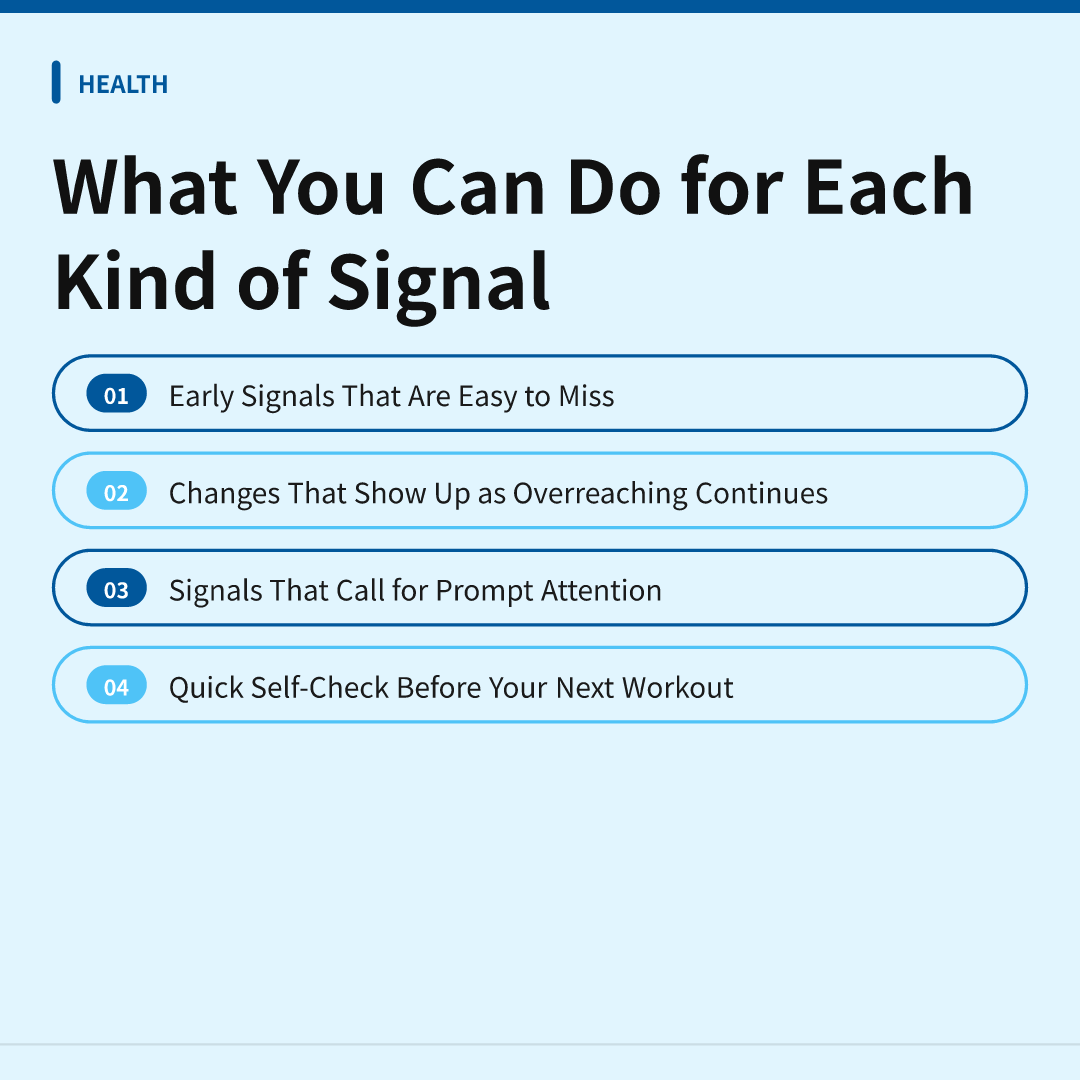
The right response depends on what you are noticing and how long it has lasted. The points below describe commonly discussed approaches, not a personal prescription, and they are not a substitute for individual advice.
For early, mild signals
Many coaches and sports health sources describe stepping back as the usual first move: lighter sessions, more rest days, and paying closer attention to sleep and food. Some people find a simple training log helpful, jotting down mood, sleep, and how sessions felt, so patterns become visible instead of relying on memory. How much time off is appropriate varies from person to person.
For signals that persist or multiply
If tiredness, mood changes, or performance drops continue despite easing off, that is a good point to talk with a primary care clinician, a sports medicine professional, or a qualified coach. They can look for other explanations, such as nutrition gaps, sleep problems, thyroid or other medical conditions, or mental health concerns, and help shape a sensible plan. Recovery from a deeper overtraining pattern can take a long time, and it tends to go better with guidance than with guesswork.
For nutrition, supplements, and medicines
People sometimes reach for supplements or over-the-counter products when they feel run down. Whether any product is appropriate depends on your health history, other medicines, and your needs, so it is best to ask a pharmacist or doctor before using anything. Product directions and professional advice, not general articles, should guide how anything is used.
For motivation and mental health
Exercise can be tied closely to identity and routine, so cutting back may feel uncomfortable. If you feel anxious about resting, or you notice compulsive urges to train despite pain or exhaustion, that is worth raising with a mental health professional or clinician. Those patterns can occur alongside disordered eating or exercise dependence, and support is available.
Quick Self-Check Before Your Next Workout
This list is a prompt for reflection, not a test. The more items that describe you over a stretch of weeks, the more reason there is to ease off and consider professional input.
- I feel tired most days, even after rest.
- My usual workouts feel noticeably harder than before.
- Soreness or heavy limbs hang around between sessions.
- My sleep is poor even though I am exhausted.
- I am more irritable, anxious, or unmotivated than usual.
- I seem to catch every bug that goes around.
- Small aches keep turning into bigger ones.
- I dread training sessions I used to look forward to.
When to Talk With a Professional
Paying attention to the signs of overtraining you should not ignore is easier when you know where the line sits between "ease off and monitor" and "get this checked." Consider reaching out to a licensed clinician if any of the following apply:
- Fatigue or reduced performance continues after a period of reduced training and better rest.
- You have any of the urgent symptoms listed above, such as chest pain, fainting, or breathing difficulty.
- Your mood has changed in a way that feels heavy, persistent, or hard to manage.
- You are losing weight unintentionally, or your menstrual cycle has changed or stopped.
- You get recurring injuries or pain that does not improve.
- You feel unable to rest without anxiety or guilt.
- You are unsure whether what you are feeling is training-related or something else.
Everyone recovers at a different pace, and no article can tell you where your own limits are. A clinician, sports medicine professional, or qualified coach can look at your history and help you decide what comes next.
Disclaimer: This article is for informational purposes only and is not a substitute for professional medical advice, diagnosis, or treatment. Please consult a licensed professional for personal health decisions.