Weekend Habits That Help You Truly Recharge
The weekend habits that help you truly recharge are usually small enough to fit into a single morning, a lunch break, or a quiet hour before bed—not a whole day cleared out for self-care. A big plan for “the perfect restful weekend” often collapses under its own weight, while a few tiny anchors woven into your existing rhythm tend to stick. This piece walks through what that can look like across three points in your day: morning, daytime, and evening, plus a short weekly check-in to see what’s actually working for you.
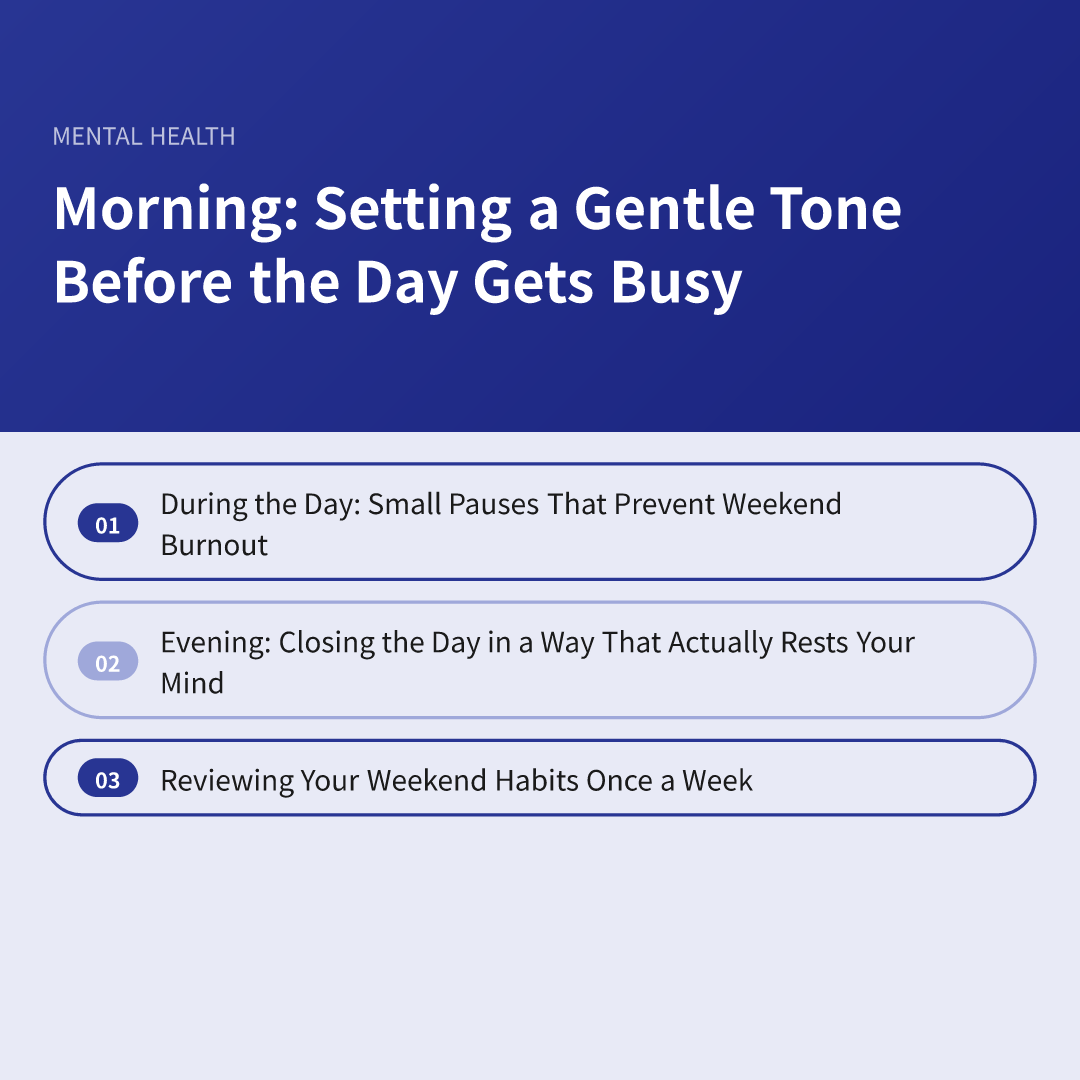
Morning: Setting a Gentle Tone Before the Day Gets Busy
What happens in the first thirty minutes after waking up often sets the emotional tone for the rest of the day, which is exactly why it’s worth protecting on weekends. Reaching for a phone immediately can pull attention into other people’s problems, notifications, and comparison before you’ve had a chance to notice how you actually feel. Delaying that by even ten or fifteen minutes gives your mind a small buffer to wake up on its own terms.
A Slower Start, Even by a Few Minutes
Instead of jumping straight into tasks, some people find it helpful to sit with a warm drink, stretch briefly, or simply look out a window before deciding what the day needs from them. This isn’t about a rigid morning routine with a checklist of ten things; it’s about creating a short pause between sleep and demand. That pause is often where a sense of calm gets planted for the hours ahead.
Natural light exposure early in the day is another habit worth considering, since it can support your body’s internal clock and general alertness. A short walk outside, or even sitting near a window with coffee, tends to work well for people who don’t have much extra time.
During the Day: Small Pauses That Prevent Weekend Burnout
Weekends can quietly turn into a second to-do list—errands, chores, social obligations—until Sunday evening arrives and it doesn’t feel like anything actually recharged you. Building in small pauses during the day helps interrupt that pattern before it snowballs. These don’t need to be long; the point is that they happen at all.
Unstructured Time Without a Purpose
Setting aside even twenty or thirty minutes with no agenda—no errands, no scrolling with intent, no productivity goal—can feel unfamiliar at first, especially for people used to filling every hour. Some find this time works best outdoors, others prefer reading something unrelated to work, and some simply sit quietly. What matters is that the activity has no deadline or performance attached to it.
Movement is another useful midday habit, and it doesn’t need to be intense to be worthwhile. A walk, some light stretching, or a few minutes of stepping away from screens can shift how the rest of the afternoon feels. Consistent movement and rest are often mentioned in general health guidance as part of managing everyday stress, and resources like the CDC’s overview on coping with stress offer a starting point for readers who want broader context.
Being Honest About Social Energy
Not every social plan restores you the same way. Some gatherings genuinely energize people, while others—even enjoyable ones—leave them more depleted than before. Paying attention to which kind of interaction you’re saying yes to on a weekend can help you space things out instead of stacking three social commitments back to back and wondering why Sunday night feels exhausting.
Evening: Closing the Day in a Way That Actually Rests Your Mind
How a day ends often matters as much as how it begins, particularly on weekends when there’s a temptation to squeeze in “one more thing” before bed. An evening that trails off into scrolling, half-finished chores, or catching up on messages rarely feels restful, even if it technically counts as downtime. A more deliberate close to the day tends to leave people feeling more settled going into the week ahead.
A Wind-Down Window, Not Just a Bedtime
Rather than thinking only about what time you go to sleep, it can help to think about a wind-down window—maybe thirty to sixty minutes beforehand—where the pace of the evening slows down. Dimming lights, putting devices in another room, or doing something low-stimulation like journaling or light reading are common choices. Individual needs vary quite a bit here, so it’s worth experimenting rather than copying someone else’s exact routine.
Reflecting briefly on the weekend—what felt good, what felt draining—can also be part of this closing ritual. This doesn’t need to be a formal journaling practice; even a few mental notes while brushing your teeth can be enough to carry useful insight into the following week.
A weekend that recharges you isn’t necessarily one with the least activity—it’s one where the activities you choose actually restore something you spent during the week.
Reviewing Your Weekend Habits Once a Week
Habits that help you recharge aren’t fixed forever; what worked during one season of life may stop working during another, especially as work demands, sleep patterns, or personal circumstances shift. A short weekly check-in helps you notice when something needs adjusting instead of running the same routine on autopilot for months. This doesn’t need to take more than a few minutes.
- Did I have at least one unstructured block of time with no agenda this weekend?
- Was there a clear wind-down period before bed, or did the evening blur into scrolling and tasks?
- Which social plans left me feeling more energized, and which left me more drained?
- Did I get any natural light or movement outdoors, even briefly?
- Do I feel noticeably more rested going into Monday than I did going into Saturday?
- Is there one habit from this list I’d like to try adjusting or dropping next weekend?
If weekends consistently feel exhausting despite trying habits like these, or if low mood, disrupted sleep, or a persistent sense of burnout continue for several weeks, it may be worth speaking with a doctor or a licensed mental health professional rather than relying on self-guided adjustments alone. Everyone’s baseline is different, and some patterns are better addressed with professional support than with routine changes alone. Overall, the weekend habits that help you truly recharge tend to be less about doing more and more about noticing, at three simple points in the day, what actually restores your energy versus what only looks restful on paper.
⚠️ Disclaimer: This article is for informational purposes only and does not replace professional medical advice.
Disclaimer: This article is for informational purposes only and is not a substitute for professional medical advice, diagnosis, or treatment. Please consult a licensed professional for personal health decisions.
Related reading: Daily Habits That Support Mental Wellbeing: Start Small