Best Foods to Eat After Strength Training
The best foods to eat after strength training are generally meals that combine a good protein source with carbohydrates, plus fluids and some minerals lost through sweat. Put simply, a post-workout meal is food chosen to help your body rebuild worked muscle and refill its energy stores. Below you'll find what that means in practice, when it matters more or less, which ideas people commonly mix up, and how to adapt the basics to your own situation.
What a Post-Workout Meal Actually Means
After resistance exercise, muscle fibers have been stressed and the body's stored fuel has been partly used. Recovery nutrition is simply eating in a way that supplies the raw materials for repair and refueling. It is not a special diet, and it does not need to be complicated.
Three building blocks come up again and again in general sports nutrition guidance, including educational materials from the U.S. Department of Agriculture and the National Institutes of Health.
- Protein: Supplies amino acids, the small units muscle tissue is built from. Eggs, Greek yogurt, cottage cheese, poultry, fish, tofu, tempeh, lentils, and beans are all common choices.
- Carbohydrates: Glycogen is the form in which your muscles store carbohydrate for fuel. Rice, potatoes, oats, whole-grain bread, fruit, and pasta are typical ways people replenish it.
- Fluids and electrolytes: Electrolytes are minerals such as sodium and potassium that help regulate fluid balance. Water, milk, soups, and fruits and vegetables with high water content all contribute.
Healthy fats, such as those in avocado, nuts, olive oil, and salmon, are fine to include. They tend to slow digestion a little, which some people notice if they feel queasy right after training.
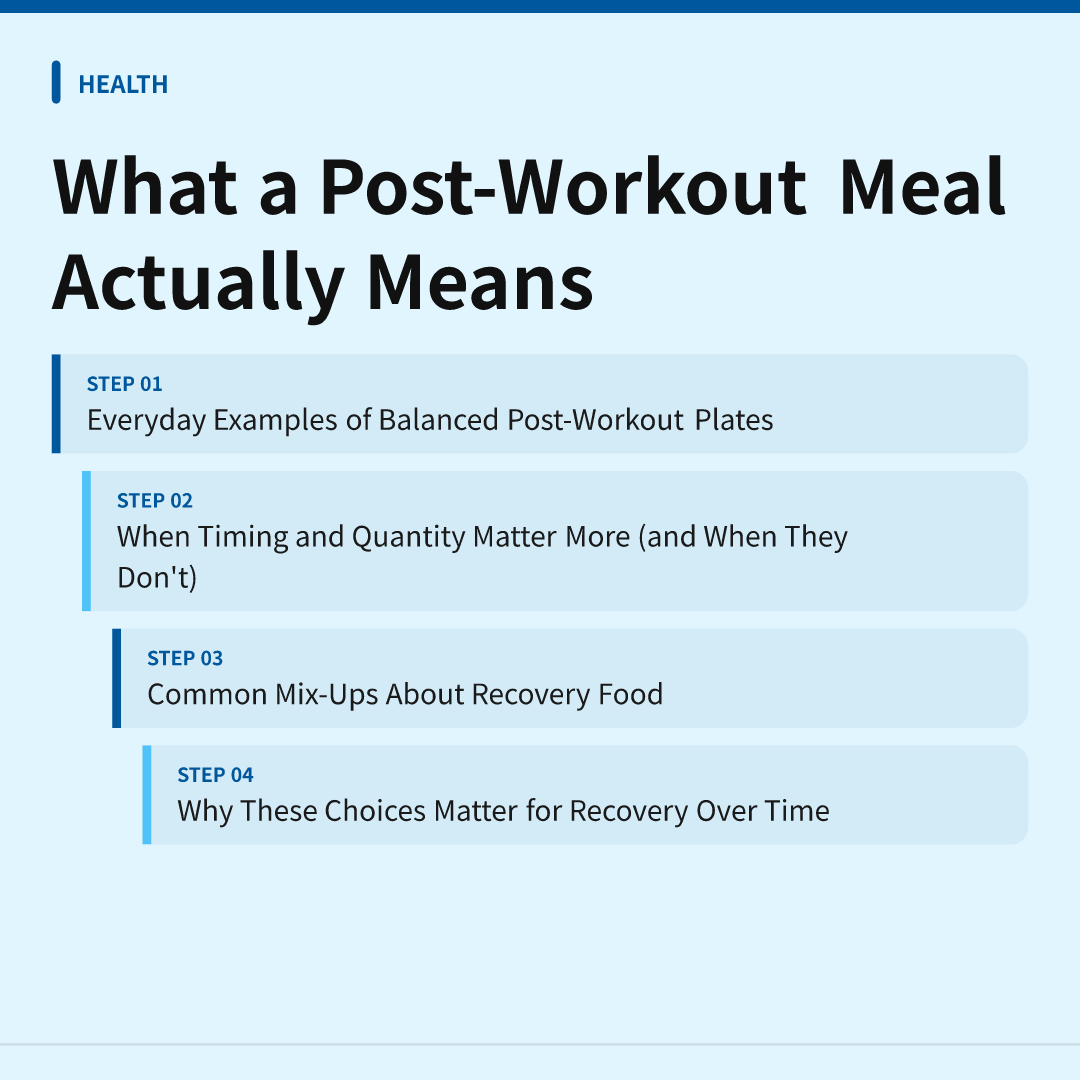
Everyday Examples of Balanced Post-Workout Plates
Because food preferences, budgets, and cultural eating patterns vary so much, it helps to think in combinations rather than a single "right" food. Here are a few ordinary pairings people often use.
- Grilled chicken or tofu with rice and roasted vegetables
- Greek yogurt with berries and a sprinkle of oats
- Scrambled eggs with whole-grain toast and fruit
- A lentil or bean bowl with sweet potato and greens
- Salmon with potatoes and a side salad
- Chocolate milk or a smoothie made with milk or a fortified plant alternative, plus a banana
None of these is magic. They are simply convenient ways to get protein and carbohydrate in the same sitting. If a plate like this fits your usual meals, you are already doing most of what general guidance describes.
When Timing and Quantity Matter More (and When They Don't)
You may have heard of an "anabolic window," the idea that you must eat within a short period after lifting or the session is wasted. Many sports nutrition reviews now describe that window as wider and more forgiving than gym lore suggests. For many people, what they eat across the whole day matters more than hitting a precise minute.
Timing tends to matter more in certain situations:
- You trained first thing in the morning without eating beforehand, so a meal soon afterward is a practical way to refuel.
- You train more than once in a day and have limited time between sessions.
- You are doing long or very demanding workouts that use a lot of stored energy.
It matters less if you ate a normal meal a few hours before training and will eat another one reasonably soon after. In that case, there is usually no need to rush to a shake in the locker room. If your appetite is low right after training, many people simply eat when hunger returns.
How much protein and how many calories are right for you depends on your body size, goals, age, activity level, and health history. That is a question for a registered dietitian or your healthcare provider rather than a one-size-fits-all rule. how much protein you need each day
Common Mix-Ups About Recovery Food
Protein shakes versus whole foods
Shakes and bars are convenient, and many people use them when a meal isn't practical. Whole foods, however, bring along fiber, vitamins, and minerals that powders often lack. Supplements are not regulated like medications in the United States, according to the FDA, so product quality and ingredients can vary. Before adding a supplement, it is sensible to ask a pharmacist, dietitian, or doctor, especially if you take medications or have kidney or other health conditions.
Post-workout food versus weight-loss goals
Some people skip eating after exercise because they worry it cancels out the workout. In general, recovery meals are part of your total daily intake, not a separate "penalty." If weight change is a goal, a dietitian can help you balance recovery needs with your overall plan.
Carbohydrates are not the enemy
Carbohydrates are sometimes treated as something to avoid after training. Yet they are the main fuel stored in muscle, and replenishing it is a big part of recovery, particularly if you train often. Needs differ, and people managing diabetes or blood sugar should get individual guidance from their care team.
Soreness versus nutrition
Muscle soreness after a hard session is common and has many causes, including how new or intense the exercise was. Food may support recovery, but no single food or drink has been shown to erase soreness on command. Think of your meal as a helpful piece of the puzzle, alongside sleep and gradual progression of your workouts.
Why These Choices Matter for Recovery Over Time
Here is a simple analogy: training is like demolishing part of a wall to rebuild it stronger, and food is the delivery of bricks and mortar. If the materials never arrive, the rebuild stalls. If they show up steadily over days and weeks, the work can continue.
That steady pattern is why consistency tends to beat perfection. Regularly eating enough protein, carbohydrate, and fluid may support how well you recover and how you feel in your next session. Results vary, and they depend on training, sleep, stress, genetics, and overall health, not just one meal.
Hydration deserves attention too
Sweating means losing both water and minerals. Many people do well by drinking water through the day and including salty or potassium-rich foods in meals. Heavy sweaters, people who exercise in hot conditions, and those with heart, kidney, or blood pressure concerns should check with a healthcare professional about fluid and sodium choices, since needs differ.
Who should get personalized guidance
General advice has limits. Consider speaking with a doctor or registered dietitian if any of the following apply:
- You are pregnant or breastfeeding.
- You are a teenager or older adult with specific nutrition needs.
- You have kidney disease, diabetes, digestive conditions, or food allergies.
- You have a history of disordered eating.
- You take medications or supplements that could interact with dietary changes.
Also seek medical care promptly if you experience unusual symptoms after exercise, such as chest pain, severe dizziness, dark-colored urine paired with intense muscle pain, or persistent vomiting. Those are not things to manage with a snack. warning signs after a hard workout
What Changes in Your Decisions Once You Understand This
Knowing how recovery eating works shifts a couple of everyday choices.
- You stop chasing the perfect minute. Instead of panicking about a narrow window, you can focus on a balanced meal that fits your schedule, with protein and carbohydrate in the mix.
- You judge products by what they add, not by hype. When you see a shake or bar marketed as the best foods to eat after strength training, you can ask whether it offers something a normal meal doesn't, and check with a pharmacist, dietitian, or doctor if you are unsure.
Disclaimer: This article is for informational purposes only and is not a substitute for professional medical advice, diagnosis, or treatment. Please consult a licensed professional for personal health decisions.