Breakfast Ideas That Keep You Full Longer
You finish a bowl of cereal at 7:30, and by 10:00 your stomach is already making demands while you stare at the office snack drawer. It is a common frustration, and it usually has more to do with what the meal was built from than with willpower. Breakfast ideas that keep you full longer generally combine protein, fiber-rich carbohydrates, and some fat, rather than relying on refined carbohydrates and sugar alone.
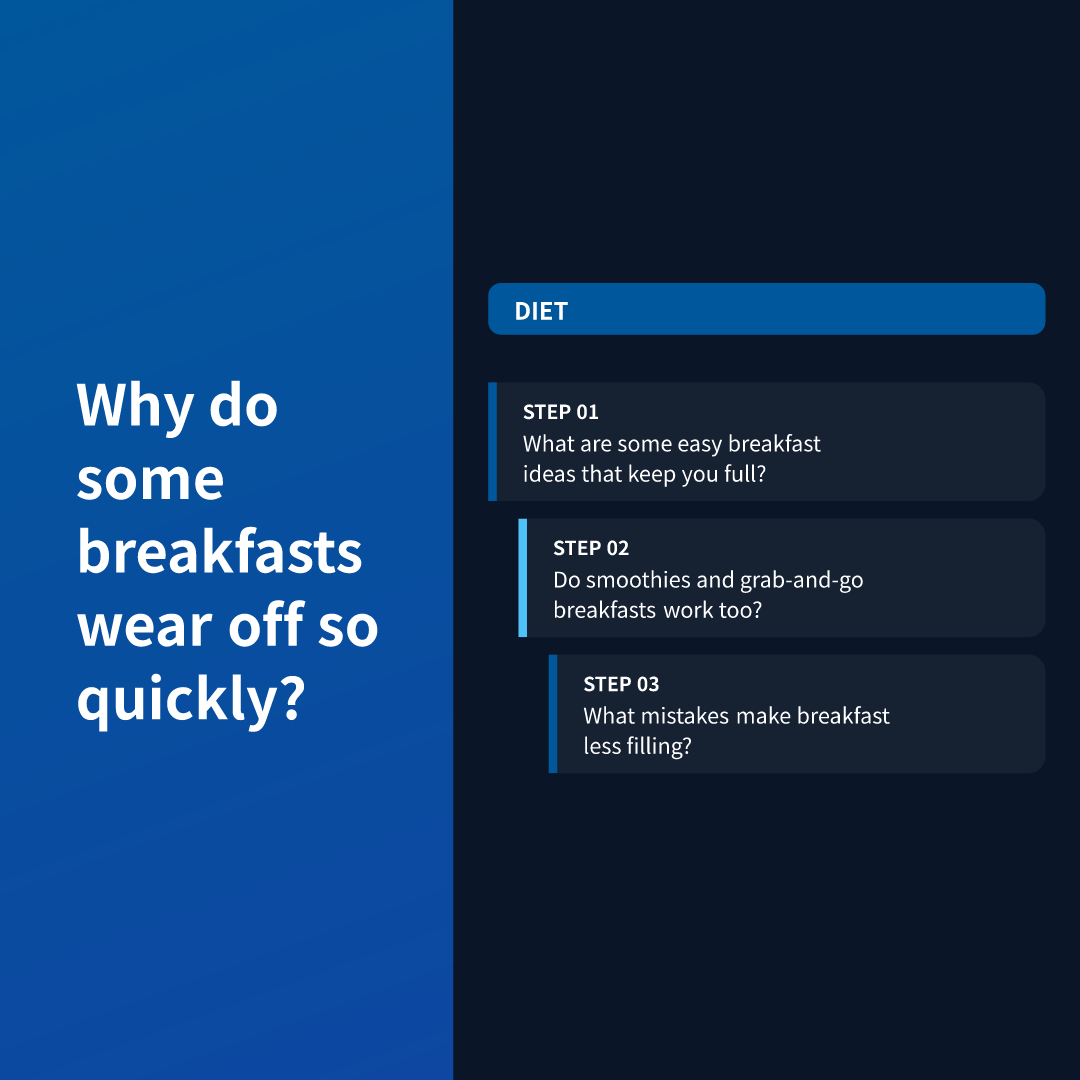
Why do some breakfasts wear off so quickly?
Meals made mostly of refined carbohydrates, such as sweet pastries, white toast with jam, or sugary cereal, are digested quickly for many people. That can leave you hungry again sooner than you expected. Individual responses differ, so the same bowl of cereal may hold one person for hours and not another.
Fullness is also affected by things outside the plate. Poor sleep, stress, a busy morning, drinking too little water, and how fast you eat can all change how hungry you feel. Hunger that seems out of proportion to what you eat is worth noting, but it is not something to diagnose from an article.
The three building blocks most often mentioned
General nutrition guidance, including the U.S. government’s MyPlate resource, encourages meals built from a mix of food groups rather than a single food type. For breakfast, that often means pairing the following:
- Protein: eggs, Greek yogurt, cottage cheese, tofu, or nut butters.
- Fiber: oats, whole grains, beans, fruit, vegetables, seeds.
- Fats: nuts, seeds, avocado, olive oil, or the fat naturally found in dairy.
Many people find that protein and fiber together feel more filling than either alone. That is a general observation, not a promise, and what works varies from person to person.
What are some easy breakfast ideas that keep you full?
The easiest approach is to start with a familiar breakfast and add whatever it is missing. A bowl of oatmeal, for example, tends to be more satisfying with nuts or a spoonful of nut butter than with brown sugar alone. Below are practical combinations people commonly use.
Egg-based options
Eggs are a classic protein-rich breakfast. Scrambled eggs with spinach and whole-grain toast, a veggie omelet, or a pair of hard-boiled eggs with fruit all fit the pattern. Hard-boiled eggs can be prepared ahead, which suits rushed mornings.
People who avoid eggs, or who have been advised to limit them for a medical reason, can look to other protein sources. That is a conversation for a clinician or registered dietitian rather than a guess.
Yogurt, oats, and seed-based options
Plain Greek yogurt topped with berries and a handful of nuts is a simple, no-cook choice. Overnight oats made with milk or a fortified alternative, plus chia seeds or ground flaxseed, give you fiber and some fat in one jar. Choosing plain versions and adding your own fruit often keeps added sugar lower than flavored, sweetened products.
- Overnight oats with chia seeds, berries, and chopped almonds.
- Cottage cheese with sliced peaches and pumpkin seeds.
- Greek yogurt parfait with oats and fruit.
Savory and make-ahead options
Not everyone wants something sweet first thing. A breakfast burrito with beans, eggs, and vegetables in a whole-grain tortilla is filling and reheats well. Avocado on whole-grain toast with an egg on top is another familiar combination.
Tofu scramble with vegetables works for people eating plant-based. Leftover dinner foods, such as rice, beans, and roasted vegetables, also count as a perfectly reasonable breakfast if that is what appeals.
Do smoothies and grab-and-go breakfasts work too?
They can, but it depends on what goes in. A smoothie made only from fruit juice and fruit is often less filling than one that also includes a protein source and some fiber or fat. Yogurt, milk or a fortified alternative, oats, nut butter, or seeds are common additions.
Liquid meals also tend to be consumed quickly, and some people feel less satisfied after drinking a meal than after chewing one. If a smoothie leaves you hungry an hour later, pairing it with a hard-boiled egg or a handful of nuts is one option to consider.
Packaged breakfast foods and bars
Convenience products vary widely. Some breakfast bars and granolas are high in added sugar and low in protein or fiber, while others are better balanced. Reading the nutrition label helps, and the FDA’s guide to the Nutrition Facts label explains how to compare products.
A packaged item can still be a useful backup on a chaotic day. It simply may not be the most filling choice for every person.
What mistakes make breakfast less filling?
A few patterns come up often. Skipping protein is the big one, since toast and juice or a plain bagel may digest quickly. Portion size matters too, and a very small breakfast may not carry you to lunch, though how much you need depends on your age, activity level, and body.
- Relying on sugary foods alone: pastries, sweetened cereals, and flavored yogurts can leave some people hungry soon after.
- Skipping fiber: fruit, oats, beans, and whole grains add bulk and slow things down.
- Eating while distracted: fast, hurried eating can make it harder to notice fullness.
- Forgetting fluids: thirst is sometimes mistaken for hunger.
When should you talk to a professional about constant morning hunger?
If you eat balanced meals and still feel intensely hungry, tired, shaky, or unusually thirsty, it is reasonable to bring it up with a healthcare provider. Persistent hunger can sometimes be linked to medications, sleep problems, hormonal changes, or conditions that need proper evaluation. An article cannot tell you which, if any, applies to you.
People with diabetes, a history of disordered eating, kidney disease, food allergies, pregnancy, or other medical conditions should get individual guidance before changing how they eat. A registered dietitian can build a breakfast pattern around your health needs, preferences, budget, and schedule. Medication timing and meals can interact, so questions about that belong with your prescriber or pharmacist.
Seek prompt medical care for symptoms that feel severe or sudden, such as fainting, confusion, or marked weakness. Those are not situations to manage with a better breakfast.
FAQ
Does skipping breakfast make you hungrier later?
It varies. Some people feel fine eating later in the morning, while others get very hungry and end up overeating at lunch. Paying attention to your own hunger signals and energy is more useful than following a fixed rule, and anyone with a medical condition should ask their care team.
Is a high-protein breakfast always the best choice?
Not necessarily. Protein is often mentioned as helpful for fullness, but fiber, fat, total portion size, and your overall diet matter as well. People with certain kidney or other health conditions may need to be careful with protein, so check with a clinician first.
What is a quick option if I have almost no time?
Plain yogurt with fruit and nuts, a hard-boiled egg with a piece of fruit, or whole-grain toast with nut butter all take only a few minutes. Preparing items the night before, such as overnight oats, can also help. These are general ideas, so adjust them to your allergies, preferences, and any dietary advice you have received.
Choosing breakfast ideas that keep you full longer mostly comes down to balance: some protein, some fiber, and a little fat, in portions that suit your body and your day. Small changes to meals you already enjoy are often easier to maintain than a complete overhaul, and a registered dietitian can help if you want a plan tailored to you.
Disclaimer: This article is for informational purposes only and is not a substitute for professional medical advice, diagnosis, or treatment. Please consult a licensed professional for personal health decisions.
Related reading: Hydration Tips for Daily Wellness You’ll Actually Keep