Hydration Tips for Daily Wellness You’ll Actually Keep
One of the easiest hydration tips for daily wellness has nothing to do with willpower — it’s about attaching a small water habit to something you already do without thinking. Instead of trying to remember “drink more water” as a brand-new task, you link it to a habit that’s already automatic, like brushing your teeth or starting your commute. This approach, sometimes called habit stacking, tends to hold up better over weeks and months than a fresh routine built from scratch.
Most people don’t struggle with knowing that water matters. They struggle with remembering, or with the day getting away from them before they’ve had more than a coffee and maybe a glass at lunch. Below is a practical way to build a hydration routine around habits you already have, along with a few behaviors worth attaching, and — just as importantly — a plan for what to do when the routine falls apart, because it probably will at some point.
Finding the Habits You Already Have
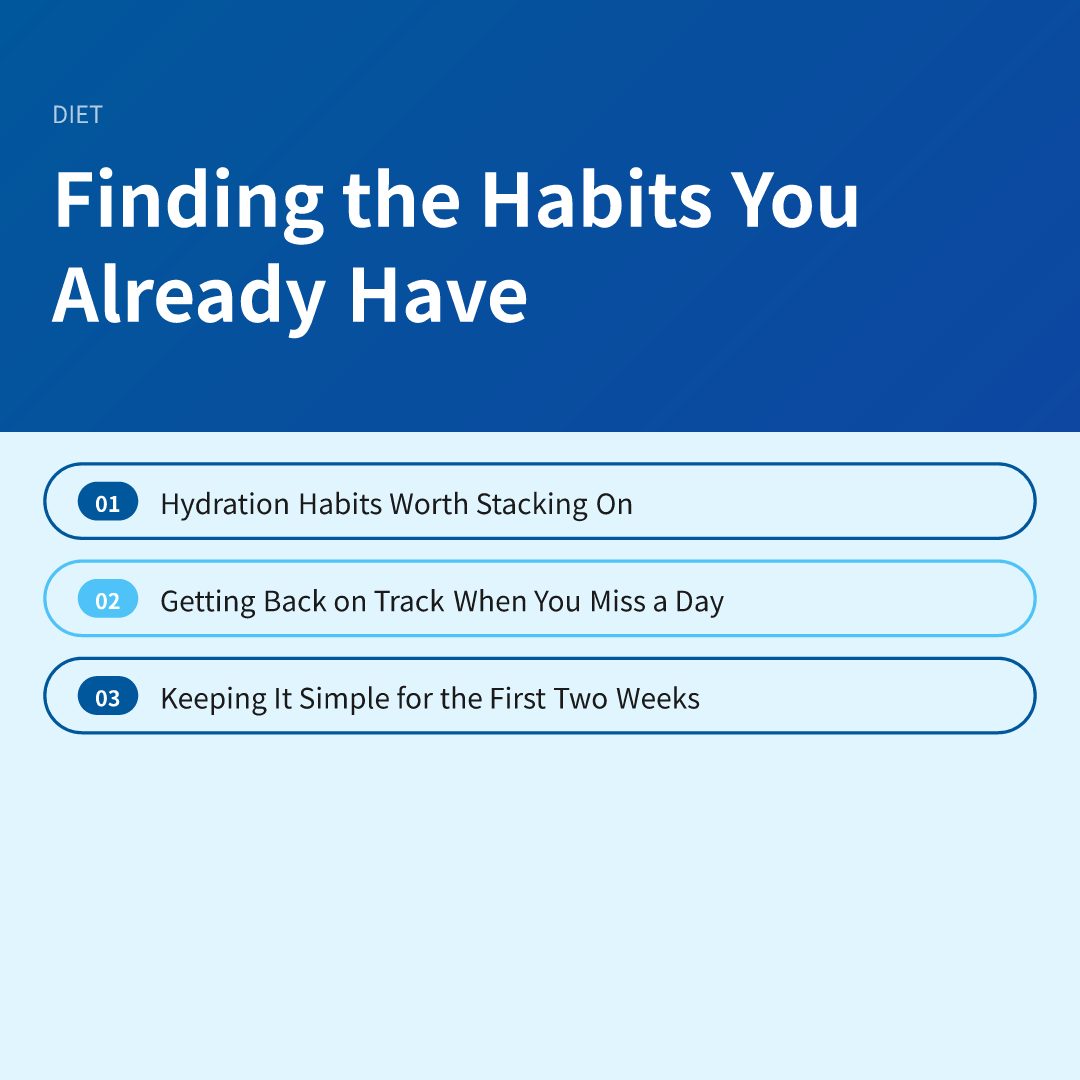
Before adding anything new, it helps to map out the parts of your day that already happen on autopilot. These are called anchor habits, and they work because you don’t need motivation to do them — you’re already doing them. Good anchors tend to be things that happen at roughly the same time or in the same order every day.
- Waking up and checking your phone
- Making coffee or tea in the morning
- Sitting down at your desk
- Finishing a meal
- Getting into your car or arriving at a bus stop
- Washing your hands after the bathroom
- Charging your phone at night
Pick two or three of these that feel the most consistent in your life right now. If your mornings are chaotic but your evenings are predictable, lean into the evening anchors instead of forcing a morning one that won’t stick. There’s no single correct starting point — the goal is reliability, not perfection.
Hydration Habits Worth Stacking On
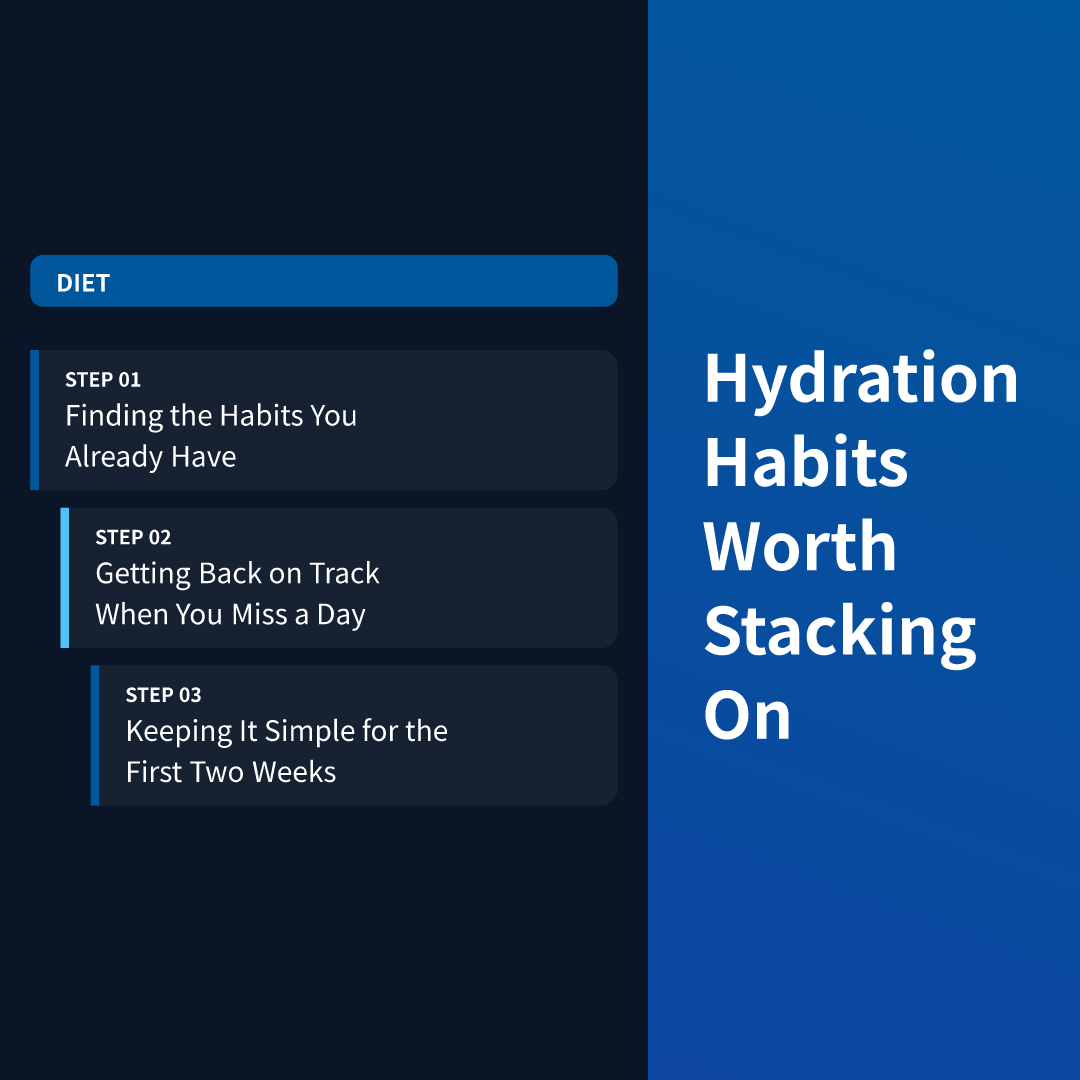
Once you have a few anchor habits in mind, the next step is choosing a small hydration behavior to attach to each one. Keep the new behavior small enough that it feels almost too easy — that’s usually a sign it will actually stick.
Morning Anchors
A common pairing is placing a glass of water next to the coffee maker, so filling it becomes part of the same motion as starting your coffee. Another option is keeping a water bottle on your nightstand and taking a few sips before you even check your phone. Neither of these requires remembering anything new; they just piggyback on a motion your hands already make.
Midday Anchors
Pairing water with meals is one of the more natural hydration tips for daily wellness because eating already happens on a schedule. Try having a glass of water before you start eating, or refilling your bottle right after you clear your plate. If you take regular breaks at a desk job, attaching a short water break to the end of a meeting or a task can work just as well.
Movement and Transition Anchors
Getting into the car, grabbing your bag before leaving the house, or arriving at your desk are all transition points — moments when your body and attention naturally shift. Keeping a bottle in the same spot every time (car cupholder, bag side pocket, desk corner) means the habit is triggered by location as much as by memory.
Evening Anchors
Since sleep and hydration both matter for how you feel the next day, some people prefer pairing a small amount of water with winding-down habits like brushing teeth or plugging in a phone charger. Keep in mind that drinking a large amount right before bed can disrupt sleep for some people, so this is a spot where a smaller amount tends to work better than a large glass. better sleep habits that support daily wellness
Fluid needs vary quite a bit from person to person depending on activity level, climate, overall health, and diet, so there isn’t one universal number that fits everyone. General hydration guidance from health resources like MedlinePlus can offer a starting point, but a doctor or registered dietitian is better positioned to speak to your specific situation, especially if you have a medical condition that affects fluid balance.
Getting Back on Track When You Miss a Day
Almost everyone falls off a new habit at some point — travel, illness, a hectic week, or simply forgetting are all normal parts of building any routine, hydration included. The habits that last aren’t the ones that never break; they’re the ones with a built-in way to restart without guilt or an all-or-nothing mindset.
A Simple Recovery Rule
One helpful rule is: never skip the same anchor twice in a row. If you missed your morning water-with-coffee habit today, that’s fine — just make sure it happens tomorrow. This keeps a single missed day from turning into a missed week, which is usually how habits quietly disappear.
Rebuild With One Anchor, Not All of Them
If your whole routine has slipped for a while, resist the urge to relaunch everything at once. Pick the single anchor that felt easiest before — often the morning one — and restart there. Once that feels automatic again, layer the others back in one at a time rather than all together.
Watch for Signs You Need More Than a Reminder
Occasional forgetfulness is normal, but persistent thirst, very dark urine, dizziness, confusion, or a noticeable drop in urination can be signs worth discussing with a healthcare provider rather than just adjusting a habit stack. These symptoms can sometimes point to something beyond everyday hydration and are worth taking seriously, particularly for older adults, people with certain chronic conditions, or anyone active in hot weather.
It’s also worth remembering that water isn’t the only source of fluid — foods with high water content, herbal teas, and other beverages contribute too, so a single “miss” on plain water isn’t automatically a crisis. Electrolyte balance can matter more during intense exercise, illness with vomiting or diarrhea, or very hot conditions, and in those cases, a pharmacist or doctor can advise on whether an electrolyte drink or oral rehydration product makes sense for you.
Keeping It Simple for the First Two Weeks
Building any new habit tends to feel fragile in the first couple of weeks, and hydration is no exception. Rather than aiming for a perfect streak, focus on a few operating rules that make the first two weeks forgiving instead of stressful.
- Pick no more than two anchors to start. Adding a morning and one midday pairing is plenty; more than that tends to collapse under a busy week.
- Let missed days reset instead of punish. If a day breaks the pattern, the only rule is to show up for the next scheduled anchor — no catching up, no guilt.
- Reassess after two weeks, not two days. Habits often feel awkward at first and smooth out with repetition, so judge the system after it’s had a real chance rather than abandoning it early.
None of this requires special products, tracking apps, or rigid schedules — just a willingness to notice what you’re already doing and quietly attach something useful to it. Over time, these small hydration tips for daily wellness tend to blend into the background of an ordinary day, which is really the point: the habit that requires the least thought is usually the one that lasts.
⚠️ Disclaimer: This article is for informational purposes only and does not replace professional medical advice. If you have concerns about your hydration, fluid intake, or a medical condition affecting fluid balance, please consult a qualified healthcare provider.
Disclaimer: This article is for informational purposes only and is not a substitute for professional medical advice, diagnosis, or treatment. Please consult a licensed professional for personal health decisions.