How to Build a Balanced Plate for Everyday Meals
The easiest way to build a balanced plate for everyday meals is to stop treating it as a brand-new project and tie it to habits you already do, like making coffee, setting the table, or opening the fridge after work. A balanced plate generally means a mix of vegetables or fruit, some protein, a source of whole grains or other starchy foods, and a modest amount of healthy fats. Instead of overhauling your diet, you attach one small choice to something that already happens every day. Over time, those small attachments can add up to a pattern that feels natural rather than forced.
This approach is often called habit stacking or habit linking. The idea is simple: the existing habit acts as a cue, and the new behavior rides along with it. Below you will find ways to spot the right anchors, a set of pairings to try, and a plan for the days when everything falls apart, because it will on some days. Needs differ from person to person, so treat everything here as general information rather than personal advice.
What a balanced plate generally looks like
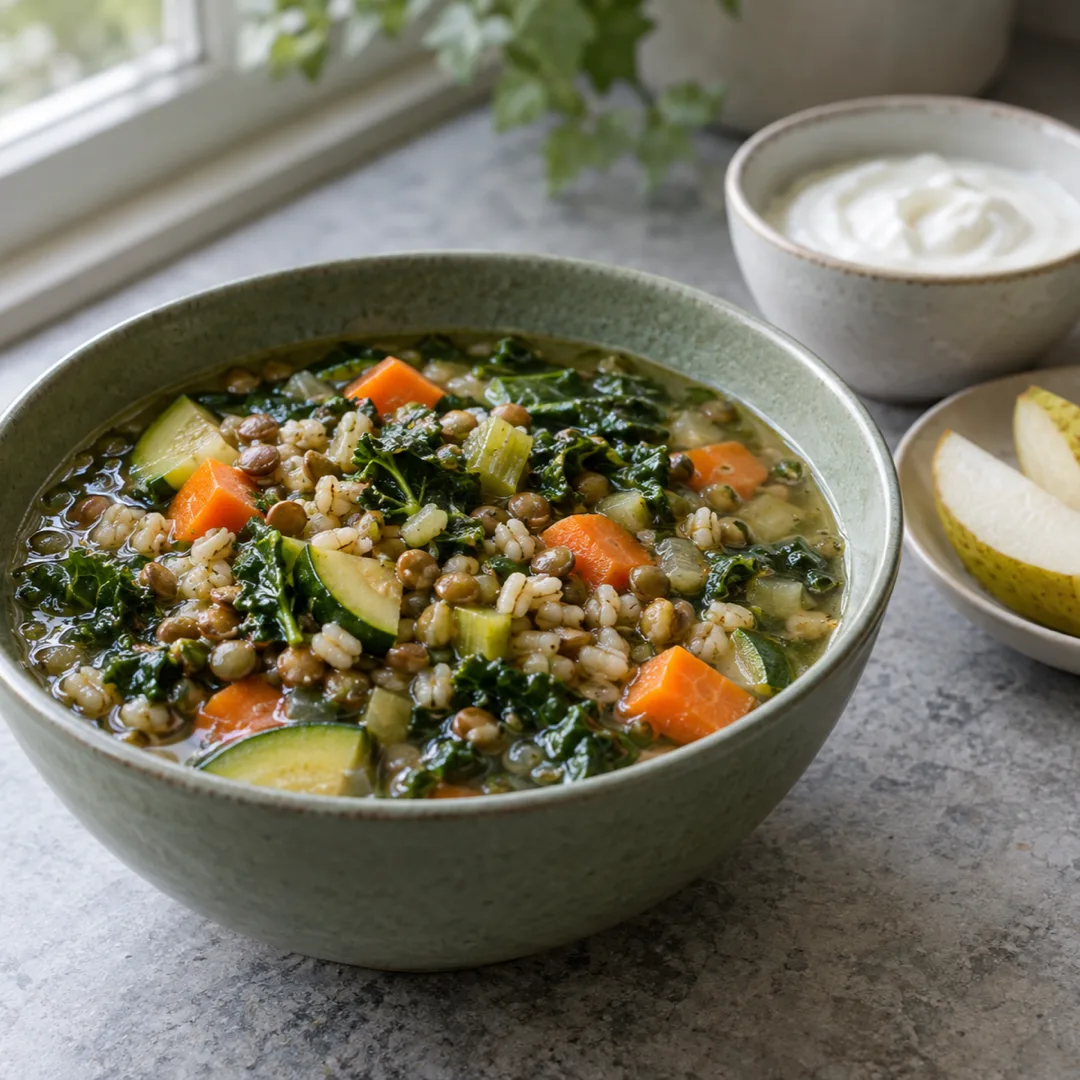
Before attaching anything to anything, it helps to have a rough picture in mind. According to the USDA's MyPlate guidance, a plate is commonly pictured as divided into fruits, vegetables, grains, and protein, with a side of dairy or a dairy alternative. Vegetables and fruits tend to take up a generous share of the visual space, while grains and protein fill out the rest.
That picture is a guide, not a rule. Some meals are soups, bowls, wraps, or leftovers eaten straight from a container, and they can still follow the same logic. The Dietary Guidelines for Americans, published by the USDA and the Department of Health and Human Services, describe healthy eating as a flexible pattern that can be adapted to cultural traditions, budgets, and personal preferences.
- Vegetables and fruit: fresh, frozen, and canned options all commonly count.
- Protein foods: beans, lentils, eggs, fish, poultry, tofu, nuts, and meat, depending on what you eat.
- Grains and starches: whole-grain options are often encouraged, alongside potatoes, corn, and similar foods.
- Fats and flavor: oils, nuts, seeds, and sauces that make food enjoyable.
People with diabetes, kidney disease, food allergies, a history of disordered eating, or other medical conditions may need a very different arrangement. A registered dietitian or your healthcare provider can help tailor a plate to your situation.
Finding the everyday habits worth building on
A good anchor habit has three qualities: it happens at roughly the same time most days, it is already automatic, and it takes place somewhere close to food. Brushing your teeth is automatic, but it is far from the kitchen, so it makes a weaker anchor for a plate-building habit. Pouring a morning drink, unpacking groceries, or turning on the stove is much closer to the action.
Look at your current day in order
Walk through a typical weekday in your head, from waking to bedtime. Note every moment that involves the kitchen, a meal, a snack, or a food decision. You will usually find a handful of reliable moments, and those are your candidates.
Some common anchors people notice:
- Starting the kettle or coffee maker in the morning.
- Opening the fridge to decide what to eat.
- Putting groceries away after shopping.
- Setting the table or clearing a spot at the desk.
- Washing dishes after dinner and thinking about tomorrow.
- Packing a bag or lunch container before leaving the house.
Pick one or two, not all of them
It is tempting to redesign every meal at once. In practice, many people find it easier to start with a single anchor, such as the evening meal, and let the habit settle before adding another. Behavior-change guidance from public health agencies like the CDC generally emphasizes small, specific, realistic steps over sweeping changes.
If your schedule is irregular, choose an anchor that is tied to an event rather than a clock time. "When I open the fridge" works for a night-shift worker and a nine-to-five worker alike.
Related reading: Simple Meal Prep Ideas for Healthy Eating: What Really Gets in the Way
Small actions that pair well with those habits
Once you have an anchor, the new action should be tiny enough that it feels almost too easy. The goal is consistency, not perfection. Here are pairings organized by the moment of the day, written as ideas to consider rather than rules.
Morning pairings
- While the coffee brews: put a piece of fruit on the counter, or slice something to add to breakfast.
- When you open the cereal or oatmeal: think about adding a protein source nearby, such as yogurt, eggs, nut butter, or soy milk.
- When you pack your bag: toss in a simple fruit or a handful of nuts if those suit you.
Midday pairings
- When you open the fridge for lunch: look first for a vegetable, then build around it with protein and a grain.
- When you sit down at your desk: use a real plate or bowl instead of eating from the package, which can make it easier to notice what is on it.
- When you heat leftovers: add a handful of greens, frozen vegetables, or a piece of fruit on the side.
Evening pairings
- When you start the stove: begin with the vegetable component, since it often takes the most time and is easiest to forget.
- When you set the table: place a bowl of vegetables or salad in the middle so it is part of the meal by default.
- When you wash up: take a minute to jot down one vegetable or protein you want for tomorrow.
Weekend pairings
- When you unpack groceries: wash and cut a few vegetables so they are ready to grab during the week.
- When you make a big pot of something: portion some into containers with a vegetable and a starch, ready for busy days.
- When you scroll recipes anyway: save one that includes a vegetable and a protein you actually like.
Making it fit your own life
A balanced plate looks different for different people. Someone cooking for a family, someone eating alone, a student with a tiny kitchen, and an older adult with a smaller appetite will all arrive at different arrangements. Cultural foods matter too. Rice dishes, tortillas, noodles, flatbreads, stews, and stir-fries can all be balanced by thinking about the same categories.
Budget is another real factor. Frozen and canned vegetables, dried beans, eggs, and seasonal produce are commonly mentioned in public nutrition guidance as practical options. If fresh produce is hard to access or expensive, those alternatives can still contribute meaningfully to a plate.
Appetite, energy needs, and portion sizes vary widely with age, body size, activity level, pregnancy, and health conditions. The plate picture is a visual shortcut, not a calorie prescription. If you are unsure whether your eating pattern meets your needs, a registered dietitian is a good person to ask.
When the plan falls apart: a recovery routine
Every habit system should assume it will fail sometimes. A late meeting, a sick kid, travel, or a rough week can knock out the anchors completely. What matters is how you come back, not whether you ever slip.
Rules for a rough day
- Never skip twice in a row. One missed day is just a day. Two in a row starts to become a new pattern, so aim to restart at the very next anchor.
- Shrink the habit, don't drop it. If building a full plate feels impossible, add just one item, like a piece of fruit or a handful of vegetables, to whatever you are eating.
- Use the next meal, not the next Monday. Waiting for a fresh start day often delays things. The next meal is a perfectly good restart.
- Keep a backup list. Think of a few low-effort options for tired days: frozen vegetables, canned beans, eggs, pre-washed greens, or a simple soup.
Rules for a rough week
If travel, illness, or stress has pulled you off course for several days, go back to a single anchor. Pick the easiest one, probably the one that survived the longest, and rebuild from there. There is no need to make up for lost meals or compensate by eating less. Public health guidance generally encourages steady, flexible eating rather than punishment or extreme restriction.
Notice when it might be more than a rough patch
If you find that food feels stressful, you are skipping meals often, you feel guilt or anxiety around eating, or you are losing or gaining weight without meaning to, it may be time to talk with a healthcare professional. The National Institute of Mental Health and similar agencies note that eating-related concerns are common and that support is available. Sudden changes in appetite, ongoing digestive trouble, or fatigue that does not improve are also reasons to check in with a clinician.
Common stumbling blocks and gentle fixes
Even with good anchors, a few predictable problems tend to show up. Knowing them in advance makes them less discouraging.
- Too many changes at once. If the plan feels heavy, cut it back to one pairing.
- Vegetables going bad. Frozen vegetables, smaller shopping trips, or washing and storing produce right after buying can reduce waste.
- Boredom. Rotate flavors, sauces, herbs, and cooking methods before you assume you "don't like" a food.
- Perfectionism. A plate that is mostly balanced is still a plate that moves in the right direction. There is no scorecard.
- Eating on the go. Pair the habit with the moment you leave the house rather than the moment you sit down.
Results from changes like these vary between people, and they tend to show up gradually rather than all at once. Many people notice they simply feel more organized around food before they notice anything else.
Conclusion
Building a balanced plate for everyday meals does not need a dramatic reset. By attaching one small action to a habit you already have, you let routine do the heavy lifting, and by planning for slip-ups you keep a bad day from turning into a bad month. If you have a medical condition, special dietary needs, or concerns about your relationship with food, a registered dietitian or healthcare provider can help you tailor the approach.
Here are three rules for your first two weeks:
- Choose one anchor habit and one tiny food action, and keep them the same for the full two weeks.
- If you miss a day, restart at the very next meal and never skip twice in a row.
- After the first week, add a second pairing only if the first one already feels automatic.
Disclaimer: This article is for informational purposes only and is not a substitute for professional medical advice, diagnosis, or treatment. Please consult a licensed professional for personal health decisions.