Simple Meal Prep Ideas for Healthy Eating: What Really Gets in the Way
Many people assume they struggle with meal prep because they lack willpower, but the real culprits are usually planning gaps, food storage problems, and routines that don't fit real life. Simple meal prep ideas for healthy eating work best when they remove friction rather than demand discipline. This article pairs the common myths with what tends to happen in practice, so you can see where your own routine might need adjusting.
Personal needs differ a lot. Age, health conditions, budget, kitchen setup, and cultural food preferences all shape what a workable plan looks like. Nothing here is a prescription, and anyone with a medical condition or special dietary needs should talk with a qualified professional.
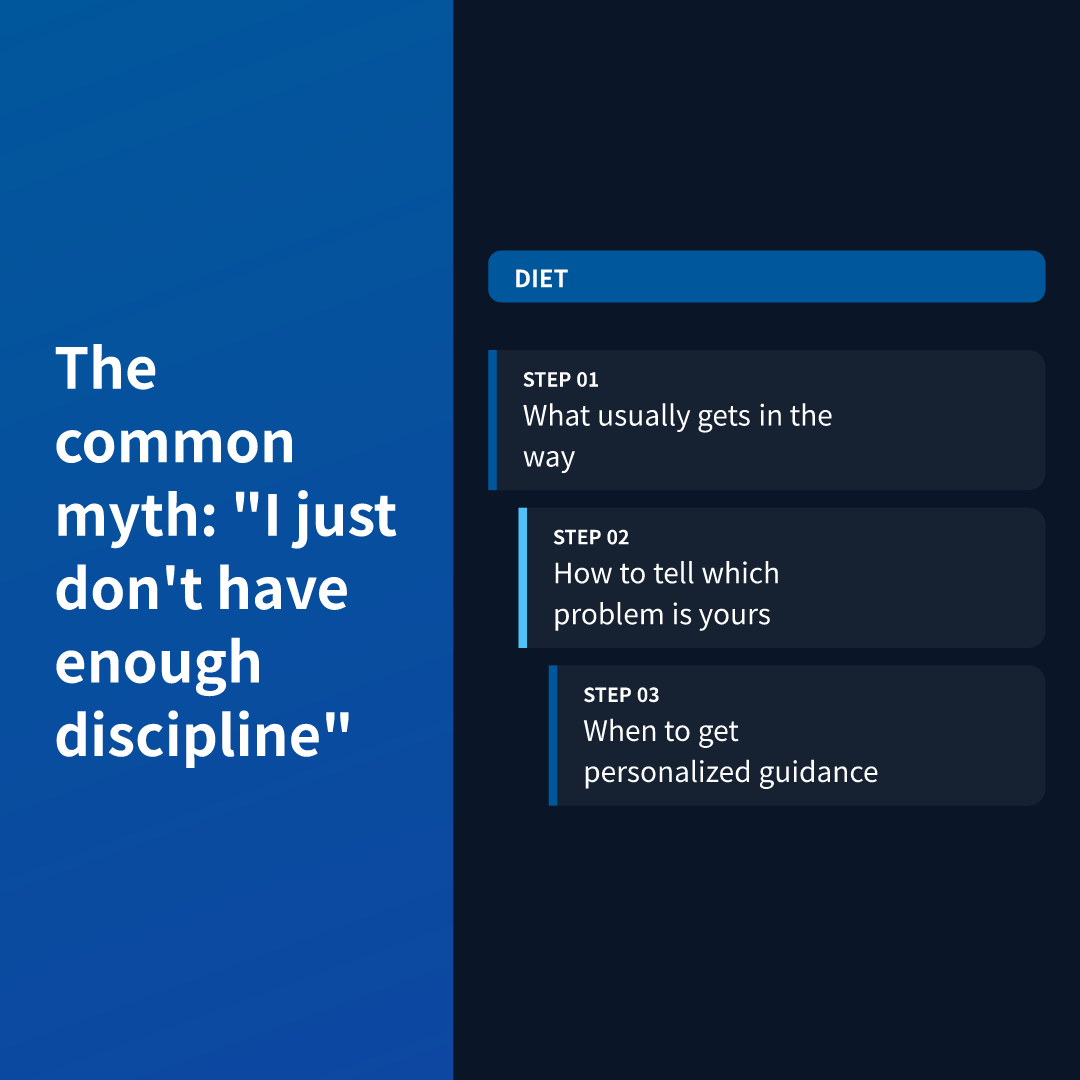
The common myth: "I just don't have enough discipline"
The most popular explanation for abandoned meal prep is a personal failing. People say they are lazy, undisciplined, or simply "not a meal prep person." It is a tidy story, and it is usually wrong.
The myth: Good eaters are more motivated than everyone else.
What tends to be true: People who eat in a balanced way often have systems that make the easy choice the healthy one. Food is already washed, chopped, or cooked when hunger arrives.
The myth: A prep day has to take an entire Sunday.
What tends to be true: Many people do better with small, repeatable steps spread across the week. A marathon session can feel like a chore, and chores are easy to skip.
The myth: Meal prep means eating the same container of chicken and rice every day.
What tends to be true: Prepping components, such as a cooked grain, a roasted vegetable, and a protein, lets you mix meals differently. Variety is easier to maintain when you prep ingredients instead of finished dishes.
The myth: Healthy eating requires special or expensive foods.
What tends to be true: General dietary guidance, such as the Dietary Guidelines for Americans published by the USDA and HHS, emphasizes a variety of vegetables, fruits, whole grains, protein foods, and dairy or fortified alternatives. Many of these are ordinary grocery items, and frozen or canned options are often part of the picture.
What usually gets in the way
If willpower isn't the main issue, what is? A few practical causes show up again and again. Each one has a matching simple fix that doesn't require a perfect plan.
No plan before the shopping trip
Shopping without a rough idea of the week's meals often leads to a full cart and an empty plan. Ingredients get bought for dishes that never happen, and food goes to waste. A loose outline of a few dinners, a couple of breakfasts, and some grab-and-go options is usually enough.
Simple meal prep ideas for healthy eating often start here: choose two or three proteins, two or three vegetables, and one or two grains or starches for the week. Those building blocks can be combined in different ways. If you have a medical reason to limit certain foods, a registered dietitian can help tailor the list.
Prep that is too ambitious
Plans that call for many recipes at once tend to collapse by midweek. A smaller start is often more sustainable. Some people begin by prepping only lunches or only breakfasts, then add more once the habit feels normal.
Some easy starting points many people find manageable:
- Overnight oats or yogurt jars: Assembled in advance with fruit and nuts or seeds, if those suit you.
- Sheet-pan vegetables: Chopped and roasted together, then used in bowls, wraps, or omelets.
- Cooked grains in bulk: Rice, quinoa, or barley that can anchor several different meals.
- Soup or stew batches: Often reheat well and freeze in portions.
- Washed and cut raw produce: Carrots, peppers, cucumbers, or greens ready for snacks and salads.
- Hard-boiled eggs or cooked beans and lentils: Flexible protein options that fit many eating styles.
Related reading: Breakfast Ideas That Keep You Full Longer
Food storage and safety gaps
Prepped food that spoils quickly or tastes unappealing by day three is a common reason people quit. This is often a storage problem rather than a cooking problem. The USDA Food Safety and Inspection Service and the FDA both publish general guidance on refrigerating leftovers promptly, cooling large batches in shallow containers, and reheating food thoroughly.
Because safe storage times depend on the food and on how your refrigerator is kept, it is worth reading the official guidance for specific foods rather than relying on memory. People who are pregnant, older adults, young children, and those with weakened immune systems are generally advised to be especially careful with leftovers and should ask a healthcare professional about their situation.
Boredom and flavor fatigue
Eating the same flavors repeatedly makes any plan harder to keep. The fix is often as simple as prepping neutral bases and changing sauces, herbs, spices, or toppings. A pot of cooked beans can lean Mexican one day and Mediterranean the next, depending on what goes on top.
A schedule that doesn't match your life
A plan built for a calm weekend can fail if your weekends are busy. Some people prep on a weeknight, split the work across two short sessions, or rely on partly prepared foods such as pre-washed greens, frozen vegetables, or canned fish and beans. These shortcuts are common and can fit into balanced eating patterns, though labels vary, so reading them is a good habit.
How to tell which problem is yours
Because the myths and the real causes can feel alike, it helps to look at the pattern. The questions below are not a diagnosis of anything. They are simply prompts for noticing where your routine breaks down.
If food goes bad before you eat it, the issue is often planning or storage. You may be buying more than you use, or prepping more than you can finish in a few days. Smaller batches and freezing portions are commonly used approaches.
If you prep but still don't eat what you made, boredom or poor reheating results may be the cause. Foods differ in how well they hold up. Crisp vegetables and dressings, for example, often work better stored separately until mealtime.
If you never get around to prepping at all, the plan may be too big or poorly timed. Shrinking the task to one or two components can make it feel less daunting.
If you are tired and hungry at the end of the day and reach for whatever is fastest, the missing piece may be a ready-to-eat option that takes almost no effort. Having a few grab-ready foods on hand is often more useful than a detailed menu.
It also helps to separate food logistics from deeper concerns. If you notice a pattern of skipping meals, feeling anxious or out of control around food, or eating in ways that distress you, that may be about more than meal planning. A doctor, registered dietitian, or mental health professional can help in those situations, and meal prep tips alone are not meant to address them.
When to get personalized guidance

General ideas are a starting point, not a custom plan. Some people have needs that call for individual advice, including those managing diabetes, kidney disease, food allergies, digestive conditions, or pregnancy, as well as people taking medications that interact with certain foods. The National Institutes of Health and MedlinePlus offer general nutrition information, but a licensed clinician or registered dietitian can tailor recommendations to a specific situation. (Source: WHO Fact sheet: Healthy diet)
Similarly, if you are making major changes to how you eat, or you are feeling unwell, unusually fatigued, or notice unexplained changes in weight or appetite, a healthcare professional is the right person to ask. Simple meal prep ideas for healthy eating can make daily routines smoother, but results and needs vary from person to person.
Frequently asked questions
How far ahead can prepped meals usually be kept?
It depends on the food, how it was stored, and how cold your refrigerator stays. Official sources such as the USDA Food Safety and Inspection Service provide general storage guidance for leftovers and cooked dishes. Freezing portions is a common way to extend how long meals stay usable, and when you are unsure about a particular item, checking the official guidance is a safer habit than guessing.
Does meal prep work for people who cook for just one person?
Yes, it can, though the approach often looks different. Smaller batches, freezer-friendly portions, and prepping ingredients rather than full dishes tend to reduce waste. Many solo cooks also find that doubling a single recipe and freezing the extra is more realistic than planning a full week.
Is it okay to rely on frozen or canned foods in a meal prep routine?
Frozen and canned foods are widely used in everyday cooking and can fit into varied eating patterns. General dietary guidance often notes that frozen vegetables and fruits, as well as canned beans or fish, can be convenient options. Labels differ, so some people check ingredient lists or ask a dietitian if they need to watch particular nutrients.
What if I have a health condition and still want to try meal prep?
Meal prep can still be a useful organizing tool, but the food choices should match your care plan. A doctor or registered dietitian can explain which foods, portions, or timing matter for your condition. Bringing a sample weekly plan to an appointment can make that conversation more concrete.
Disclaimer: This article is for informational purposes only and is not a substitute for professional medical advice, diagnosis, or treatment. Please consult a licensed professional for personal health decisions.