How to Make Walking a Daily Habit Without Burning Out
The simplest way to make walking a daily habit is to shrink it: pick one small, repeatable walk, attach it to something you already do, and let that be enough on busy days. Most people who quit don’t lack willpower. They start with a big plan, miss a day or two, and decide the whole thing has failed. Starting small and staying flexible tends to hold up better than an ambitious schedule.
If you have ever bought new shoes, mapped out a five-day plan, and abandoned it by the second week, you are in good company. The pattern is common: too many rules, too much time, too little room for a bad day. This article goes the other way. It starts with the one or two actions that give the most return for the least effort, then adds optional extras, then lists what you can safely let go of.
The Two Things Worth Doing First
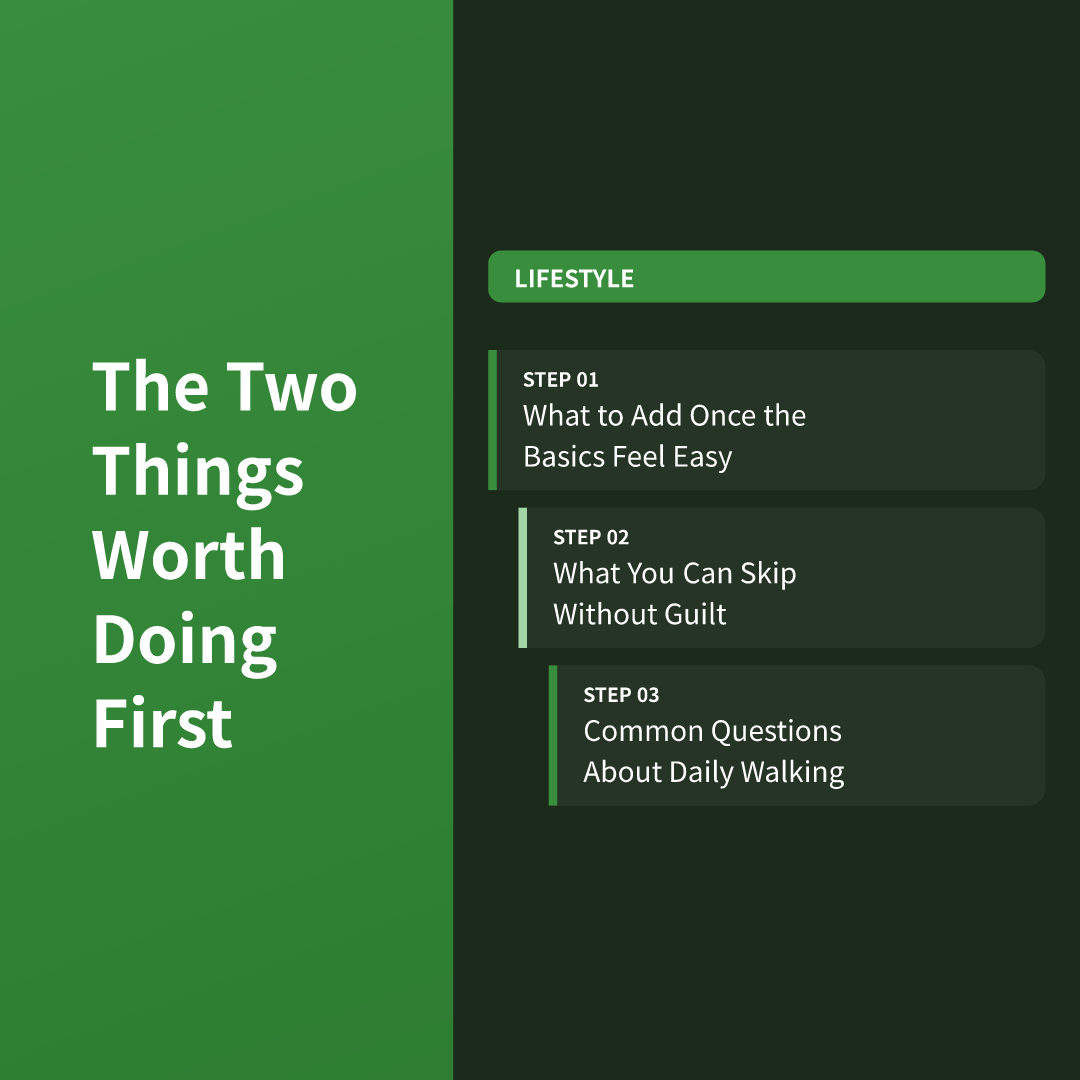
If you only do two things, make them these: anchor your walk to an existing routine, and keep the starting walk small enough that skipping it feels silly. Everything else is decoration. Neither step needs equipment, an app, or a gym membership.
1. Tie the walk to something you already do
Habit researchers often describe this as linking a new behavior to an existing cue. Instead of “I’ll walk when I have time,” the plan becomes “after I pour my morning coffee” or “right after I close my laptop for the day.” Time rarely appears on its own, but routines happen whether you feel motivated or not.
Some cues people find workable:
- After breakfast or after the first cup of tea or coffee
- Right after work, before sitting down at home
- During a regular phone call, if you can talk while moving
- After dinner, as a short loop around the block
The limit here is that cues can break. A schedule change, travel, or a new job can erase your anchor overnight. When that happens, it is normal to pick a new one rather than treat it as a personal failure.
2. Start smaller than feels useful
A ten-minute walk, or even a five-minute one, is a legitimate starting point. The aim in the early weeks is not fitness. It is making the behavior automatic, so that putting on your shoes stops requiring a debate with yourself. Length and pace can grow later, once the habit exists.
The honest caveat: a very short walk will not do everything a longer, brisker one might. General public health guidance, such as the physical activity pages from the World Health Organization, encourages regular movement over the week and notes that some activity is better than none. Think of your small walk as the foundation, not the finished building.
What to Add Once the Basics Feel Easy
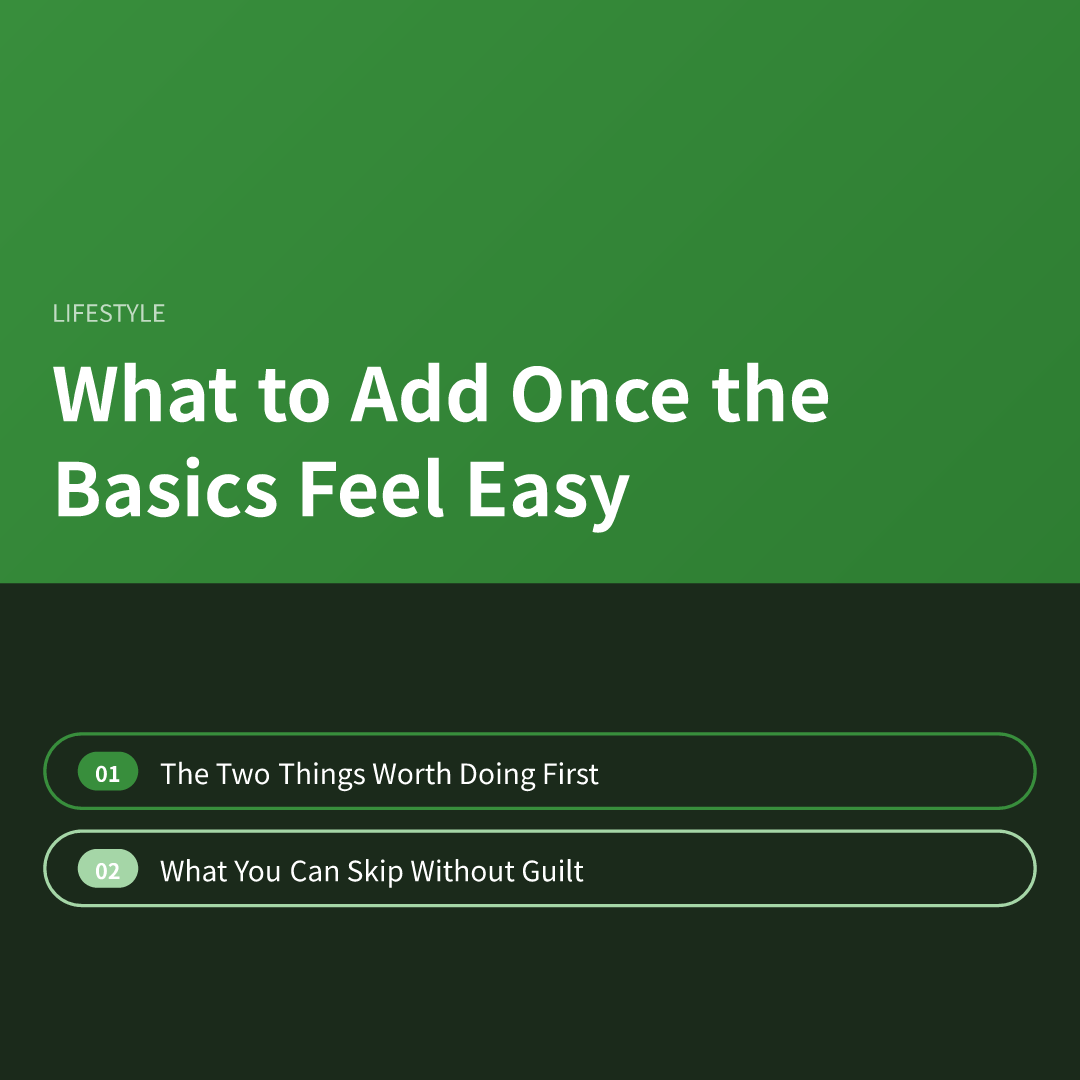
Once your anchor walk has been happening for a while without much effort, you can layer in extras. None of these are required, and adding them too soon is a classic way to turn a pleasant habit into a chore. Choose one at a time, and keep it only if it makes walking more appealing.
Make it more enjoyable
Enjoyment is a stronger long-term glue than discipline for many people. A podcast, an audiobook, or a playlist saved only for walks can make the time feel like a treat rather than a task. Walking with a friend, a neighbor, or a dog adds a bit of social accountability, which some people find helpful and others find stressful. Try it and see which group you fall into.
Gradually lengthen or vary the route
When ten minutes feels easy, some people extend the walk a little or choose a more interesting route, such as a park, a waterfront, or a quiet street with trees. Variety can help with boredom. Gentle changes in pace or the occasional hill are also options, though how much is appropriate depends on your current fitness, joints, and any health conditions.
Track it lightly, if tracking helps
A basic calendar with a mark for each walk can be motivating, and a step counter or phone app works for some people. Tracking is a tool, not a requirement. If the numbers start to make you anxious or push you to overdo it, it is reasonable to stop looking at them.
Have a rainy-day plan
Weather is one of the most predictable habit-breakers. Decide in advance what a bad-weather version looks like: a few laps inside a mall, a walk around a large store, pacing the hallway during a phone call, or simply a shorter outdoor loop with the right jacket. Having the fallback ready means a storm changes the walk rather than canceling it.
What You Can Skip Without Guilt
A lot of walking advice quietly adds pressure. Here is a list of things that are often presented as essential but usually are not, especially when you are just trying to build consistency.
- A fixed step target. Round-number goals are popular, but they are a convenient benchmark, not a magic line. Your starting point, schedule, and health all shape what is reasonable.
- Special gear. Comfortable, supportive shoes matter, but you do not need specialized clothing or gadgets to begin.
- Perfect streaks. Missing a day is not the end of the habit. The more useful rule is simply to return the next day without making it a big deal.
- Speed. A relaxed pace still counts as walking. Pushing the pace too early can make the habit feel unpleasant.
- Long blocks of time. Several short walks can fit into a day more easily than one long one, and many people find that more realistic.
- Morning-only rules. The best time to walk is whichever one you will actually keep. Early risers and night owls both get to count.
Letting go of these is not lowering the bar. It is removing obstacles that have little to do with whether you walk tomorrow.
When to check in with a professional first
For many healthy adults, walking is a gentle form of activity, but it is not right for every person in every situation. If you have a heart or lung condition, balance problems, significant joint pain, are pregnant, are recovering from surgery or injury, or have not been active in a long time, it is sensible to ask a doctor or other qualified professional what kind and amount of walking suits you. The same applies if you notice chest discomfort, unusual shortness of breath, dizziness, or sharp pain while walking. Those are reasons to stop and seek medical advice rather than push through.
Common Questions About Daily Walking
What if I miss a day, or a whole week?
It happens to nearly everyone. Illness, travel, and busy stretches interrupt routines. Many people find it easier to restart with the original small walk and the same anchor, instead of trying to “make up” for lost time with a long session.
Is a short walk really worth it?
A short walk can still break up long periods of sitting, give you some fresh air, and reinforce the routine. It will not replace everything a longer or more vigorous session offers, and it is not a substitute for medical care or a plan from a professional. As a starting point for building the habit, though, it is a reasonable choice.
Should I walk outside or is indoor walking fine?
Both are options. Outdoor walks offer scenery and daylight, while indoor walking is useful when the weather, air quality, or safety is a concern. Choose what you can repeat consistently, and think about lighting, footing, and your comfort level wherever you walk.
How long before I notice a change?
There is no set timeline, and it varies from person to person. Some people notice small things early, such as a clearer head after a walk or an easier time getting out the door, while other changes, like stamina, may take longer to show up or may be subtle. Sleep, stress, health conditions, age, and the rest of your routine all play a part. Rather than watching for a specific result, many people find it more helpful to notice whether the walk is becoming easier to start. If that is happening, the habit is taking hold, and learning how to make walking a daily habit is mostly a matter of repeating that small, flexible routine until it feels ordinary.
Disclaimer: This article is for informational purposes only and is not a substitute for professional medical advice, diagnosis, or treatment. Please consult a licensed professional for personal health decisions.
Related reading: Daily Wellness Checklist for Busy Adults That Sticks