Signs of Poor Sleep Quality You Might Miss
The signs of poor sleep quality you might miss are often quiet ones: waking up unrefreshed, leaning on caffeine to function, or feeling oddly irritable by mid-afternoon. You can check many of these yourself, starting tonight, just by paying attention. This is observation, not diagnosis, and nothing here can tell you whether you have a sleep disorder or a medical condition. Think of it as gathering notes you can use for your own adjustments or share with a professional.
Plenty of people assume that time spent in bed equals good sleep. In practice, you can log a full night and still wake up feeling like you barely rested. Sleep quality is about how continuous, restorative, and well-timed your sleep feels, not only how long it lasts. Below is a way to notice patterns, read them sensibly, and decide what to do next.
How to Observe Your Own Sleep Without Any Gadgets
You do not need a tracker to start. A simple notebook or phone note, kept for a couple of weeks, is often enough to reveal patterns. Each item below follows the same three steps: what to look at, what tends to be typical, and what may deserve more attention. These are general patterns, and personal variation is wide.
Morning feel
What to look at: Notice how you feel in the first stretch after getting up, before coffee or screens. Are you alert enough to start your day, or foggy and heavy?
Typical range: Many people feel a little groggy for a short while after waking and then settle into the day. That brief grogginess, sometimes called sleep inertia, is commonly described as normal.
Range to watch: Feeling consistently unrefreshed for a long stretch of the morning, most days, even after what seemed like enough hours in bed, is worth noting.
Daytime energy and the afternoon dip
What to look at: Track your energy at a few points in the day, such as mid-morning, after lunch, and late afternoon.
Typical range: A mild dip in the early afternoon is common for many people, and it often passes.
Range to watch: Struggling to stay awake during quiet activities like reading, meetings, or watching TV, or feeling like you could nod off at any moment, is a stronger signal. Dozing off while driving or in other risky situations is a reason to seek care promptly rather than wait.
How long it takes to fall asleep
What to look at: Estimate roughly how long you lie awake before drifting off. You do not need exact timing; a general sense is fine.
Typical range: Most people take a little while to wind down, and that is normal.
Range to watch: Regularly lying awake with a racing mind, or dreading bedtime because sleep feels unpredictable, may point to something worth looking into.
Night wakings
What to look at: Note whether you wake during the night, how often you notice it, and how easily you fall back asleep.
Typical range: Brief awakenings are a normal part of sleep, and many are forgotten by morning.
Range to watch: Waking often, staying awake for long periods, or waking too early and being unable to return to sleep, especially if it happens repeatedly, is worth tracking.
What a bed partner notices
What to look at: If someone shares your room, they may notice things you cannot, like loud snoring, pauses in breathing, gasping, or a lot of kicking and thrashing.
Typical range: Occasional light snoring is common and often has simple explanations, such as a stuffy nose.
Range to watch: Loud, frequent snoring combined with choking or gasping sounds, or observed breathing pauses, is the kind of pattern health agencies encourage people to discuss with a clinician. According to the National Heart, Lung, and Blood Institute's general guidance on sleep apnea, loud snoring and daytime sleepiness are among the commonly described features, though many people with snoring do not have the condition.
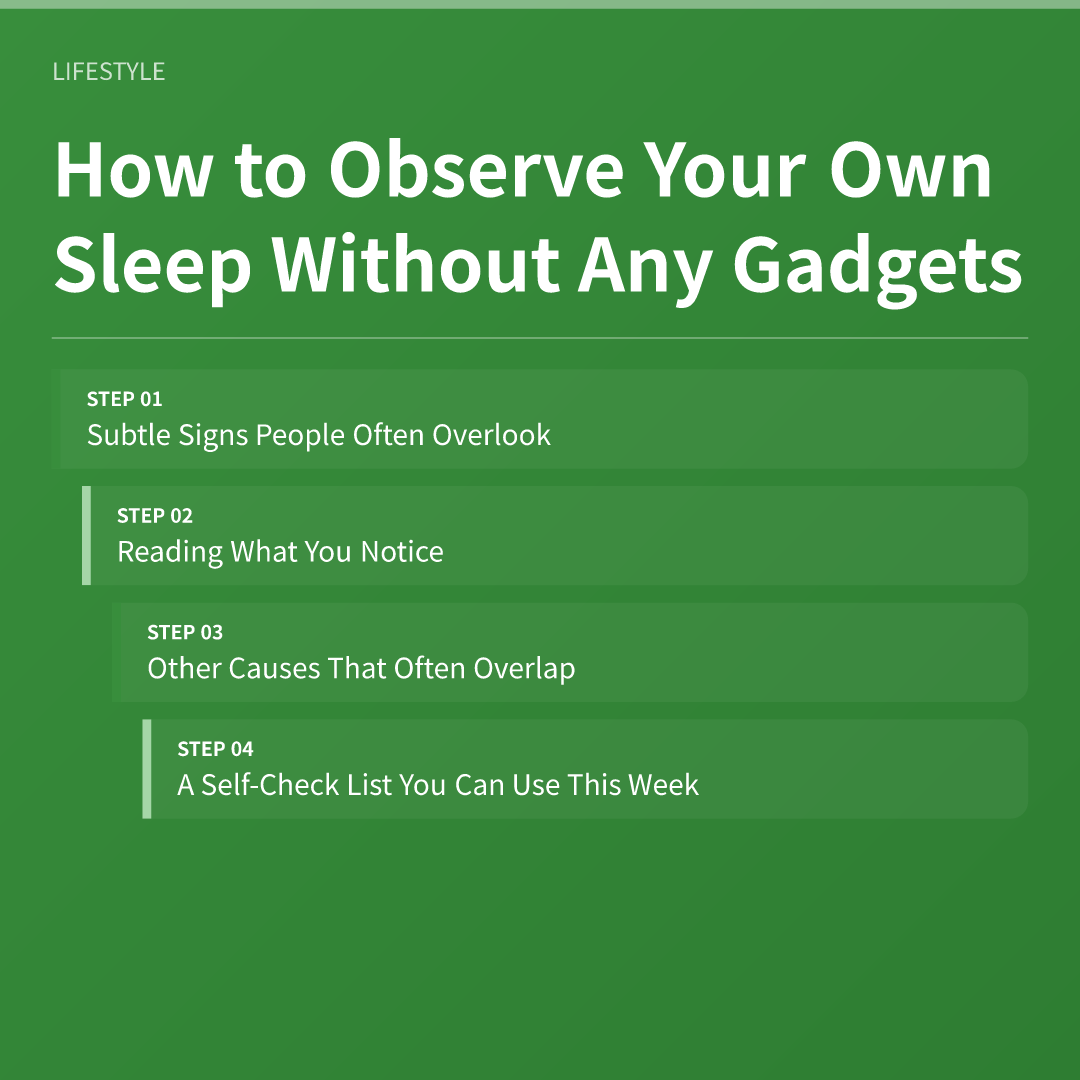
Subtle Signs People Often Overlook
Some of the clues are not about sleep at all on the surface. They show up in mood, focus, and habits during the day, which is why they are easy to blame on stress or a busy week.
- Reaching for caffeine to get started and to keep going. Using it now and then is ordinary. Needing it just to feel functional, day after day, can be a hint your sleep is not restoring you.
- Irritability or a shorter fuse. Not getting enough good sleep can affect how you feel and how well you manage your day, though the effects differ from person to person.
- Trouble concentrating or forgetting small things. Misplacing keys occasionally is normal. Noticing a persistent decline in focus is more notable.
- Craving sugary or starchy snacks, especially late in the day. Appetite can shift when you are tired, though many other factors play in as well.
- Needing a long weekend catch-up sleep. Big swings between weekday and weekend wake times can suggest your schedule is not matching your body's needs.
- Waking with a dry mouth, sore throat, or headache. These can have many causes, including nasal congestion, but they are worth noting alongside other signs.
- Feeling more run-down or catching things more often. This is a loose association at best, and many other factors can explain it.
No single item on this list proves anything. It is the pattern, its persistence, and its effect on your day that matter most.
Reading What You Notice
After a week or two of notes, step back and look for repetition. One bad night after a late dinner or a stressful day is not a pattern. The same complaint showing up most days over a few weeks starts to look like one.
It helps to sort what you see into three rough buckets. First, things that look tied to habits, like late screens, irregular bedtimes, or evening caffeine. Second, things that look tied to your environment, such as noise, light, or room temperature. Third, things that do not clearly fit either and keep happening regardless of what you adjust. That third group is the one most worth bringing to a professional.
Be gentle with yourself in this process. Tracking can sometimes make people anxious about sleep, which can itself make sleep worse. If note-taking starts to feel stressful, scale it back to a quick morning check-in instead of detailed logs.
Other Causes That Often Overlap
Poor sleep quality rarely has one tidy explanation. Several common factors can look similar or stack on top of each other, and sorting them out is part of why professional input can help.
Daily habits and schedule
Irregular sleep and wake times, late-evening light from screens, heavy meals close to bedtime, and alcohol can all affect how restful sleep feels. The National Institute of Neurological Disorders and Stroke and the CDC both discuss general sleep habits, such as keeping a consistent schedule and a comfortable sleep environment, as commonly suggested foundations. Individual needs differ, so what suits one person may not suit another.
Stress, mood, and mental health
Worry, low mood, and anxiety are closely tied to sleep trouble, and the relationship can run both ways. If your sleep complaints come with persistent sadness, loss of interest, or constant worry, a mental health professional or primary care clinician is a sensible place to start.
Physical health and pain
Chronic pain, reflux, allergies, breathing issues, and hormonal changes can all interrupt sleep. Because these have their own care pathways, a clinician can help figure out which factors are in play.
Medications, caffeine, and other substances
Some prescription and over-the-counter products, along with caffeine, nicotine, and alcohol, can influence sleep. If you suspect something you use is affecting your rest, ask a pharmacist or doctor before changing or stopping anything. Do not adjust a prescribed medicine on your own.
Sleep disorders
Conditions such as sleep apnea, insomnia disorder, and restless legs syndrome are recognized by health agencies, including the National Institutes of Health. Only a qualified professional can evaluate whether one applies to you. The signs above can overlap with these conditions but cannot confirm them.
Life stage and shift work
Pregnancy, perimenopause, new parenthood, and rotating or night shifts commonly change sleep. In these seasons, disrupted sleep is often expected, but it still deserves support and, when it becomes hard to manage, a conversation with a clinician.
A Self-Check List You Can Use This Week
Read through the statements below and note how many sound like you over the past few weeks. This is not a scored test or a diagnostic tool; it is a way to organize your observations.
- I often wake up feeling unrefreshed, even after a full night in bed.
- I rely on caffeine to feel functional most days.
- I struggle to stay awake during quiet activities.
- I regularly lie awake for a long time before falling asleep.
- I wake during the night and have trouble returning to sleep.
- I wake much earlier than intended and cannot fall back asleep.
- Someone has told me I snore loudly, gasp, or seem to stop breathing briefly.
- I wake with headaches, a dry mouth, or a sore throat on many mornings.
- My mood, patience, or focus has noticeably slipped.
- My weekday and weekend sleep times differ a great deal.
- These patterns have lasted for several weeks and affect my daily life.
What to Do Based on What You Found
If few or none of these fit
Keep observing casually. Sleep naturally fluctuates with stress, travel, and seasons. Continue paying attention to how you feel in the morning, and recheck if something changes.
If several fit, but your days are still manageable
Consider small lifestyle adjustments and watch how things respond over time. Many people look at consistent sleep and wake times, a darker and quieter bedroom, limiting caffeine later in the day, and a calmer evening routine. Results vary, and changes often take a while to show. If you are unsure whether a product, supplement, or sleep aid is appropriate for you, ask a pharmacist or doctor before using it.
If many fit, or if they persist and disrupt your life
Talking with a licensed professional is a reasonable next step, and bringing your notes can make the visit more useful. Seek care sooner if you notice loud snoring with breathing pauses, falling asleep in unsafe situations, strong low mood, or sleep trouble that keeps worsening. If anything feels urgent or frightening, contact local emergency services or a qualified clinician right away.
Noticing the signs of poor sleep quality you might miss is a practical first step, not a verdict. A few weeks of honest observation can show you what is worth adjusting at home and what is worth handing to someone trained to look deeper.
Disclaimer: This article is for informational purposes only and is not a substitute for professional medical advice, diagnosis, or treatment. Please consult a licensed professional for personal health decisions.
Related reading: How Room Temperature Affects Sleep Quality