Stretching Before or After Exercise: What Works Better
Stretching before or after exercise is a question most people answer by habit: you feel tight, so you pull on a muscle, and sometimes you feel looser and sometimes you feel oddly weaker. The short answer is that it depends on the type of stretch and the activity. Gentle movement-based warm-ups tend to suit the time before exercise, while longer held stretches are often saved for afterward or for a separate session. Here is why that pattern shows up, and why it does not look the same for everyone.
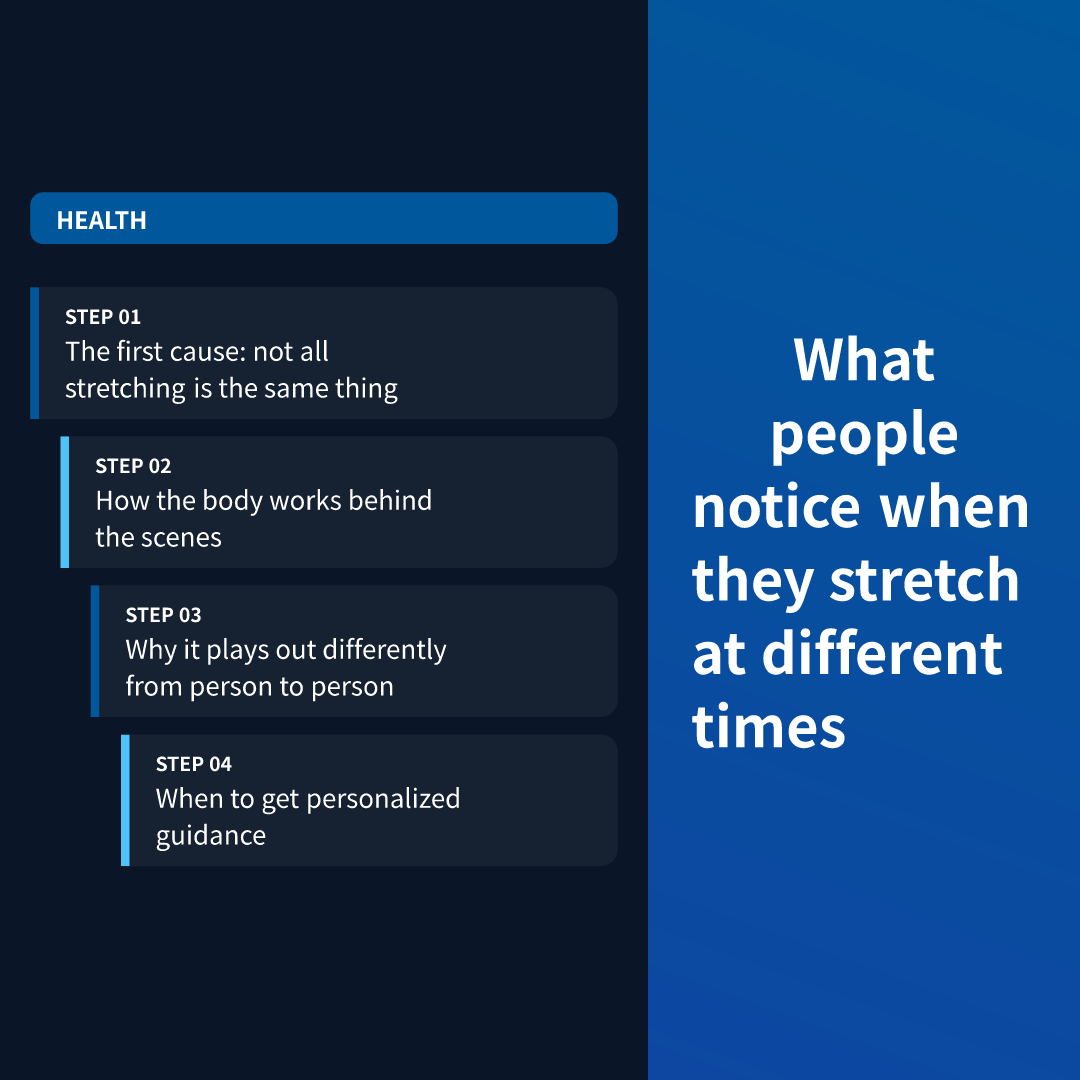
What people notice when they stretch at different times
Ask a group of regular exercisers and you will hear conflicting stories. Some say that holding a calf stretch before a run leaves their legs feeling heavy. Others say skipping stretches after a workout leaves them stiff the next morning. Some feel nothing either way.
These reports are not contradictions so much as clues. The same muscle can respond differently depending on how it is stretched, how long the stretch lasts, and what you do right afterward. According to the CDC's general physical activity guidance, warming up and cooling down are commonly recommended parts of a routine, though the guidance does not claim one rigid sequence fits everyone. (Source: WHO Fact sheet: Physical activity)
A few experiences come up again and again:
- Feeling looser right after a long hold. The muscle often feels easier to lengthen, which is pleasant but not always helpful for explosive activity.
- Feeling warmer and more ready after active movement. Leg swings, easy marching, or slow lunges often leave people feeling more prepared.
- Feeling stiff later in the day. Muscles worked hard may feel tight afterward, and some people find gentle stretching helps them feel more comfortable.
- Feeling no difference at all. This is common, and it is a perfectly valid response.
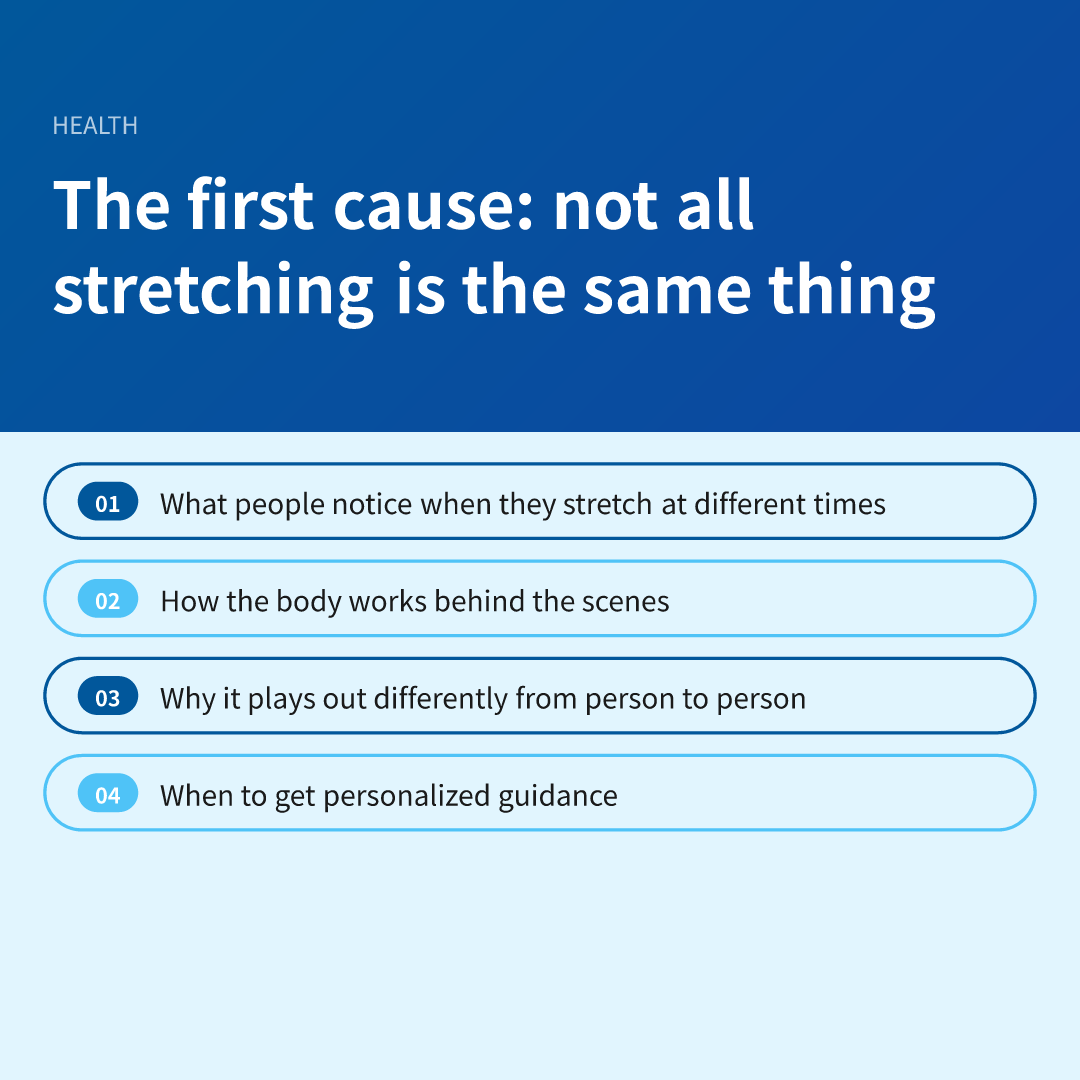
The first cause: not all stretching is the same thing
The biggest reason the debate never settles is that "stretching" covers very different actions. Mixing them up makes advice sound inconsistent.
Static stretching
This means easing into a position and holding it, such as reaching toward your toes. It is the style most people picture. It focuses on lengthening a muscle while it stays still.
Dynamic stretching
This uses controlled, repeated movement through a range of motion, like arm circles or walking lunges. It raises body warmth while moving joints, so it resembles the activity to come.
Other approaches
Some people also use techniques such as proprioceptive methods that combine contraction and relaxation, or practices like yoga. These are generally taught by trained instructors or therapists, and the details are best learned in person rather than from an article.
General guidance from the NHS and similar public health bodies tends to describe warm-ups as light activity that gradually raises heart rate and loosens the joints, and stretches as something that can follow. That framing already hints at an answer: the type of stretch matters as much as the timing.
How the body works behind the scenes
To see why timing matters, it helps to follow the chain of events inside a muscle. This is a simplified picture, and researchers are still refining it, so treat it as a general explanation rather than a settled rule.
- A muscle is held in a lengthened position → the nervous system registers the stretch and may allow the muscle to relax somewhat.
- The muscle relaxes → it can feel less stiff, and the range of motion around the joint may temporarily increase.
- A very long hold lowers tension for a while → some studies suggest the muscle may produce force less readily right afterward, particularly in power or sprint-type tasks.
- Active, movement-based warm-ups raise muscle temperature and blood flow → muscles and connective tissue tend to feel more pliable, and the nervous system is primed for the movements ahead.
This chain is why many people end up with a simple pattern: dynamic movement first, held stretches later. The reasoning is that a long hold can leave a muscle feeling relaxed when you want it ready, while the same relaxation can feel welcome once the hard work is finished.
What the evidence can and cannot tell us
Research on this topic is mixed. Some findings suggest held stretching right before power-based activity may slightly reduce performance for a short window, while other work finds little difference, especially for shorter holds. Research also suggests regular stretching over time may support flexibility. Studies differ in how long people stretched, what exercise followed, and who took part, which makes tidy conclusions hard.
On injury prevention, the evidence is also uneven. A warm-up as a whole is widely encouraged, but it is difficult to credit any single stretch for preventing strains. Anyone with a past injury or a medical condition affecting muscles or joints should ask a clinician or physical therapist what suits them. how to build a simple warm-up routine
Why it plays out differently from person to person
Once you know the chain above, the individual differences make more sense. Several factors change how each link behaves.
The activity you are about to do
A gentle walk, a yoga class, a heavy lifting session, and a sprint workout place very different demands on muscles. Someone doing slow, steady cardio may notice little effect from stretching timing, while someone sprinting or jumping may be more sensitive to a long hold beforehand.
Your natural flexibility and training history
People vary in how stiff or flexible they naturally are. A person who already moves through a wide range may feel little change from static stretching, while someone very tight may feel a bigger difference in comfort. Years of consistent training can also shift how the body responds.
Age, injury history, and health conditions
Muscles and connective tissue change over time, and past injuries can alter how a joint tolerates stretching. Pain that is sharp, sudden, or lingering is a different matter from ordinary stretch sensation. It is worth getting checked rather than pushing through. when muscle soreness needs a professional look
Your goal
If you want to feel ready for a workout, a movement-based warm-up is the common choice. If you want to work on flexibility over weeks and months, a separate stretching session or a post-workout routine is often how people do it. Someone preparing for a sport that needs a deep range of motion, such as gymnastics or martial arts, may be guided by a coach with different priorities.
Comfort and consistency
The routine you will actually keep doing often matters more than a perfect order. Results vary, and the National Institutes of Health and MedlinePlus general guidance emphasize regular activity and listening to your body instead of chasing a single ideal method.
When to get personalized guidance
General principles only go so far. A physical therapist, athletic trainer, or other licensed professional can look at how you actually move and suggest what fits. This is especially worth considering if you have joint problems, recent surgery, chronic pain, pregnancy-related changes, or a condition that affects balance or connective tissue.
Seek care promptly if you notice sharp pain during a stretch, swelling, numbness, tingling, or weakness that does not settle. Those are not typical signs of a muscle simply feeling tight.
Two habits worth steering clear of
Knowing the mechanism makes it easier to spot the habits that work against you. Two stand out.
- Forcing a deep, long-held stretch on cold muscles right before explosive effort. Cold tissue tends to be less pliable, and a long hold may leave the muscle less ready for sprinting or jumping. Easing in with light movement first is the more common approach.
- Pushing into pain or bouncing hard to get a bigger stretch. Stretching should feel like mild tension, not sharp pain. Pain is a signal to back off, and ongoing pain is a reason to talk with a professional rather than stretch harder.
So when it comes to stretching before or after exercise, what works better is usually matching the type of stretch to the moment and to your own body, not following one fixed rule.
Disclaimer: This article is for informational purposes only and is not a substitute for professional medical advice, diagnosis, or treatment. Please consult a licensed professional for personal health decisions.