Sugar Cravings: Causes and How to Manage Them
It is mid-afternoon, you ate lunch not long ago, and suddenly the vending machine feels like it is calling your name. That pull toward something sweet is one of the most common experiences people describe, and it usually has an explanation. Sugar cravings tend to come from a mix of how the body handles energy, how well you slept, how stressed you are, and the habits you have built around sweet foods. Understanding that chain makes it easier to manage cravings without blaming yourself.
This piece works from the outside in. It starts with what cravings look like, moves to the usual first-level causes, goes down into the mechanisms underneath, and then explains why the same trigger can feel so different from one person to the next.
What a Sugar Craving Actually Looks Like
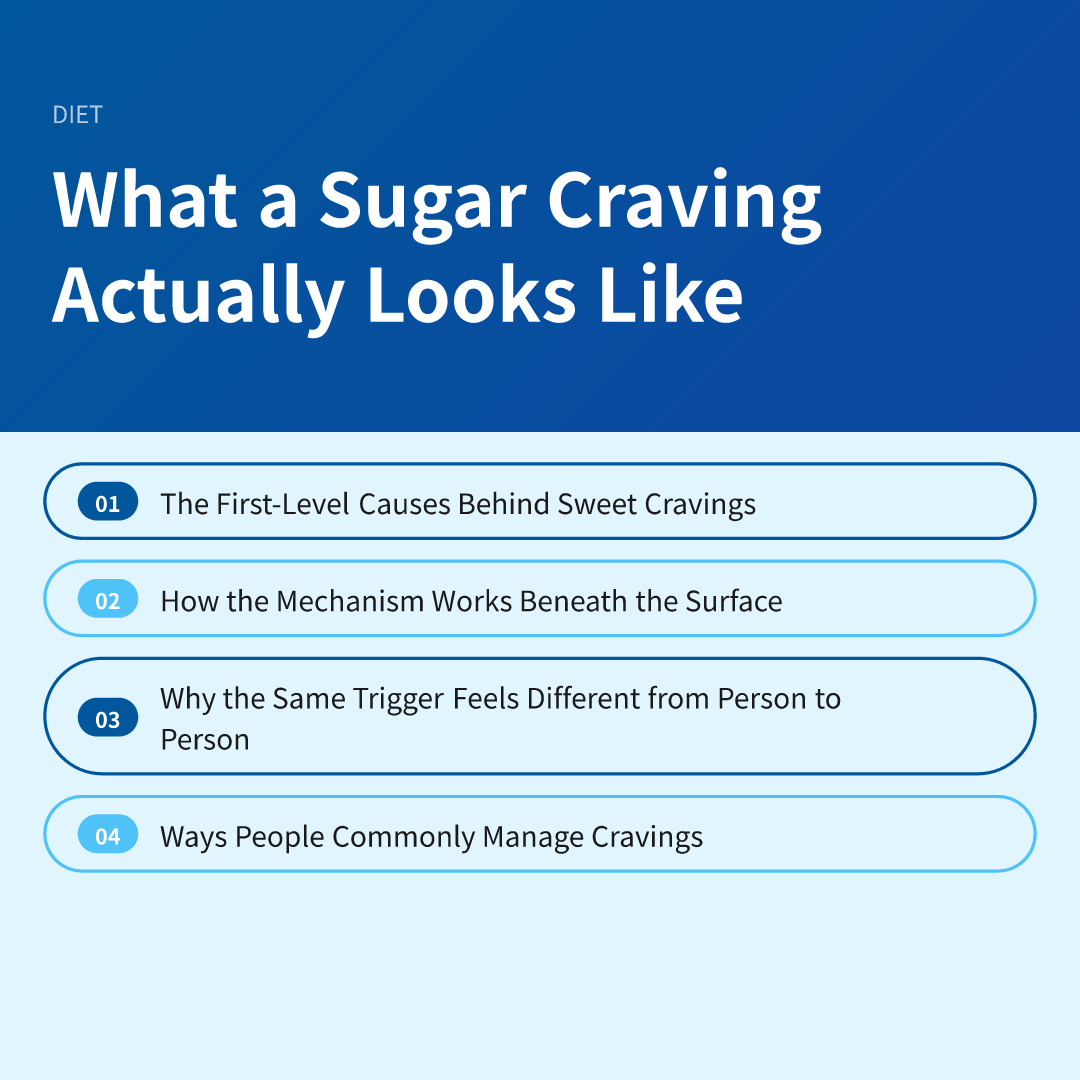
A craving is not the same as ordinary hunger. Hunger usually builds gradually and can be satisfied by many foods. A craving is often sudden, specific, and fixated on one kind of taste or texture, such as chocolate, pastries, or sweet drinks.
People commonly describe a few recurring patterns:
- An urge that shows up at the same time every day, often mid-afternoon or late evening.
- A strong pull toward sweets after a stressful meeting, an argument, or a poor night of sleep.
- Wanting something sweet right after a meal, even when you feel full.
- A sense that one piece is never quite enough, followed by wanting more.
These patterns are clues. When a craving is tied to a time of day, a mood, or a situation, that usually points to a specific trigger rather than a lack of willpower.
The First-Level Causes Behind Sweet Cravings
Several everyday factors are commonly linked with stronger cravings. None of them applies to everyone, and most people have more than one going on at once.
Meals that leave you hungry again quickly
Meals built mostly from refined carbohydrates and very little protein, fiber, or fat tend to digest quickly. Many people notice that they feel hungry again sooner and reach for something sweet to fill the gap.
Short or disrupted sleep
According to the National Institutes of Health, sleep plays a role in how the body regulates appetite and energy. Many people find that after a short night they want more sugary or high-energy foods the next day.
Stress and emotional eating
Sweet foods are often tied to comfort and reward. When stress is high, reaching for them can become a quick way to feel better, even briefly.
Habit, environment, and cues
Candy on the desk, a coffee-and-cookie routine, or dessert after every dinner can build a strong association. Over time, the cue alone can trigger the urge, whether or not your body needs the energy.
Skipped meals and heavy restriction
Going a long time without eating, or sharply cutting back on food, is often followed by intense cravings. The body is generally wired to push toward quick energy when it senses a shortfall.
How the Mechanism Works Beneath the Surface
Underneath those everyday triggers, a few overlapping processes help explain why sweet foods feel so compelling. The science here is still developing, and researchers do not all agree on how much each piece contributes, so it helps to treat these as general explanations rather than a fixed formula.
The blood sugar swing
When you eat something high in fast-digesting carbohydrates, blood glucose generally rises, and the body releases insulin to help move that glucose into cells. According to the National Institute of Diabetes and Digestive and Kidney Diseases, insulin is a key hormone in how the body manages blood sugar. For some people, a quick rise can be followed by a noticeable dip, and that dip can feel like fatigue, irritability, or a strong want for more quick energy.
The chain often goes like this:
- A meal or snack is mostly fast-digesting carbohydrate, with little protein, fiber, or fat.
- Blood sugar rises quickly, and the body responds by releasing insulin.
- Blood sugar then falls, and some people feel tired, shaky, or unfocused.
- The brain looks for fast energy, and sweet foods are the quickest option.
- Eating them restarts the cycle.
Not everyone experiences this swing in a noticeable way, and the size of the response varies from person to person.
The reward pathway
Sweet taste is generally linked to the brain's reward system. Eating something enjoyable can trigger a feel-good signal, and the brain tends to remember what produced it. Repeating the same food in the same situation can strengthen that link, which is why a craving can feel automatic.
Appetite hormones and sleep
Hormones involved in hunger and fullness are influenced by sleep and by regular eating patterns. When sleep is short or meals are irregular, appetite signals can become less steady. That may help explain why cravings often feel stronger on tired days.
Stress signaling
The body's stress response also interacts with appetite. Some people notice that during stressful periods they want more comforting, energy-dense food. The American Psychological Association has described how stress can influence eating behavior, though the effect is not the same for everyone.
Why the Same Trigger Feels Different from Person to Person
Two people can eat the same breakfast and have completely different mid-morning experiences. Several things help explain that variation.
- Body and metabolism: People differ in how quickly they digest food and how strongly their blood sugar responds to a given meal.
- Sleep and stress load: Someone sleeping poorly while under pressure is often more cravings-prone than someone well rested, even with an identical diet.
- Eating history: Past dieting, long gaps between meals, or growing up with sweets as rewards can shape how strongly the urge shows up.
- Hormonal changes: Many people notice shifts in appetite and cravings at certain points in the menstrual cycle, during pregnancy, or around menopause.
- Medications and health conditions: Some medicines and medical conditions can affect appetite or blood sugar, which may change how cravings feel.
- Taste and culture: Familiar foods, family traditions, and what is easy to find all influence what people crave.
Because of this variation, a strategy that works well for a friend may do little for you. It is more useful to notice your own pattern than to copy someone else's rules.
Ways People Commonly Manage Cravings
Once the chain is clear, management tends to focus on the links you can influence. These are general approaches people often discuss, not a personal plan.
- Building meals with a mix of protein, fiber, and healthy fats, which many people find keeps them satisfied longer.
- Eating at fairly regular times so that extreme hunger is less likely to set in.
- Protecting sleep where possible, since tired days often bring stronger urges.
- Noticing emotional triggers and finding other ways to respond to stress, such as a short walk or a call with a friend.
- Changing the environment, for example keeping sweets out of easy reach.
- Allowing sweets in a planned, enjoyable way rather than treating them as forbidden.
The Dietary Guidelines for Americans generally encourage limiting added sugars as part of an overall balanced eating pattern. How much that matters for you, and how to approach it, depends on your health, your goals, and your daily life.
Related reading: Posture Habits to Prevent Back Pain You Can Actually Keep
When Cravings Deserve a Professional Conversation
Occasional cravings are normal. It may be worth talking with a licensed clinician or a registered dietitian if cravings feel overwhelming or out of control, if they come with extreme thirst, frequent urination, unexplained weight change, or unusual fatigue, or if eating sweets is tied to guilt, bingeing, or distress. These can sometimes signal something that deserves a proper evaluation, such as a blood sugar issue, a sleep problem, or a difficult relationship with food.
If you take medication or have a condition such as diabetes, changes to how you eat are best discussed with your care team first. Supplements marketed for reducing cravings should also be reviewed with a pharmacist or doctor, since reactions and interactions vary.
Two Habits Worth Avoiding Once You Know the Mechanism
Knowing how the chain works points to two common traps.
First, avoid skipping meals or cutting food drastically to "save up" for sweets or to cancel out a craving. Long gaps and heavy restriction tend to set up the very swing and rebound hunger that make cravings louder, and they can make the urge feel harder to ignore later in the day.
Second, avoid labeling sugar as strictly forbidden and then relying on willpower alone. Rigid rules often turn a sweet food into something charged with guilt, which can make cravings feel more intense and lead to a cycle of restricting and overeating. A steadier approach, built around regular meals, rest, and stress relief, usually gives cravings less fuel.
Disclaimer: This article is for informational purposes only and is not a substitute for professional medical advice, diagnosis, or treatment. Please consult a licensed professional for personal health decisions.